
Friday, October 30, 2026Oct 30

This story is free to read.

States’ reporting of coronavirus testing data leads to confusion

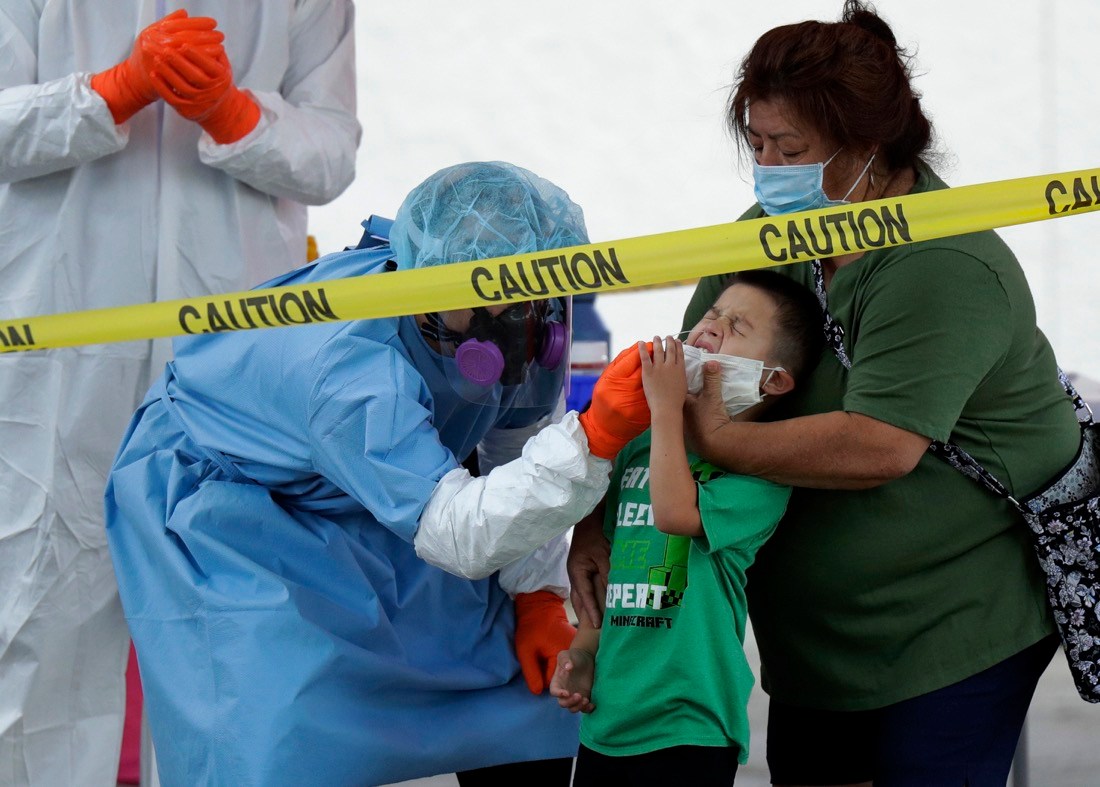
FILE - In this May 14, 2020, file photo, Jerry A Mann, center, is held by his grandmother, Sylvia Rubio, as he is tested for COVID-19 by the San Antonio Fire Department at a free walk-up test site in San Antonio. Public health officials have said robust testing for the coronavirus is essential to safely lifting stay-at-home orders and business closures, but states are creating confusion in the way they are reporting the data. (AP Photo/Eric Gay, File)
FILE - In this May 14, 2020, file photo, Jerry A Mann, center, is held by his grandmother, Sylvia Rubio, as he is tested for COVID-19 by the San Antonio Fire Department at a free walk-up test site in San Antonio. Public health officials have said robust testing for the coronavirus is essential to safely lifting stay-at-home orders and business closures, but states are creating confusion in the way they are reporting the data. (AP Photo/Eric Gay, File) FILE - In this May 14, 2020, file photo, Jerry A Mann, center, is held by his grandmother, Sylvia Rubio, as he is tested for COVID-19 by the San Antonio Fire Department at a free walk-up test site in San Antonio. Public health officials have said robust testing for the coronavirus is essential to safely lifting stay-at-home orders and business closures, but states are creating confusion in the way they are reporting the data. (AP Photo/Eric Gay, File)

PROVIDENCE, R.I. (AP) – Elected officials, businesses and others are depending on coronavirus testing and infection-rate data as states reopen so that they will know if a second wave of contagion is coming – and whether another round of stay-at-home orders or closings might be needed.

But states are reporting those figures in different ways, and that can lead to frustration and confusion about what the numbers mean. In some places, there have been data gaps that leave local leaders wondering whether they should loosen or tighten restrictions. In others, officials are accused of spinning the numbers to make their states look better and justify reopening.

In a continuing theme for the outbreak in the United States, a lack of federal leadership persists. Even the U.S. Centers for Disease Control and Prevention has been lumping together tests that measure different things.

Such errors render the CDC numbers about how many Americans are infected “uninterpretable,” creating a misleading picture for people trying to make decisions based on the data, said Ashish Jha, director of Harvard’s Global Health Institute,

“It is incumbent on health departments and the CDC to make sure they’re presenting information that’s accurate. And if they can’t get it, then don’t show the data at all,” Jha said. “Faulty data is much, much worse than no data.”