
Thursday, October 29, 2026Oct 29

This story is free to read.

Books? Hairdressers? Europeans split on lockdown essentials

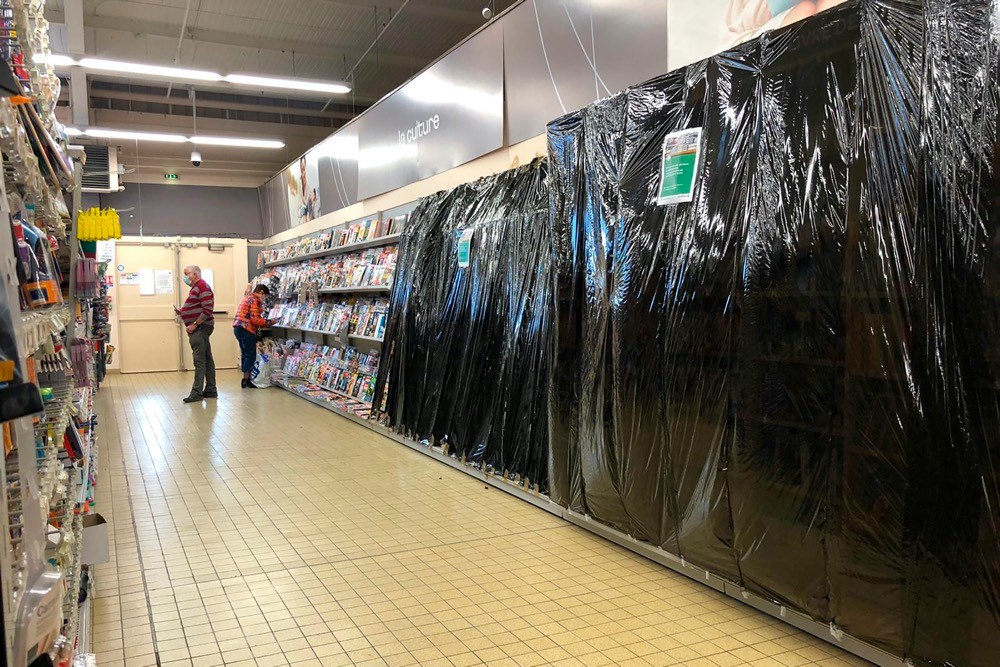
In this Monday, Nov. 2, 2020, a customer picks up a magazine in a supermarket in Gex, France. French supermarkets will be prohibited from selling books, make-up, clothes and other goods considered as non essential as smaller businesses have been forced to shut down amid virus lockdown. (AP Photo/Nadine Achoui-Lesage)
In this Monday, Nov. 2, 2020, a customer picks up a magazine in a supermarket in Gex, France. French supermarkets will be prohibited from selling books, make-up, clothes and other goods considered as non essential as smaller businesses have been forced to shut down amid virus lockdown. (AP Photo/Nadine Achoui-Lesage) In this Monday, Nov. 2, 2020, a customer picks up a magazine in a supermarket in Gex, France. French supermarkets will be prohibited from selling books, make-up, clothes and other goods considered as non essential as smaller businesses have been forced to shut down amid virus lockdown. (AP Photo/Nadine Achoui-Lesage)

HALLE, Belgium (AP) – In times when a pandemic unleashes death and poverty, the concept of what is essential to keep society functioning in a lockdown is gripping Europe.

Beyond the obvious – food stores and pharmacies – some answers in the patchwork of nations and cultures that make up Europe can approach the surreal. What is allowed on one side of a border can be banned just a brief stroll down the road, on the other.

German Chancellor Angela Merkel said that while it might seem fairest to just shut everything down, “it’s perhaps not the most practical” solution.

“If people are only satisfied when everything possible is shut down, then that’s a view which naturally doesn’t make economic sense,” Merkel said.

That’s why Germany is keeping car dealerships open this time, after their closure in the first, spring lockdown hurt the country’s huge automobile industry.