
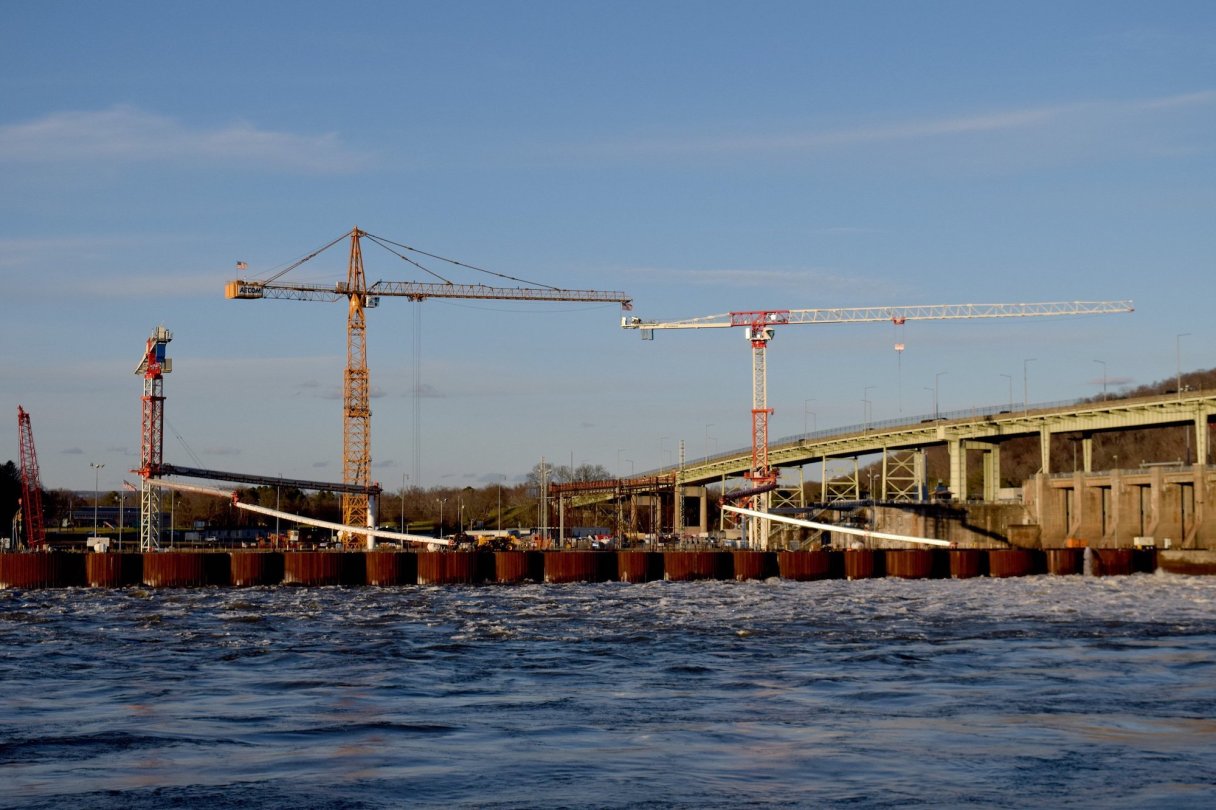
Construction of a new Chickamauga Lock would proceed at full pace in the next year if Congress approves a bipartisan spending plan unveiled Tuesday for the U.S. Army Corps of Engineers.
Outgoing U.S. Sen. Lamar Alexander of Tennessee is pushing a measure to boost the overall budget for the Corps by $72 million above the current year and to change the funding formula to put a bigger federal funding contribution to work on the new lock at the Chickamauga Dam in Chattanooga during fiscal 2021.
The proposed spending measure, which Alexander introduced Tuesday along with the ranking Democrat on the Energy and Water Development Appropriation Subcommittee he chairs, would provide a record high $7.72 billion for the Army Corp of Engineers to maintain and rebuild the nation’s waterways, including an expected $69 million for the new Chickamauga Lock in the current fiscal year.
A 110-by-600-foot lock is being erected beneath the Chickamauga Dam to replace the current, smaller lock to allow tow boats to more efficiently push more and bigger barges through the lock at one time. The existing lock at the Chickamauga Dam was built by Tennessee Valley Authority in 1940 and later taken over by the Corps after it developed problems with concrete growth and the lock walls began to crumble.
With adequate funding, the Corps has estimated the new lock could be completed by 2024. To expedite the work, Alexander is proposing a one-year change in the formula used to allocate funds for the lock from the Inland Waterways Trust Fund from an equal match between barge fees and federal tax dollars to a one-year provision to fund 85% of the work with federal funds.