
On Oct. 2, 1918, Maj. Charles Whittlesey led his battalion into the rugged Argonne Forest in western France. Whittlesey did not know it, but heavy German fire stopped the French unit protecting his left flank. The 700 Americans were soon were surrounded in a deep ravine, continually attacked by machine gun and rifle fire, hand grenades and devastating artillery barrages. Finally, on Oct. 7, friendly forces broke through. They found 338 exhausted Americans alive.
The saga of the “Lost Battalion” became one of the most celebrated episodes of the war and gave the American public a sense of pride in the dogged determination, courage and success of their doughboys. Gen. John J. Pershing recognized the emotional importance of the event, and Major Whittlesey and six others received Medals of Honor for their heroic actions.
The next day, Oct. 8, a young corporal from the hills of Tennessee, Alvin York, would make a name for himself as well. His 82nd Division moved northwest through the rugged forests after the breakthrough to Whittlesey’s battalion. York’s platoon sergeant and several other men were wounded by a machine gun they were supposed to capture. In the confusion, York found himself alone at the bottom of a hill. As German soldiers raised their heads to fire at him, he began picking them off, “jes like a turkey shoot” back home.
York then went on the offensive, and a few other men joined him. They knocked out 35 machine guns, killed 25 enemy soldiers and captured 132 more. York was promoted to sergeant, awarded the Medal of Honor and given the French Croix de Guerre (Cross of War). Marshal Foch, the French commander, told him, “What you did was the greatest thing accomplished by any private soldier in all the armies of Europe.”
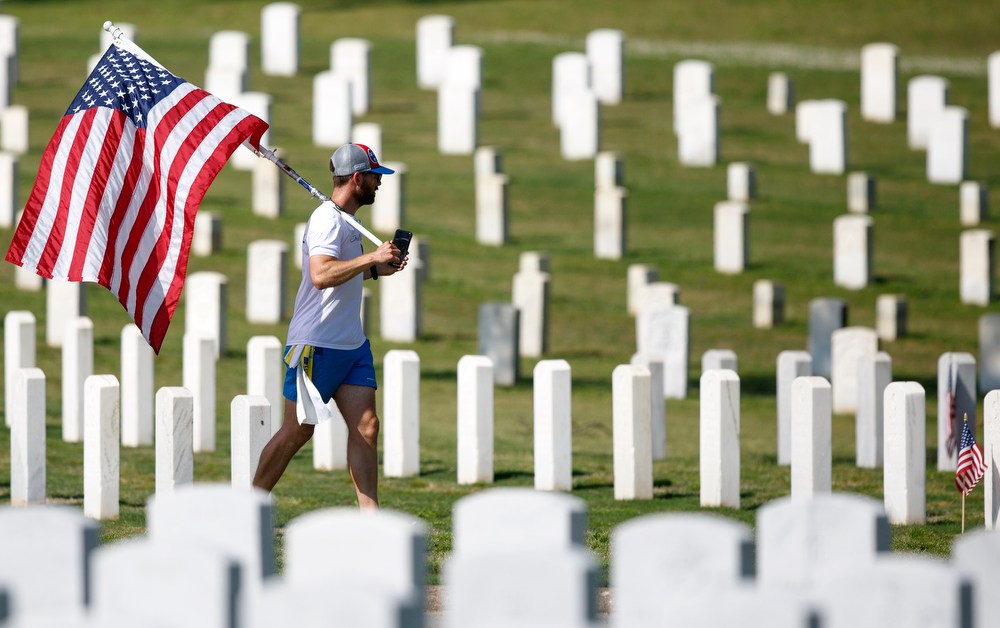
A month later, on Nov. 11, 1918, the combatants signed an armistice to end the fighting. Americans were deliriously proud. In their first major war abroad, their soldiers came through the fire and proved their mettle. The next year, President Woodrow Wilson designated Nov. 11 as “Armistice Day.” In 1954, President Eisenhower signed a bill changing Armistice Day to Veterans Day, our current holiday to celebrate the sacrifice and courage of all military service men and women.
How things changed in a hundred years. Futile efforts by brave American soldiers in Vietnam, Iraq and Afghanistan have left the American public disillusioned about our role in the world. U.S. foreign policy lacks purpose, unlike the times when we were committed to stopping tyrants like the Kaiser, Hitler or Tito.
How do we regain our national clarity? We cannot, until we define once again who we are as a nation. The ancient Chinese military strategist Sun Tzu wrote “The Art of War” around 500 B.C. Our military academies and war colleges still reference it. He said, “If you know the enemy and know yourself, you need not fear the result of a hundred battles.”
In 1918, Americans knew themselves. They were united by a Christian faith but respected other religions. They believed in hard work, laws and history. In 2020, we wring our hands in desperation when we face a pandemic that is bad but mild compared to the “Spanish” flu that killed millions. In October 1918 alone, 195,000 Americans died of the flu. Today, we demand “justice” by lawlessly burning and looting our cities. We are divided almost evenly in hateful political discord. We have murdered more than 61 million babies, calling it a “choice.” Some claim not to know the most natural thing about ourselves – whether we are male or female. How can we know ourselves?
It’s a great question to reflect upon this Veterans Day. The generation of Whittlesey and York had something we as a nation lack – faith in God. Life was about something bigger than themselves. That would be a good place for us to begin.
Roger Smith, a local author, is a frequent contributors to the Times Free Press.
 Roger Smith