
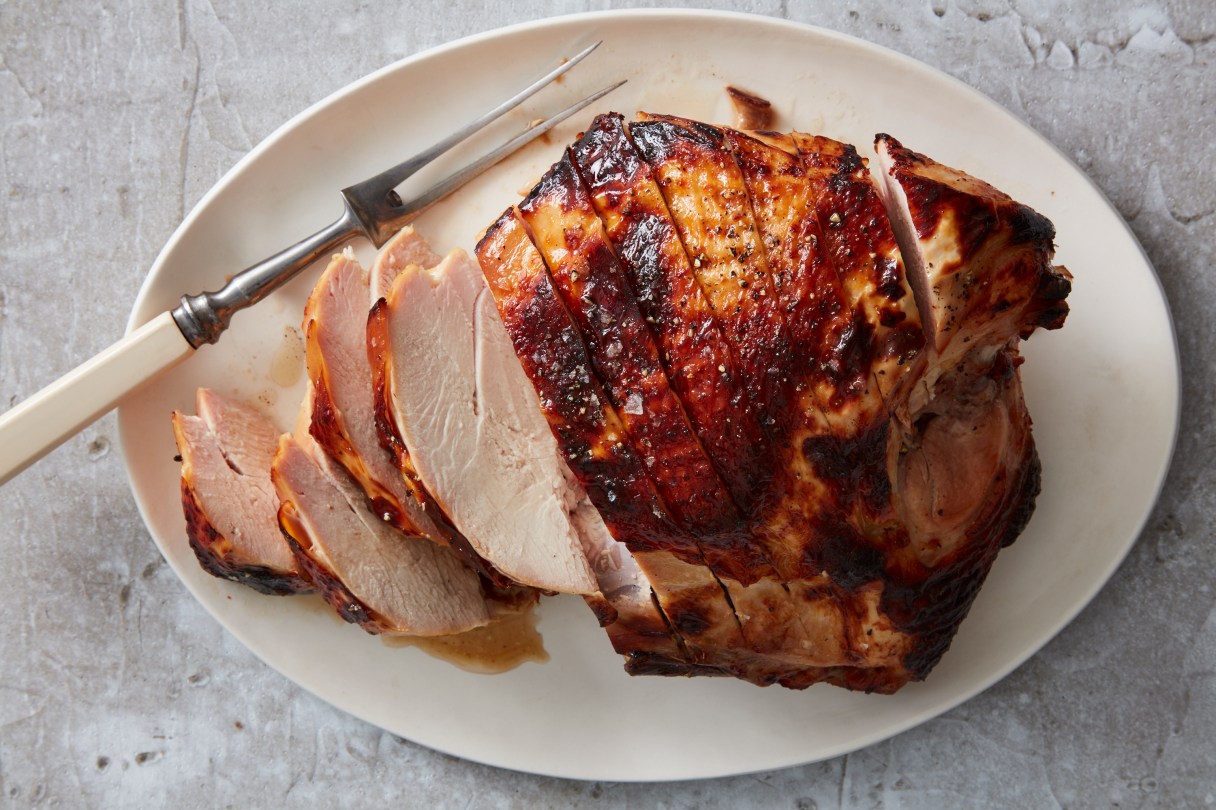
For someone who didn’t grow up celebrating Thanksgiving, I’ve got a lot of strong opinions about turkey.
It’s probably because I’ve cooked more of it than practically anyone I know, in just about more ways than I can list. I’ve roasted, braised, grilled, spit-roasted and deep-fried it. I’ve boned it out and made “turchetta.” I’ve dry-brined it, wet-brined it, injected it with brine and stuffed slabs of herbed butter under its skin. I’ve built a makeshift cinder-block oven to cook it at a friend’s farm that lacked a kitchen. I’ve even cooked 20 turkeys in a night, working the holiday in a restaurant.
And I once took an impromptu call from famed rancher Bill Niman. He was just starting to raise heritage turkeys and wondered if he could swing by with seven different breeds for me to cook for a blind tasting. I figured why not and threw myself into the challenge, roasting all of the breasts and right legs, and braising all of the left legs. I remember that I took lots of notes and that some birds tasted much more turkey-ish than others.
As I look back on all of this poultry, though, one thing is clear: No matter how complicated or technical the preparation, no one turkey I’ve ever cooked has been that much more exciting to eat than any other. (Though if it was under-seasoned or overcooked, it was certainly less exciting to eat.)
The truth is, deep down in my heart, I’ve always secretly hoped that if I cook it just right, a roast turkey will emerge from the oven as tender and juicy as a perfect roast chicken. And I suspect I’m not the only one who feels that way. But the fact of the matter is that it’s a different bird! And it has completely different qualities.