
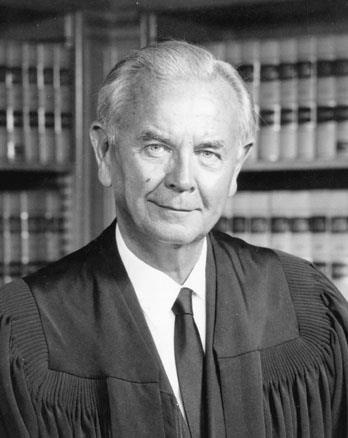
In our final column celebrating Constitution Week, our attention broadens to one of the most significant cases in U.S. Supreme Court history, based on a 1962 Tennessee issue. Since the points brought by the plaintiff, Charles Baker of Memphis, parallel the situation then confronting Chattanooga and other Tennessee cities, it seems appropriate to explore the concept of “equal representation” in the U.S. Congress.
When the Constitutional Convention met in Philadelphia in 1787, the delegates quickly agreed that the Articles of Confederation no longer provided the necessary foundation for a functional government, and they began to debate and draft a new form of government. The issue of representation remained a primary question for the delegates: How might they balance the power between the central government and the states, between the large states and the smaller states and how could they assure that individual voices were not lost in the process. Those questions produced seemingly endless debates. Ultimately, the delegates proposed and approved a plan they believed would serve the varied needs.
In Article I, Section 2, the process for “equal representation” in the House of Representatives is clearly delineated: “The actual Enumeration shall be made within three years after the first meeting of the Congress of the United States, and within every subsequent term of ten years, in such manner as they shall by law direct. The number of Representatives shall not exceed one for every thirty thousand, but each state shall have at least one Representative …”
The enumeration mentioned is our national census, scheduled to occur every 10 years, with results used to apportion the seats in the House so that each district contained about the same number of citizens. As the young nation grew, each state was charged with using the new census data to reapportion the House districts to assure equal representation.
In the late 1950s, Tennessee was still using the district boundaries established in 1901, based on the 1900 census. Residents in Tennessee’s major cities, Memphis, Nashville, Knoxville, Chattanooga and Jackson, argued that the 1901 boundaries favored rural areas over the more rapidly growing urban areas. However, the 1960 presidential and congressional elections were scheduled to proceed without any adjustment to district boundaries.