
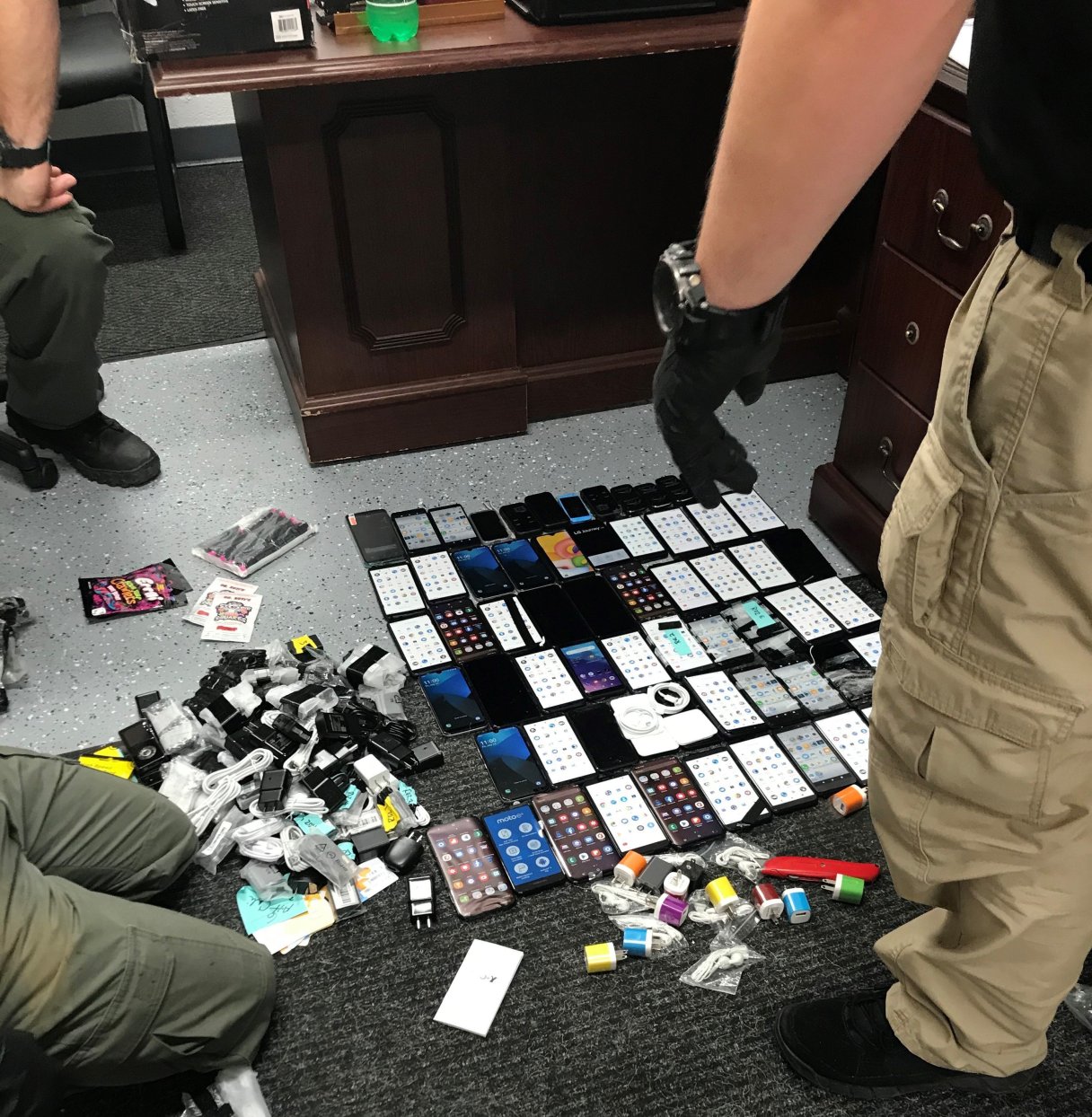

Contraband cellphones are instrumental in illicit activities in prisons, ranging from unapproved communications with people on the outside to the orchestration of violent drug rings such as the “reign of violence and drugs” operation inside the Tennessee prison system that federal agents busted last month.
Tennessee Department of Correction Commissioner Tony Parker said an 87-year-old federal law is blocking the way for states to start jamming contraband cellphones being used inside prisons, and it’s time for a change. The state has even received funding for piloting the idea.
“We believe there is only one viable solution in fighting the war on contraband cellphones in our facilities and that is through the deployment of shielded micro-jamming technology,” Parker said in a statement after arrests last week that led to 37 people being federally charged. “Shielded micro-jamming uses lower power technology to focus energy effectively on the target area while limiting signal disruption outside of the target area. We are working with federal lawmakers and the [U.S.] Department of Justice to find ways to promote shielded micro-jamming.”
Although TDOC was awarded a grant through the U.S. Bureau of Justice Assistance to conduct a pilot program using shielded micro-jamming, Parker said the Communications Act of 1934 blocks use of the technology.
“In the fight against contraband cellphones, we run into a brick wall time and time again,” he said. “Our hands are tied with a near-century-old law that could not have foreseen the problem of illegal cellphones inside prisons in 2021.”