
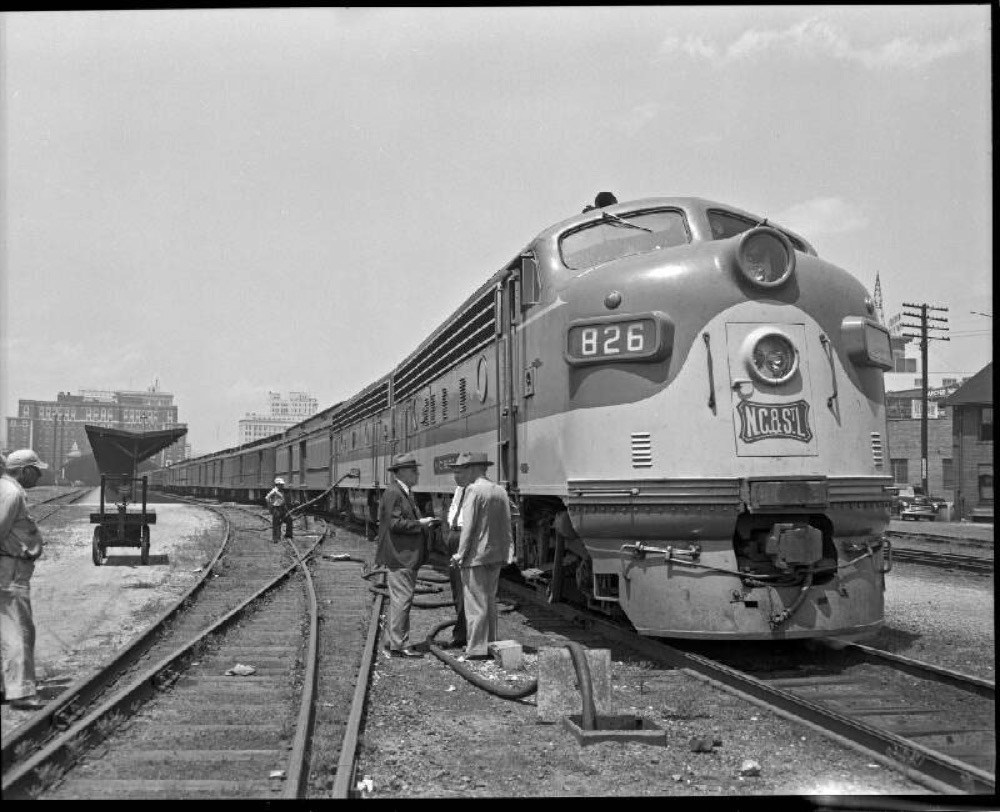

Fifty years ago this month, passenger train service into and out of Chattanooga was in its death throes.
Even so, the hearts of local preservationists were growing stronger. And though they could not save Union Station, from which the last train departed on May 1, 1971, they did make enough noise to help save Terminal Station, which saw its last train pull out in 1970 but which today hosts the Chattanooga Choo Choo hotel complex.
While the last few trains chugged in and out of the city that April, Margaret Summerville, a representative of the Historic American Buildings Survey, a division of the National Park Service and the Department of the Interior, arrived to take the measure of Union Station.
She noted its year of original construction (1858), its designation as the only surviving building in the city built before the Civil War, its likely construction of bricks made by slaves, its current ownership by the state of Georgia, and an “interior feature of note,” the walnut doors in the “ladies waiting room.”
Summerville also detailed the interior and exterior features, its major alterations, and its architectural and historical significance. Her report included two photographs, one of its interior and one of its West Ninth Street (now M.L. King Boulevard) exterior.