
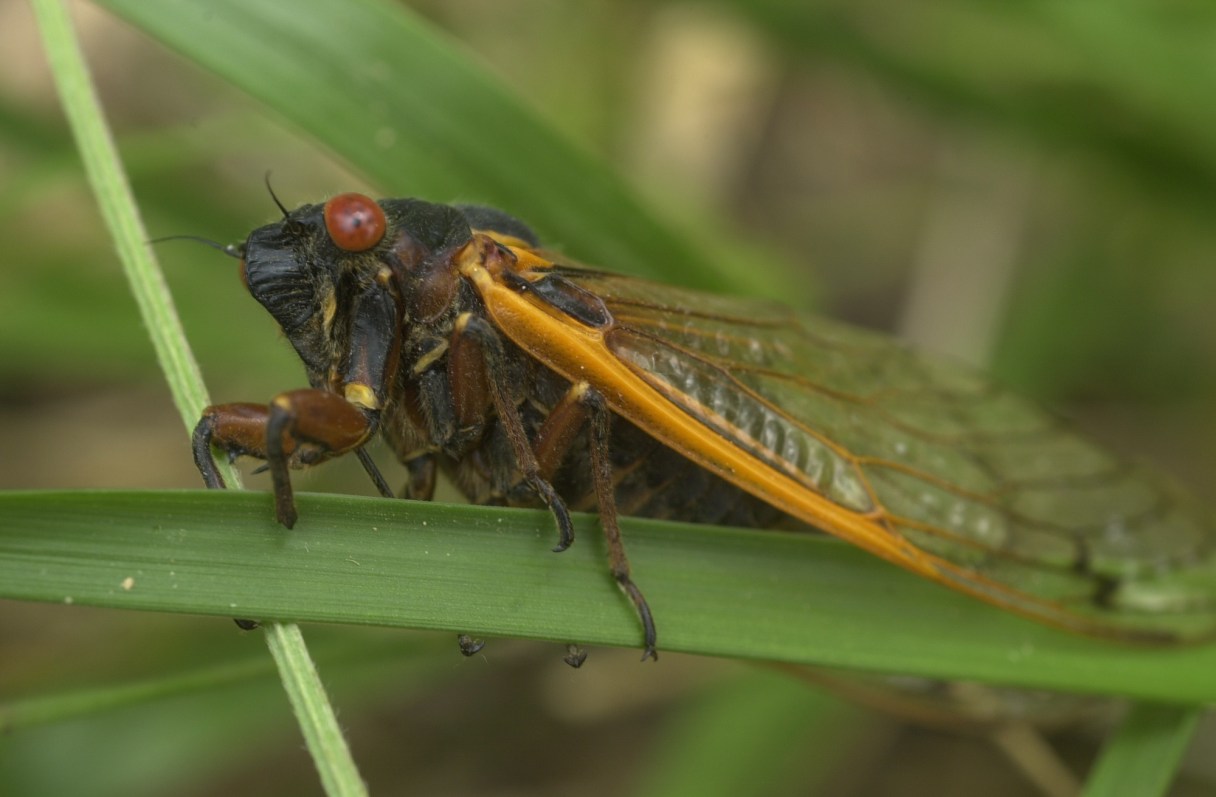
After 17 years underground, billions of red-eyed creatures will soon arise from the Earth.
The mass emergence of periodical cicadas is considered one of nature’s most extraordinary events – and one of its loudest. According to entomologists, swarms of the flying insect can produce sounds up to 120 decibels – comparable to an in-use chainsaw.
What separates periodical cicadas from all other insects is not just their long lifespan, but also their synchronized emergence. This spring, over the course of a week or two, billions of periodicals across 18 states – including Tennessee – will tunnel out of the soil. They will climb into nearby branches, shed their exoskeletons and, in search of mates, the males will begin to buzz.
Typically, the cacophony lasts only a month or so. But as conspicuous as periodicals are, their life history is largely mysterious.
Here, we burrow into what is known and unknown about the insect.