
Thursday, November 12, 2026Nov 12

Contact tracing takes a back seat during latest COVID surge

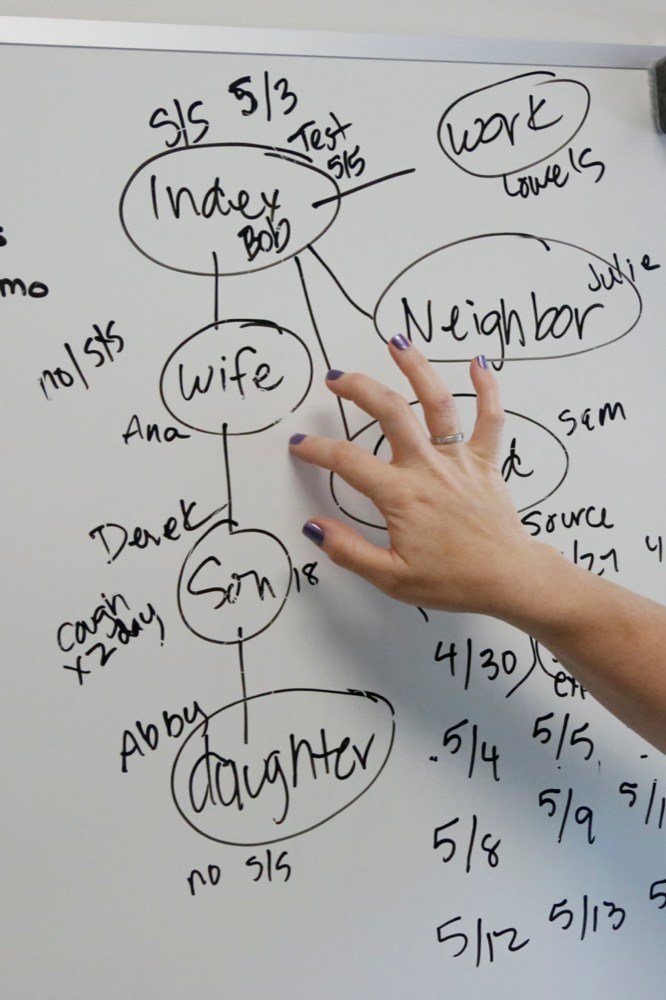
FILE - In this Monday, May 11, 2020, photo, Salt Lake County Health Department public health nurse Lee Cherie Booth points to a board showing a hypothetical case that serves as a training tool to teach new contact tracers how to track all the people they need to reach out to after a person tests positive for the new coronavirus. (AP Photo/Rick Bowmer)
FILE - In this Monday, May 11, 2020, photo, Salt Lake County Health Department public health nurse Lee Cherie Booth points to a board showing a hypothetical case that serves as a training tool to teach new contact tracers how to track all the people they need to reach out to after a person tests positive for the new coronavirus. (AP Photo/Rick Bowmer) FILE - In this Monday, May 11, 2020, photo, Salt Lake County Health Department public health nurse Lee Cherie Booth points to a board showing a hypothetical case that serves as a training tool to teach new contact tracers how to track all the people they need to reach out to after a person tests positive for the new coronavirus. (AP Photo/Rick Bowmer)

Health investigators across the U.S. are finding it nearly impossible to keep up with the deluge of new COVID-19 infections and carry out contact tracing efforts that were once seen as a pillar of the nation’s pandemic response.

States are hiring new staff and seeking out volunteers to bolster the ranks of contact tracers that have been overwhelmed by surging coronavirus cases.

Some states trimmed their contact tracing teams this spring and summer when virus numbers were dropping and are now scrambling to train new investigators. Others have triaged their teams to focus on the most vulnerable, such as cases involving schools or children too young to be vaccinated.

Texas got out of the business entirely, with the new two-year state budget that takes effect Sept. 1 explicitly prohibiting funds being used for contact tracing. That left it up to local health officials, but they can’t keep up at a time when Texas is averaging more than 16,000 new cases a day.

Mississippi has 150 staff working full time to identify people who have had close contact with an infected person, but they are swamped, too.