
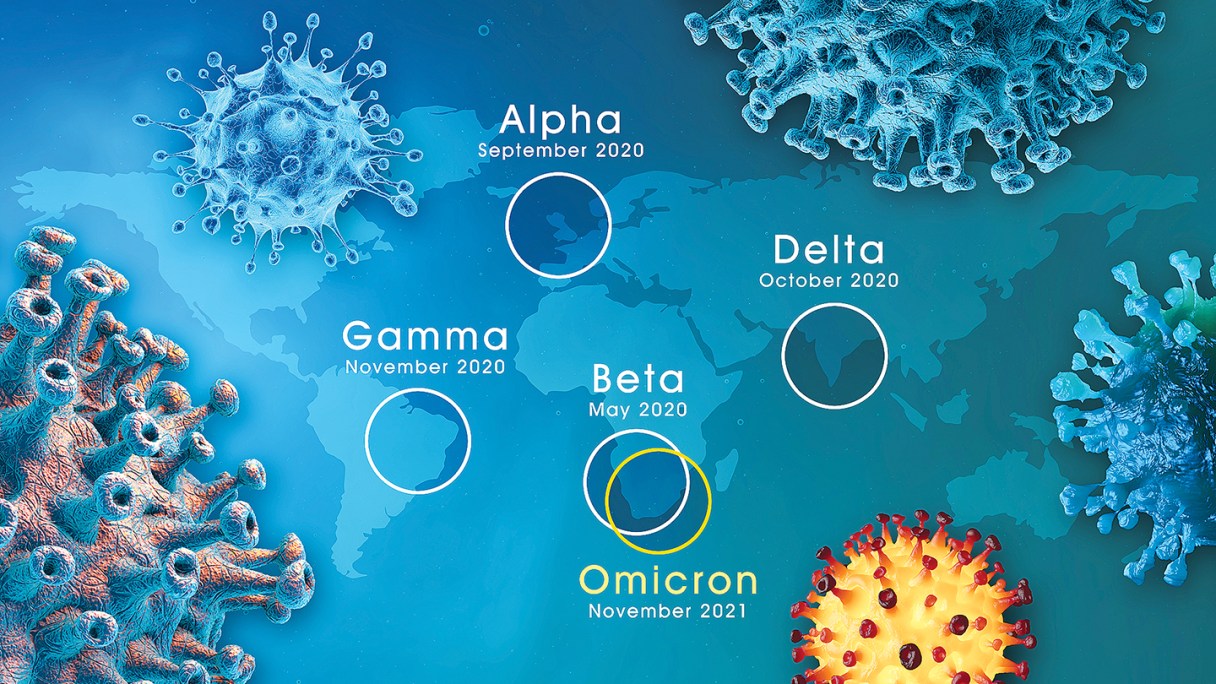
With the latest omicron variant of COVID-19 now identified in two dozen countries, what can we expect next from the virus that causes it? Is SARS CoV-2 any more ingenious than other viruses in developing new strains, and will we be able to keep ahead of it in the race between infection and suppression? Professor Peter White is an expert in viral evolution and leads the White Laboratory at the University of New South Wales in Sydney, Australia. He spoke to David Fickling on Dec. 1.
A lightly condensed and edited transcript of the conversation follows.
David Fickling: What makes viral evolution, and broadly evolution of pandemic diseases, different from evolution elsewhere in nature? It feels like we’re watching natural selection taking place in the span of days rather than millennia.
Peter White: The answer to that lies in the speed of evolution – the speed of generation of genetic diversity, or mutations, if you like. The fastest of all those are viruses. Bacteria are slower and then of course we are the slowest, and you could draw a line through the mutation rates and see the correlation: If you have a small genome like viruses, you get faster mutation. They change quickly. We don’t. It will take generations, hundreds of years to change phenotypes for most mammals, but with viruses it’s very quick.
DF: And the generations themselves are ridiculously short for viruses, in terms of what we think of as a generation.