
Thursday, October 29, 2026Oct 29

This story is free to read.

New reforms target US military’s missing weapons problem

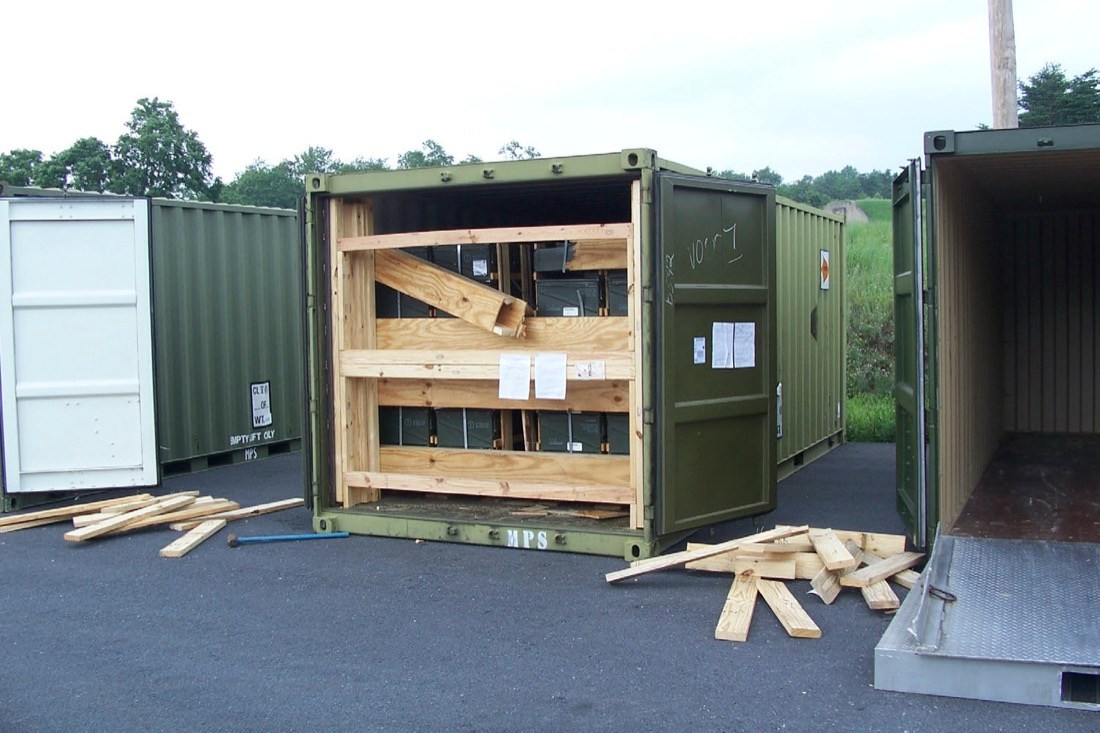
FILE - In this July 13, 2017, image provided by the U.S. Army Criminal Investigation Command on Feb. 9, 2021, a storage container of explosive ordnance shows signs of theft after arriving at the Letterkenny Army Depot in Chambersburg, Pa. An ammunition canister containing 32 rounds of 40mm M430A1 grenades, property of the U.S. Marine Corps, was missing. (U.S. Army Criminal Investigation Command via AP, File)
FILE - In this July 13, 2017, image provided by the U.S. Army Criminal Investigation Command on Feb. 9, 2021, a storage container of explosive ordnance shows signs of theft after arriving at the Letterkenny Army Depot in Chambersburg, Pa. An ammunition canister containing 32 rounds of 40mm M430A1 grenades, property of the U.S. Marine Corps, was missing. (U.S. Army Criminal Investigation Command via AP, File) FILE - In this July 13, 2017, image provided by the U.S. Army Criminal Investigation Command on Feb. 9, 2021, a storage container of explosive ordnance shows signs of theft after arriving at the Letterkenny Army Depot in Chambersburg, Pa. An ammunition canister containing 32 rounds of 40mm M430A1 grenades, property of the U.S. Marine Corps, was missing. (U.S. Army Criminal Investigation Command via AP, File)

The Department of Defense is overhauling how it keeps track of its guns and explosives, and Congress is requiring more accountability from the Pentagon — responses to an Associated Press investigation that showed lost or stolen military weapons were reaching America’s streets.

The missing weaponry includes assault rifles, machine guns, handguns, armor-piercing grenades, artillery shells, mortars, grenade launchers and plastic explosives.

The Pentagon will now have to give lawmakers an annual report on weapons loss and security under the National Defense Authorization Act, which Congress approved this month and President Joe Biden is expected to sign. As AP’s AWOL Weapons investigation showed, military officials weren’t advising Congress even as guns and explosives continued to disappear.

To meet those reporting requirements, the military is modernizing how it accounts for its millions of firearms and mountains of explosives.

“Clearly the accountability on this issue was stopping at too low of a level,” said U.S. Rep. Jason Crow, D-Colorado, a U.S. Army veteran and member of the House Armed Services Committee who supported the reforms. With the new requirements, “if there are hundreds of missing weapons in that report, members of Congress are going to see it and they are going to be asked about it publicly and held accountable for it.”