
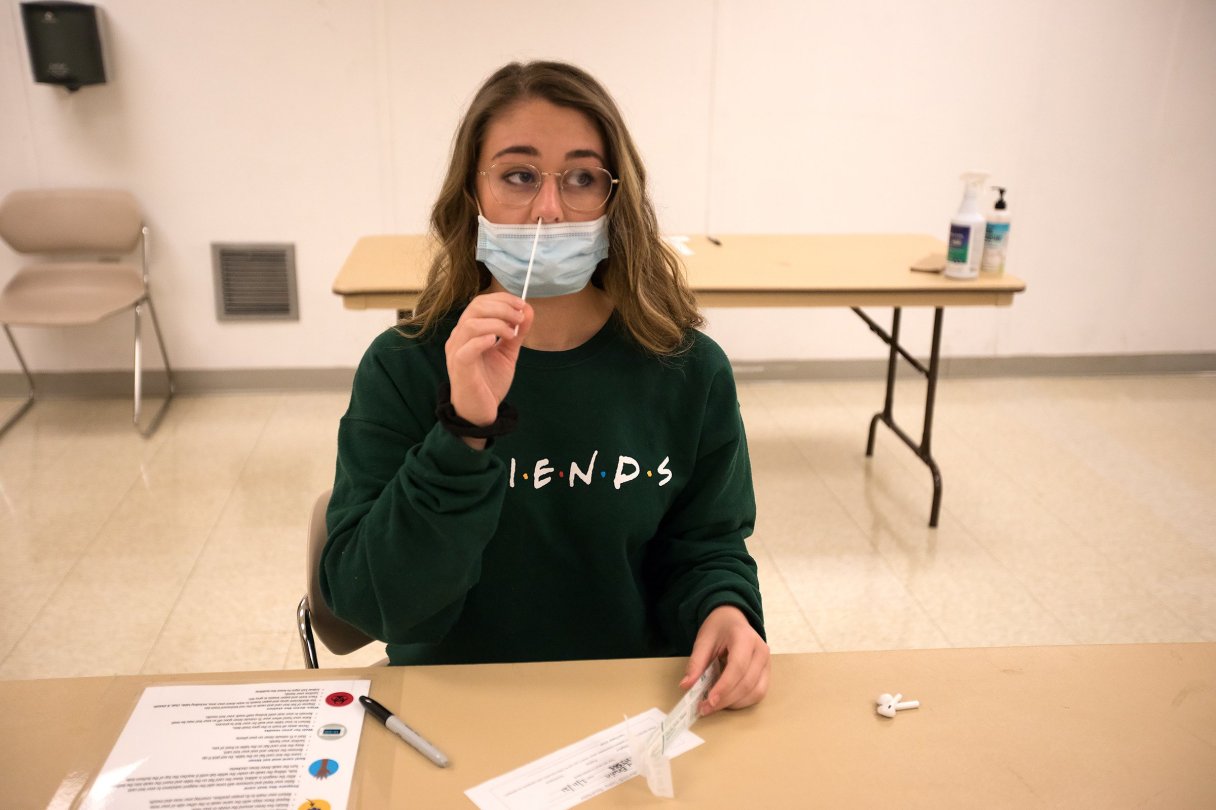
The University of Tennessee at Chattanooga began routine, random COVID-19 testing for staff and students this week in an effort to detect and isolate infected individuals who could otherwise unknowingly spread the coronavirus.
Mass surveillance testing – which is used to monitor outbreaks and find unknown infections rather than diagnose sick people – on college campuses is based on research and recommendations from the U.S. Centers for Disease Control and Prevention and the American College Health Association, said Yasmine Key, director of university health services at UTC.
Key cited an article from the Journal of the American Medical Association, which found that over 50% of COVID-19 transmission occurs from people who aren’t showing symptoms.
“In order to take out some of the people that are out there walking around unknowingly infectious, you really need to test people who don’t think they’re sick, so that was one of the driving forces behind working to mitigate some of the risk for campus,” she said. “Rather than just focusing on symptomatic and exposed individuals, we wanted to find a way to test the rest of the community as well, just to try and continue to keep the campus community and our surrounding community as safe as possible.”
In the early days of the pandemic, Key said testing supplies and access to reliable rapid tests were so limited that it wasn’t possible to conduct routine testing on a large scale.