
Tuesday, November 10, 2026Nov 10

Are Jan. 6 rioters traitors? So far, criminal charges say no

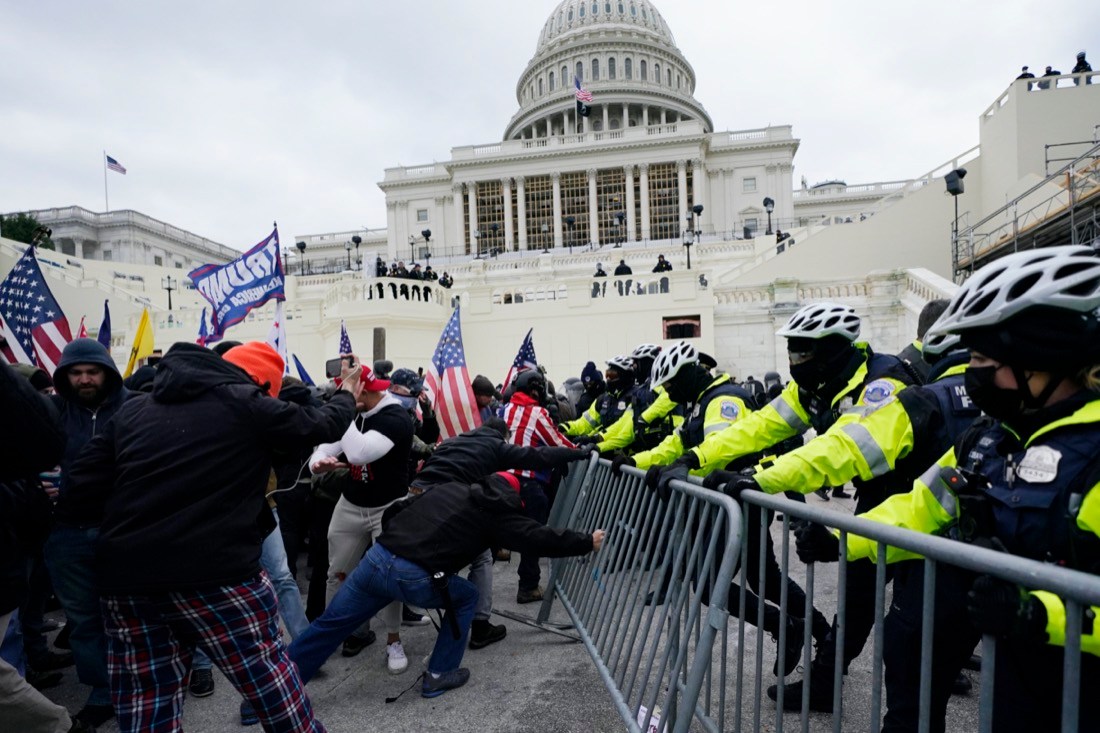
FILE - In this Jan. 6, 2021 file photo, supporters loyal to then-President Donald Trump, try to break through a police barrier at the Capitol in Washington. Key figures in the Jan. 6 riot on U.S. Capitol spoke about their desire to overthrow the government, but to date, U.S prosecutors have charged no one with sedition. They could still add them. But prosecutors may be reluctant to bring them because of their legal complexity and the difficulty in securing convictions. (AP Photo/Julio Cortez)
FILE - In this Jan. 6, 2021 file photo, supporters loyal to then-President Donald Trump, try to break through a police barrier at the Capitol in Washington. Key figures in the Jan. 6 riot on U.S. Capitol spoke about their desire to overthrow the government, but to date, U.S prosecutors have charged no one with sedition. They could still add them. But prosecutors may be reluctant to bring them because of their legal complexity and the difficulty in securing convictions. (AP Photo/Julio Cortez) FILE - In this Jan. 6, 2021 file photo, supporters loyal to then-President Donald Trump, try to break through a police barrier at the Capitol in Washington. Key figures in the Jan. 6 riot on U.S. Capitol spoke about their desire to overthrow the government, but to date, U.S prosecutors have charged no one with sedition. They could still add them. But prosecutors may be reluctant to bring them because of their legal complexity and the difficulty in securing convictions. (AP Photo/Julio Cortez)

CHICAGO (AP) – Plotted to block the certification of Joe Biden’s election victory: Check. Discussed bringing weapons into Washington to aid in the plan: Check. Succeeded with co-insurrectionists, if only temporarily, in stopping Congress from carrying out a vital constitutional duty: Check.

Accusations against Jan. 6 rioter Thomas Caldwell certainly seem to fit the charge of sedition as it’s generally understood – inciting revolt against the government. And the possibility of charging him and others was widely discussed after thousands of pro-Trump supporters assaulted scores of police officers, defaced the U.S. Capitol and hunted for lawmakers to stop the certification. Some called their actions treasonous.

But to date, neither Caldwell nor any of the other more than 500 defendants accused in the attack has been indicted for sedition or for the gravest of crimes a citizen can face, treason. And as an increasing number of lesser charges are filed and defendants plead guilty, those accusations may never be formally levied.

Some legal scholars say that sedition charges could be justified but that prosecutors may be reluctant to bring them because of their legal complexity and the difficulty historically in securing convictions. Overzealousness in applying them going back centuries has also discredited their use. And defense attorneys say discussions of such charges only add to the hyperbole around the events of that day.

Overall, the bar for proving sedition isn’t as high as it is for the related charge of treason. Still, sedition charges have been rare.