
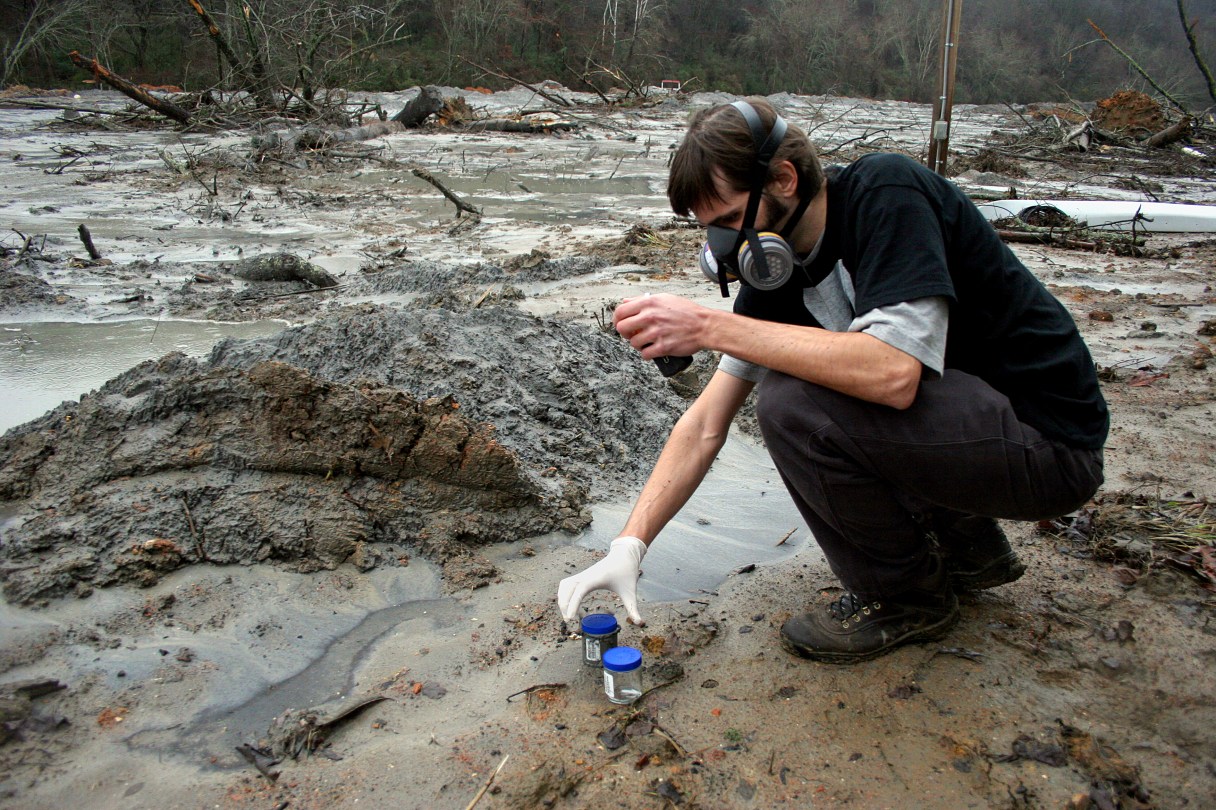
Workers at TVA coal plants have not been adequately protected against hazardous materials, and the federal utility is failing to monitor potentially dangerous exposures by its employees and contractors, according to a new assessment of TVA’s industrial hygiene program.
In a 21-page report issued last week, TVA’s inspector general said the utility’s industrial hygiene program at its coal plants “had weaknesses that resulted in hazards not being identified and evaluated,” including at least four instances of employees being exposed to excessive silica and not being informed or protected as required under federal regulations.
Tennessee Valley Authority auditors said the utility relied upon limited information to identify health hazards and employed incomplete monitoring efforts and no formal evaluation of the specific risks posed by the hazardous materials and residues at its coal plants.
The Office of Inspector General identified potential health hazards at coal plants from mold, extreme heat and radiation and chemicals such as ammonia, hydrogen, nitric acid, nitrogen oxide and pebble lime that TVA had not properly identified as hazards in its plans.
Although 80% of the TVA employees surveyed at coal plants said they felt the agency adequately protected against health hazards, the inspector general found the agency needs to do more to identify potential hazards and do a better job of monitoring for health problems. TVA also lacked adequate monitoring at retiring plants as they neared closure, including the Allen, Johnsonville and Paradise coal plants closed from 2017 to 2020 during the period studied by the auditors.