
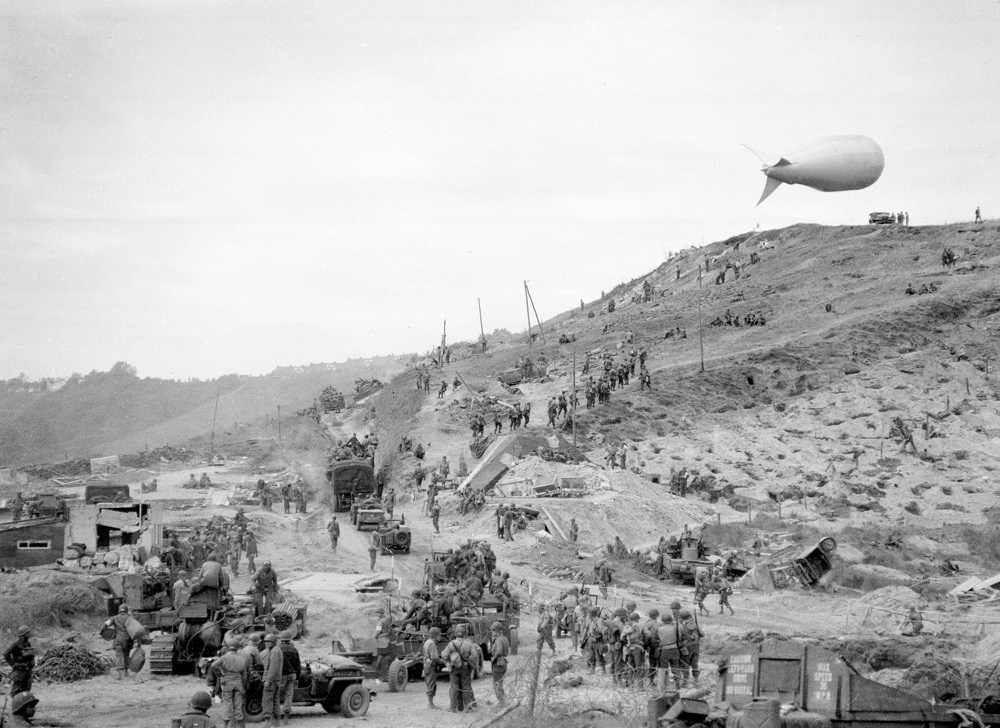
Each year in early June, we observe the anniversary of the Normandy invasion of World War II, commonly called D-Day. By the way, the “D” simply stands for whatever day a military assault is planned. For example, D-3 meant three days before a D-Day, while D+7 meant seven days after a D-Day. On June 6, 1944, America and its allies engaged in one of the most significant military operations of the 20th century.
I have personally suffered loss from war and have a deep appreciation for the service and sacrifice that men and women give to protect our country. My mother’s youngest brother, Kenny Maye, was killed in Korea, and I have his dog tags, casket flag and a rare picture of him. He was only 20 years old in 1950. Sadly, his existence is nearly unknown, and I often wonder about the life he could have had. For everyone who has sacrificed for this great nation, thank you for your service.
I live a couple of miles from a national military cemetery. From the highway, you can see many of the more than 12,000 perfectly lined white marble tombstones. I admit I’ve often driven past hardly thinking about how each of these individuals at one time or another accepted the call of duty. And what is that call? To defend and protect our freedom whatever the cost.
These brave soldiers were willing to give their life for their country. I cannot help but wonder how many of us have convictions that strong. The First Amendment was not only signed into existence with ink but with the blood of over 1.1 million Americans who have died in U.S. wars. Even more have suffered from physical and mental difficulties. The privilege and freedom we have to share what is on our mind are liberties that have come at a great price. We should always remember the cost of this blessing.
As a volunteer chaplain for a veterans health-care facility, I have the opportunity and honor to sit and talk with many fine men and women who have served in our nation’s military. The World War II veterans who are still alive are now in their 80s and 90s. I believe it’s important to not only record and preserve their amazing war stories but to sincerely listen and respect who they are as individuals.