
Thursday, October 29, 2026Oct 29

This story is free to read.

Panic attacks highlight stress at shelters for migrant kids

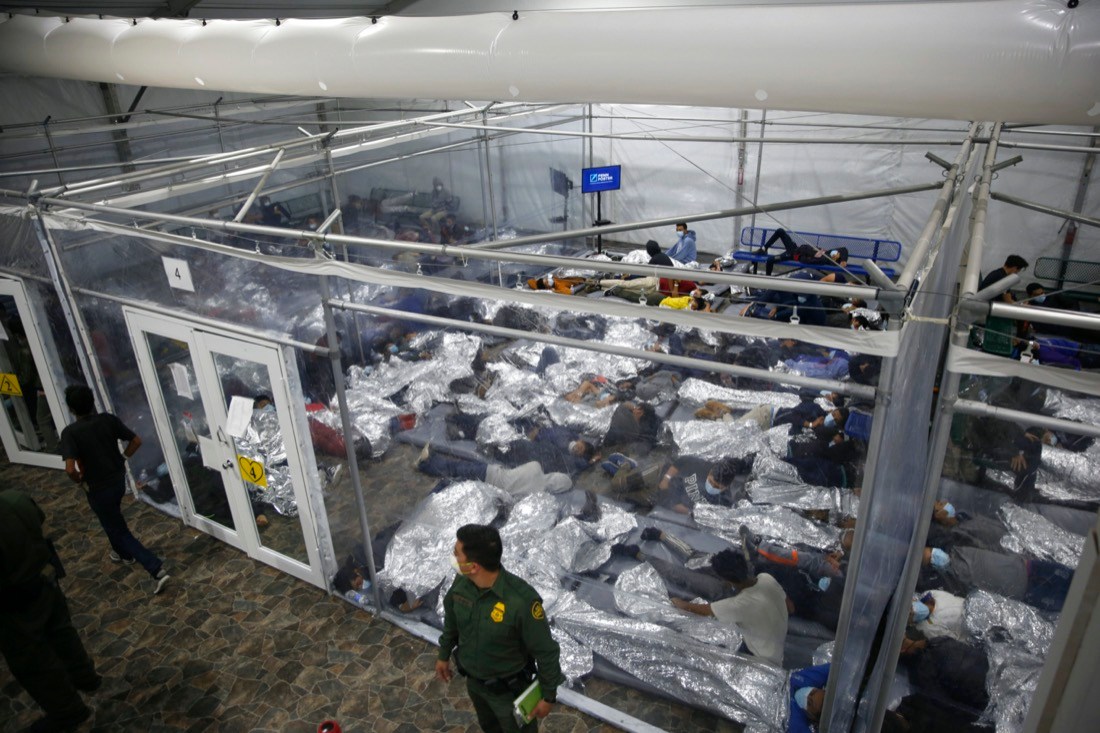
FILE - In this March 30, 2021, file photo, minors are shown inside a pod at the Donna Department of Homeland Security holding facility, the main detention center for unaccompanied children in the Rio Grande Valley run by U.S. Customs and Border Protection (CBP), in Donna, Texas. A federal volunteer at the Biden administration's largest shelter for unaccompanied immigrant children says paramedics were called regularly during her the two weeks she worked there. She said panic attacks would occur often after some of the children were taken away to be reunited with their families, dashing the hopes of those left behind. The conditions described by the volunteer highlight the stress of children who cross the U.S.-Mexico border alone and now find themselves held at unlicensed mass-scale facilities waiting to reunite with relatives. (AP Photo/Dario Lopez-Mills, Pool,File)
FILE - In this March 30, 2021, file photo, minors are shown inside a pod at the Donna Department of Homeland Security holding facility, the main detention center for unaccompanied children in the Rio Grande Valley run by U.S. Customs and Border Protection (CBP), in Donna, Texas. A federal volunteer at the Biden administration's largest shelter for unaccompanied immigrant children says paramedics were called regularly during her the two weeks she worked there. She said panic attacks would occur often after some of the children were taken away to be reunited with their families, dashing the hopes of those left behind. The conditions described by the volunteer highlight the stress of children who cross the U.S.-Mexico border alone and now find themselves held at unlicensed mass-scale facilities waiting to reunite with relatives. (AP Photo/Dario Lopez-Mills, Pool,File) FILE - In this March 30, 2021, file photo, minors are shown inside a pod at the Donna Department of Homeland Security holding facility, the main detention center for unaccompanied children in the Rio Grande Valley run by U.S. Customs and Border Protection (CBP), in Donna, Texas. A federal volunteer at the Biden administration's largest shelter for unaccompanied immigrant children says paramedics were called regularly during her the two weeks she worked there. She said panic attacks would occur often after some of the children were taken away to be reunited with their families, dashing the hopes of those left behind. The conditions described by the volunteer highlight the stress of children who cross the U.S.-Mexico border alone and now find themselves held at unlicensed mass-scale facilities waiting to reunite with relatives. (AP Photo/Dario Lopez-Mills, Pool,File)

Associated Press (AP) – Paramedics were called regularly to treat children suffering from panic attacks so severe their hands would constrict into balls and their bodies would shake. The outbursts often occurred after other children were taken away to be reunited with families, dashing the hopes of those left behind at the largest emergency shelter set up by the Biden administration to hold minors who had crossed the U.S.-Mexico border alone.

The conditions described by a federal volunteer who spent two weeks in May at the shelter at Fort Bliss Army Base in El Paso, Texas, highlight the desperation and stress of thousands of children held at unlicensed facilities, waiting to reunite with relatives.

Some had marks on their arms indicating self-harm, and federal volunteers were ordered to keep out scissors, pencils or even toothbrushes that could be used as a weapon. While girls made origami and braided friendship bracelets, a large number of the children spent the day sleeping, the volunteer said. Some had been there nearly two months.

The volunteer spoke on condition of anonymity because she was not authorized to talk publicly about what she witnessed on the base from May 12 to May 25. She said she was compelled to speak out because of the despair she observed. Much of what she described mirrored what advocates who visited the shelter recently recounted to The Associated Press and what children there told them.

The conditions raise concerns about why it is taking more than a month on average to release the children when most have family in the United States. More staffing has been added since the emergency shelters were opened this spring amid an unprecedented arrival of migrant children, and the flows have subsided.