
PORTLAND, Ore. (AP) – The smell of fresh empanadas wafted through the stands at Portland’s Saturday Market. People talked through their masks with artists as others sifted through fork windchimes, crystal necklaces, tie dye dresses and clay mugs.
The weekly event was smaller than in years past, but longtime attendees say it was a sign of life being breathed back into downtown.
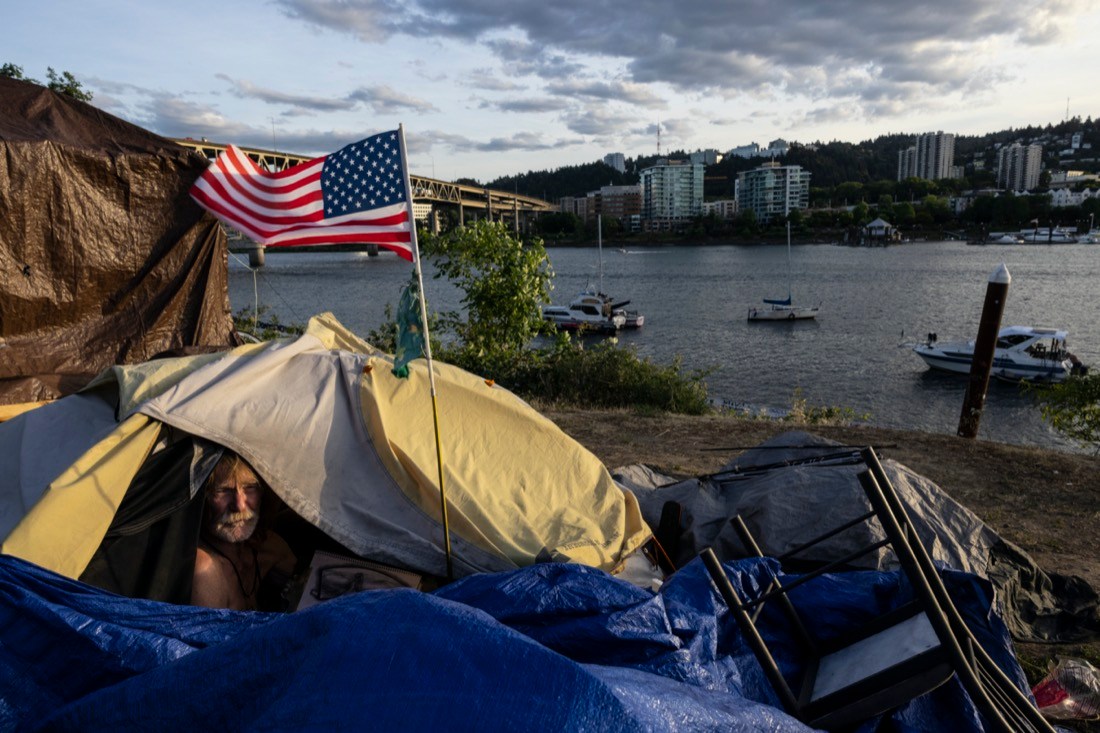
Nine blocks away, past businesses still shuttered with plywood boards – the names of Black people killed by police painted onto them – a panhandler leaned against a fence outside the federal courthouse in an area that was choked with tear gas last summer as thousands of protesters seized the streets. It’s now overwhelmed by a makeshift homeless camp.
The scenes are from a city trying to emerge from one of its most wrenching periods, one that saw its reputation go from quirky “Portlandia” to violent dystopia in the minds of many on the outside looking in.
The Pacific Northwest city had best been known nationally for its ambrosial food scene, craft breweries and nature-loving hipsters.