
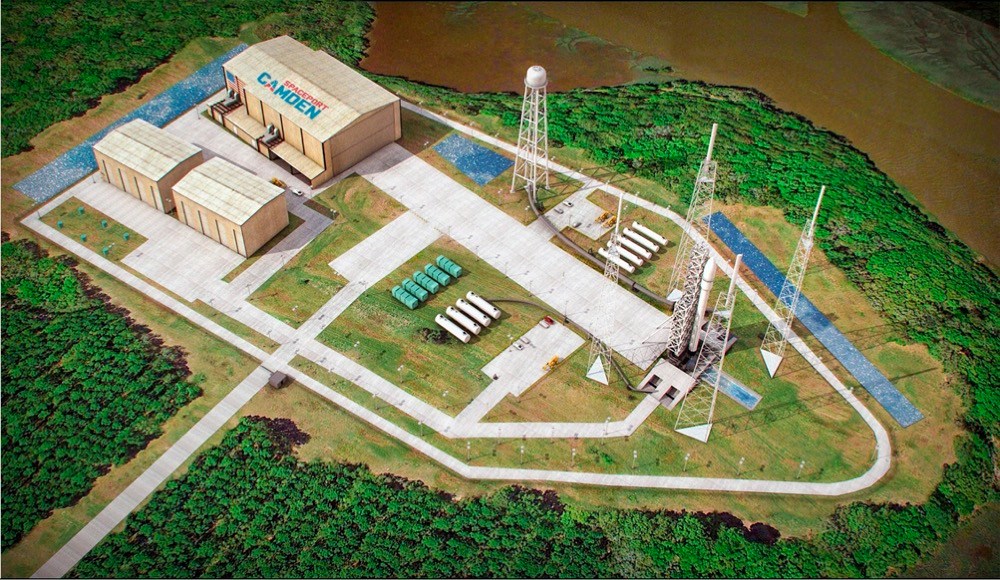
SAVANNAH, Ga. (AP) – After nine years of planning and $10 million invested by local taxpayers, county officials in Georgia’s coastal southeast corner came a big step closer Thursday to winning federal approval of a project engineered to literally inject the local economy with rocket fuel.
Since 2012, Camden County on the Georgia-Florida line has doggedly pursued plans to build and operate the 13th licensed U.S. commercial rocket launch pad for blasting satellites into orbit. It’s been a bumpy ride, with critics concerned that explosive misfires might threaten a protected barrier island popular with campers and possibly a Navy base entrusted with nuclear weapons.
The project came closer to fruition Thursday, when the Federal Aviation Administration issued its final study on Spaceport Camden’s environmental impacts. The agency concluded that building the spaceport was its “preferred alternative,” as opposed to scrapping the project. That paves the way for a final decision in July on its license to operate a launch site.
Even if approved, there’s no guarantee the project will fire its first rocket anytime soon. Despite increased demand for commercial launches in the past decade, more than half of licensed U.S. spaceports have never held a licensed launch.
Regardless, Steve Howard, Camden County’s government administrator, insists the community of 55,000 is seizing a “once-in-a-generation opportunity” not only to join the commercial space race, but to lure supporting industries and tourists.