
(Editor’s note: First in a Women’s History Month series)
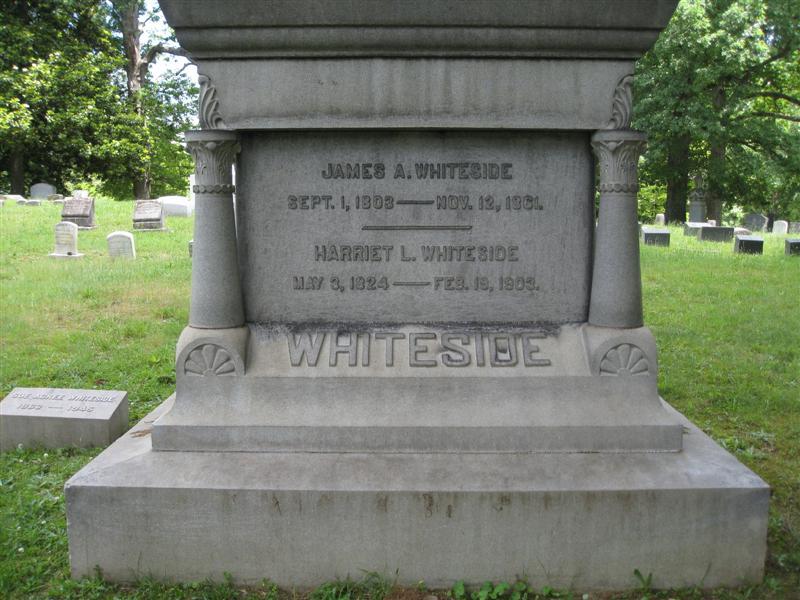
A casual search of regional history often discloses the Whiteside name. James Anderson Whiteside, the grandson of Irish immigrants, was reared in Overton and Bledsoe counties, educated in White County, gained a certain fame as an attorney in Davidson County and, by 1838, had moved to Chattanooga Valley with his first wife and five children.
He quickly became a leading citizen with extensive investments in Lookout Mountain land holdings and area business endeavors, including the critical element for Chattanooga’s success, the railroads. In 1844, Whiteside, now a widower, married a second time. Land records reveal references to his homes, a wagon road from Chattanooga Valley to the summit of Lookout Mountain named the Whiteside Pike and the Lookout Mountain Hotel. While amassing his financial empire, James Whiteside also served in the Tennessee legislature, donated land for St. Paul’s Episcopal Church, and later served as vice president of the Chattanooga and St. Louis Railroad. His death in 1861 threatened the Whiteside empire, but into the void stepped his widow.
In the decades between 1861 and her death in 1903, Harriet Lenora Straw Whiteside established herself as a leading citizen of the region and was heralded as the most successful and wealthiest woman in Tennessee.
The Chattanooga News announcement of her death [Feb. 21] and subsequent articles over the next week paid tribute to the late Mrs. Whiteside. “In her death, one of the finest brains and one of the ablest minds which has aided and assisted in the development of Chattanooga has gone to rest” was followed by “All who know anything about it can testify that she has never lost her grip on the mountain to which the mountain is indebted for the present prospect of making the Inn a center of business and of culture, refinement, health and pleasure.”