
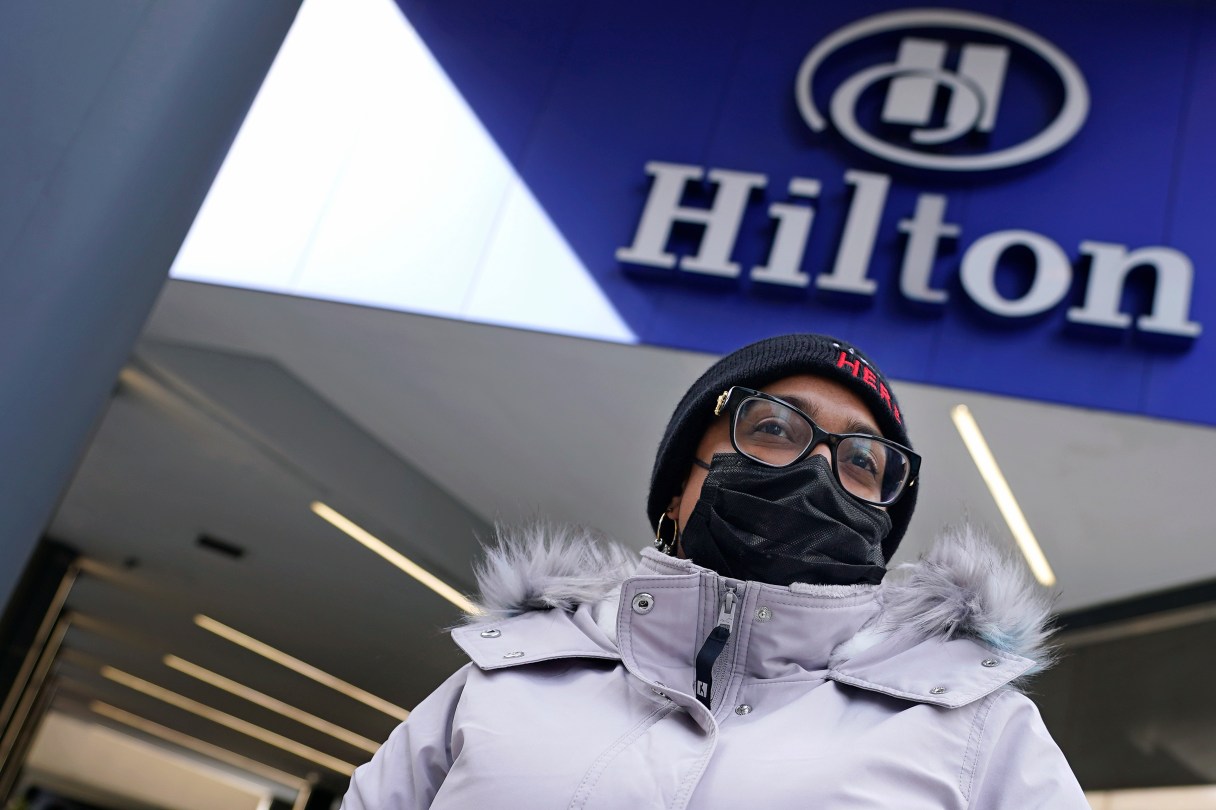
Esther Montanez’s house cleaning job at the Hilton Back Bay in Boston was a lifeline for her, a 31-year-old single mother with a 5-year-old son.
The pay was steady and solid – enough to pay her bills and still have money left over to sock away for a savings account for her child. Montanez liked her co-workers and felt pride in her work.
But when the viral pandemic slammed violently into the U.S. economy a year ago, igniting a devastating recession, it swept away her job, along with many tens of millions of others. Since then, in desperation, Montanez has siphoned away money from her son’s savings to help meet expenses. At Christmas, she turned to charities to provide presents for him. For now, she’s getting by on unemployment aid and, for the first time, has applied for food stamps.
“The truth is, I want my job back,” said Montanez, who has banded with her former colleagues and worked through their union to press the hotel to reinstate their jobs.
Getting it back could prove a struggle for her, along with millions of other unemployed people around the world. Even as viral vaccines increasingly promise a return to something close to normal life, the coronavirus seems sure to leave permanent scars on the job market. At least 30% of the U.S. jobs lost to the pandemic aren’t expected to come back – a sizable proportion of them at employers that require face-to-face contact with consumers: Hotels, restaurants, retailers, entertainment venues. United Here, Montanez’s union, says 75% of the 300,000 hospitality workers it represents remain out of work.