
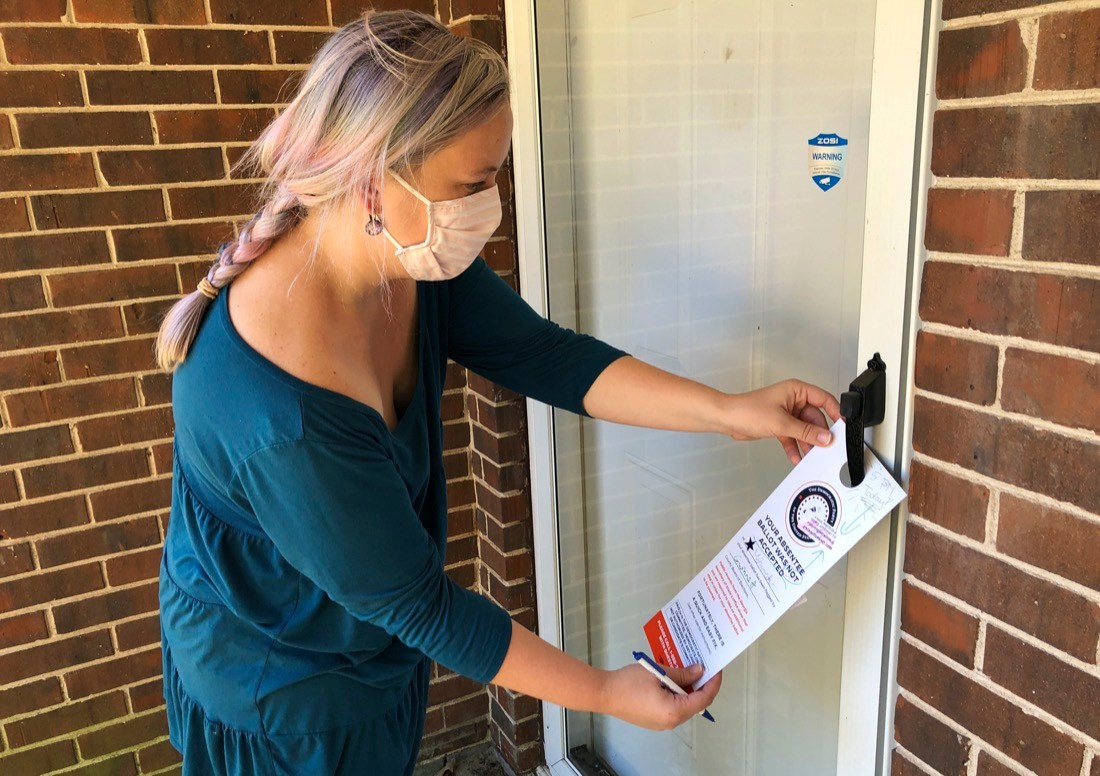
ATLANTA (AP) – The coronavirus pandemic triggered an unprecedented surge in mailed ballots last year, raising concerns that a flood of first-time absentee voters would lead to another record: more ballots tossed out for missing deadlines, signatures or other reasons.
Those fears never materialized. An analysis by The Associated Press found that the rate of rejected ballots was actually lower in November than during last year’s primaries in several politically pivotal states despite an increase in the number of absentee ballots cast.
In one of the most striking instances, Wisconsin saw both a decline in rejection rate and the overall number of ballots tossed out. During the state’s chaotic primary at the start of the pandemic, Wisconsin rejected roughly 23,000 absentee ballots compared with about 4,000 ballots in November even as the number of absentee ballots rose from just shy of 1.2 million in the primary to nearly 2 million.
Election officials and voting experts attribute the declines to extensive voter education campaigns; work by volunteers to help find voters and fix ballot issues; and myriad efforts to make absentee voting easier, including new ways for people to track their ballots. Concerns about U.S. Postal Service delays also played a role, motivating voters to return ballots early or take advantage of a fleet of drop boxes that were deployed for the election.
Despite this success, Republican lawmakers in several states have invoked former President Donald Trump’s unfounded claims of election fraud to propose strict limits on absentee voting. For instance, a GOP push in Georgia would eliminate no-excuse absentee voting, requiring people to give a reason.