
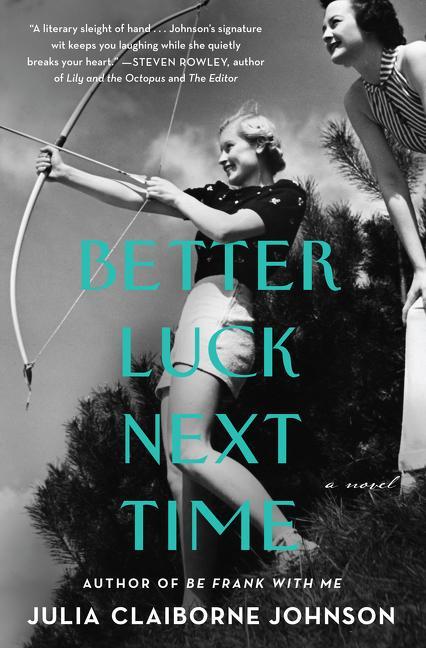
“BETTER LUCK NEXT TIME” by Julia Claiborne Johnson (Custom House, 288 pages, $29).
Midway through Julia Claiborne Johnson’s second novel, “Better Luck Next Time,” two women show up at a masquerade dance wearing costumes they have stolen from a local college production of “A Midsummer Night’s Dream.” One is dressed as a fairy, “a gossamer costume” with “glittery wings”; the other wears Bottom’s papier-mâché donkey’s head, “a string of pearls, and nothing else.” Both, it hardly bears mentioning, are intoxicated.
This tableau, naughtily comic and psychologically unsettling, offers an accurate snapshot of the novel, a work that invites comparisons to Shakespeare’s madcap comedies. Characters meet in exotic settings where they fall in love, undergo transformations and endure sudden reversals before returning to the real world. The key difference is that, whereas Shakespearean comedies end in weddings, Johnson’s characters are trying to get divorced.
“Better Luck Next Time” is set in 1938 at a “divorce ranch” in Reno, where unhappy wives can establish residence by staying in Nevada for six weeks, after which they can legally start their lives over. Johnson begins the story in 1988, when an unnamed interviewer tracks down Ward Bennett, a hand at the Flying Leap Dude Ranch 50 years earlier, and asks him about his experiences with two women, Emily Sommer and Nina O’Malley, who feature in a photograph the interviewer shows Ward (no costumes, no nudity – those come later).
After working at the Flying Leap, Ward fights in World War II and goes to medical school on the G.I. Bill. Now retired after decades of practice in his Tennessee hometown, Ward is pleased to talk about those long-ago weeks with Emily and Nina, who had a profound impact on his life. “I think I learned more about the subtleties of suffering and the milk of human kindness working on that ranch than I did in all the years that came after,” Ward says. Enraptured by his memories, he doesn’t inquire about the interviewer’s connection to the women. Johnson withholds that information until the very end, a revelation that causes Ward, and readers, to re-evaluate the entire story.