
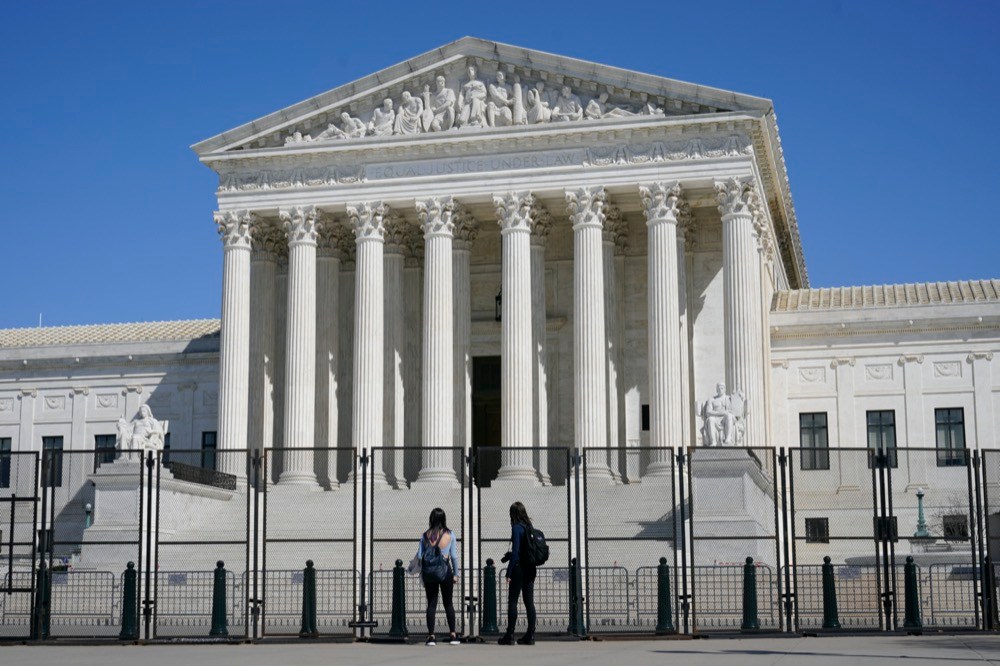
WASHINGTON (AP) – The Supreme Court is siding with a New Mexico woman who was shot by police as she drove away from them, in a case that will allow more excessive force lawsuits against police to go forward.
The justices ruled 5-3 on Thursday that Roxanne Torres’ suit could continue because she had been “seized” by police when she was shot, even though she fled. The five justices in the majority included the court’s three liberals and two of its conservative members.
“The question in this case is whether a seizure occurs when an officer shoots someone who temporarily eludes capture after the shooting. The answer is yes: The application of physical force to the body of a person with intent to restrain is a seizure, even if the force does not succeed in subduing the person,” Chief Justice John Roberts wrote in an 18-page opinion for himself, conservative Brett Kavanaugh and liberals Stephen Breyer, Sonia Sotomayor and Elena Kagan.
The decision does not end the case. Roberts wrote that the “Fourth Amendment does not forbid all or even most seizures – only unreasonable ones.” Lower courts will have to weigh in on the “reasonableness of the seizure, the damages caused by the seizure, and the officers’ entitlement to qualified immunity,” which could also end the case in the officers’ favor.
When the case was argued in October, the Trump administration had urged the justices to side with Torres and send the case back to lower courts.