
Tuesday, November 10, 2026Nov 10

Researchers release endangered snakes in Louisiana forest

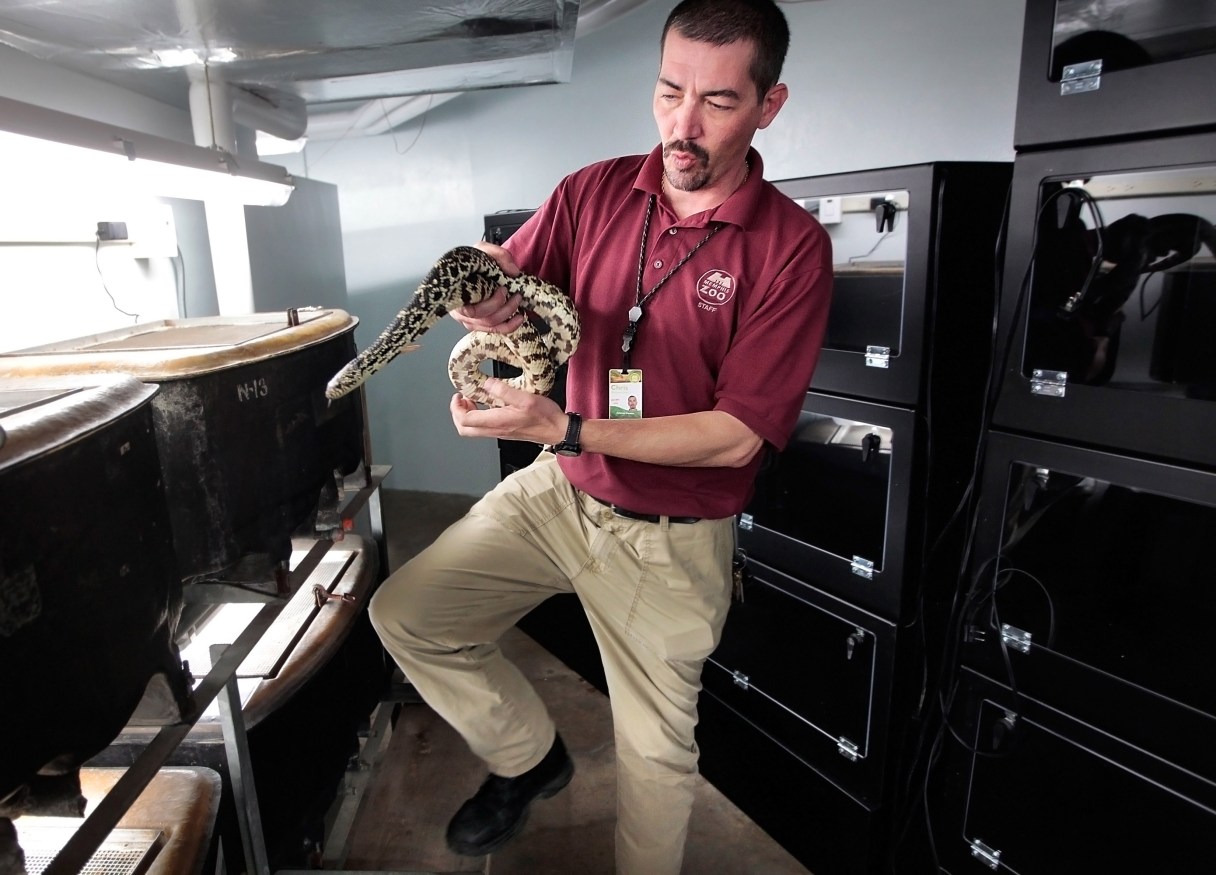
This photo taken March 1, 2016, shows assistant Herpetarium Curator Chris Baker unwinding a Louisiana Pine Snake from it's enclosure at the Memphis Zoo. The Zoo has reopened it's Herpetarium after a two month renovation to improve lighting, animal enclosures, and install new digital information screens about the animals. (Jim Weber/The Commercial Appeal via AP) MANDATORY CREDIT
This photo taken March 1, 2016, shows assistant Herpetarium Curator Chris Baker unwinding a Louisiana Pine Snake from it's enclosure at the Memphis Zoo. The Zoo has reopened it's Herpetarium after a two month renovation to improve lighting, animal enclosures, and install new digital information screens about the animals. (Jim Weber/The Commercial Appeal via AP) MANDATORY CREDIT This photo taken March 1, 2016, shows assistant Herpetarium Curator Chris Baker unwinding a Louisiana Pine Snake from it's enclosure at the Memphis Zoo. The Zoo has reopened it's Herpetarium after a two month renovation to improve lighting, animal enclosures, and install new digital information screens about the animals. (Jim Weber/The Commercial Appeal via AP) MANDATORY CREDIT

MEMPHIS, Tenn. (AP) — Researchers with the Memphis Zoo have released 50 endangered Louisiana pine snakes into a national forest in an attempt to revive their population.

On April 22 — Earth Day — the Memphis Zoo’s research team and partners from the U.S. Fish and Wildlife Service, the U.S. Forest Service, and zoos in Fort Worth, Texas, and Alexandria, Louisiana, released the young pine snakes into their natural habitat in Kisatchie National Forest.

The juvenile snakes were safely placed into tunnels where pocket gophers live in the Louisiana forest, the Memphis Zoo said. The snakes’ main prey is pocket gophers. Researchers hope the snakes will breed effectively, helping increase the species’ population in the wild.

The Louisiana pine snake is native to the longleaf pine forests of Louisiana and Texas. Since 2010, Memphis Zoo research director Steve Reichling has led captive breeding programs that involve artificial insemination as well as natural breeding, the Memphis Zoo said.