
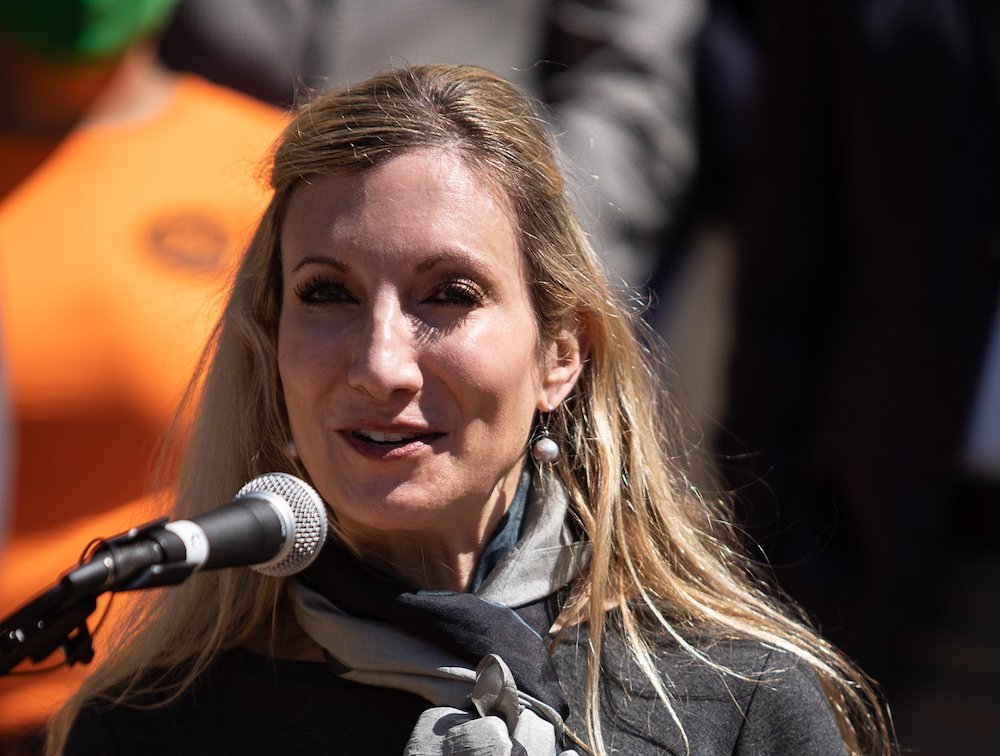
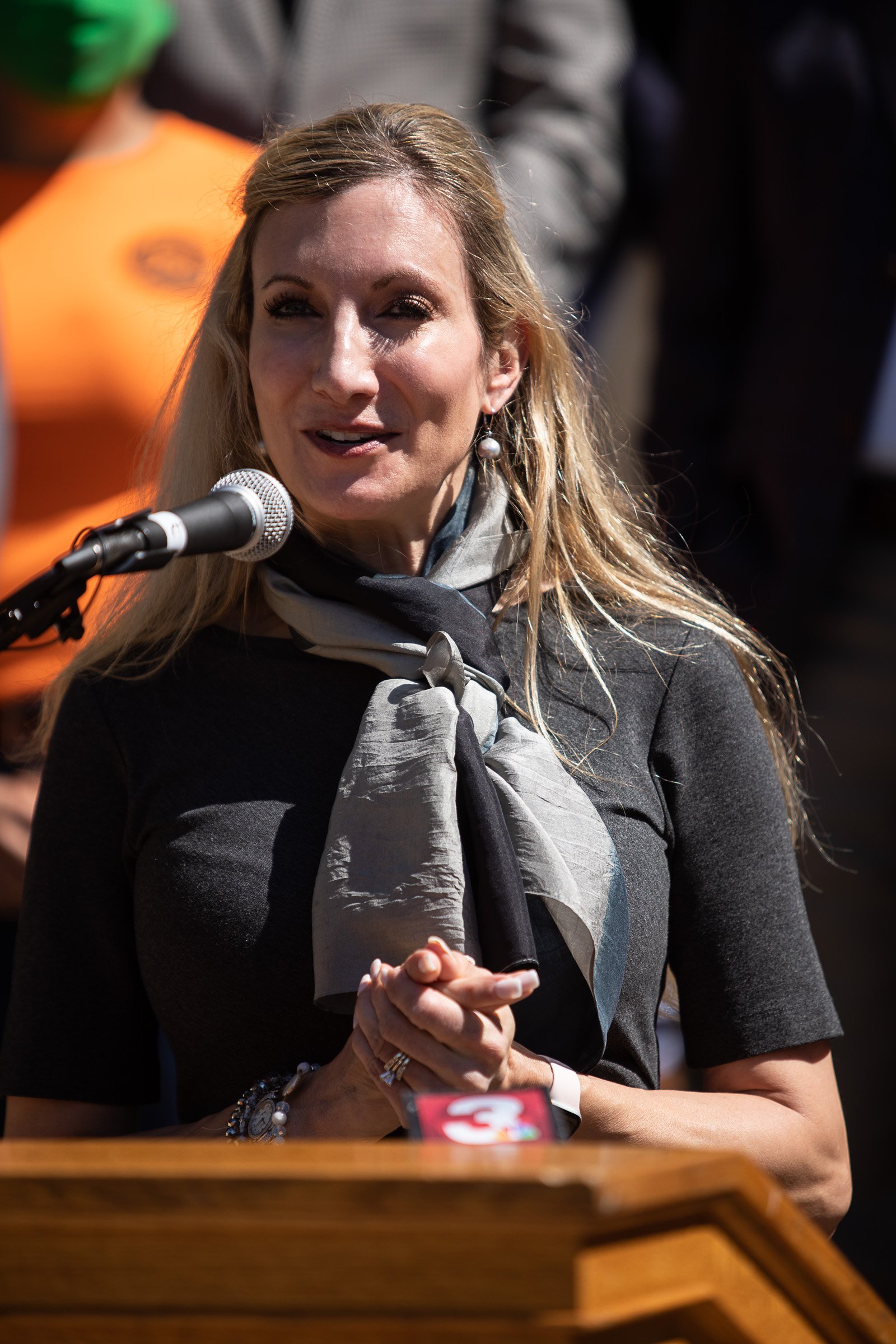
 Staff photo by Troy Stolt / Christy Gillenwater, president and CEO of the Chattanooga Chamber, speaks during a news conference to announce an initiative to increase diversity in Chattanooga’s businesses at City Hall on Thursday, May 6, 2021. Prominent Chattanooga business leaders, members of the Chamber of Commerce, faith leaders, and members of the city government attended the conference in support.
Our Tennessee state legislature has banned educators from teaching students about systemic racism in America’s history and culture. To make their point forcefully, lawmakers included this leverage: the state will be able to withhold funds from schools and districts that fail to comply.
And yet at nearly the same time, Chattanooga’s Chamber of Commerce took steps to promote the economic and racial equity that has been systemically limited. It is asking members to sign an equity pledge that has gained support from business CEOs, organization directors and diverse business leaders.
Was anyone surprised by the pushback to the chamber’s pledge from the conservative organization, Hamilton Flourishing, which argued that the goal of chambers of commerce is to recruit new businesses, not just help a few businesses and certainly not by radically changing our economy and culture.
This takes me back to when I first began my urban planning master’s degree at the University of Cincinnati in 1972. That’s when I was told that my economic development work with impoverished communities should focus on Appalachian-related areas, not Black neighborhoods. The white folks had a chance at getting out of poverty, but the Blacks were so entrenched in segregated areas that their fate was sealed.
A decade later, I completed my degree, at the University of Illinois at Chicago. By then, there was some movement in Chicago to address the economic and racial inequities that had been built into the city’s infrastructure. Social justice was touted, but policy changes were more likely made because inner city land was needed for expanding downtown. So residents in poor, all-Black public housing were relocated to suburban areas. When I visited one of these new suburban housing areas, I found that it was located away from the rest of the suburb and its malls, grocery stores and businesses. Hidden from view by thick rows of evergreen bushes, it was an economic wasteland.