
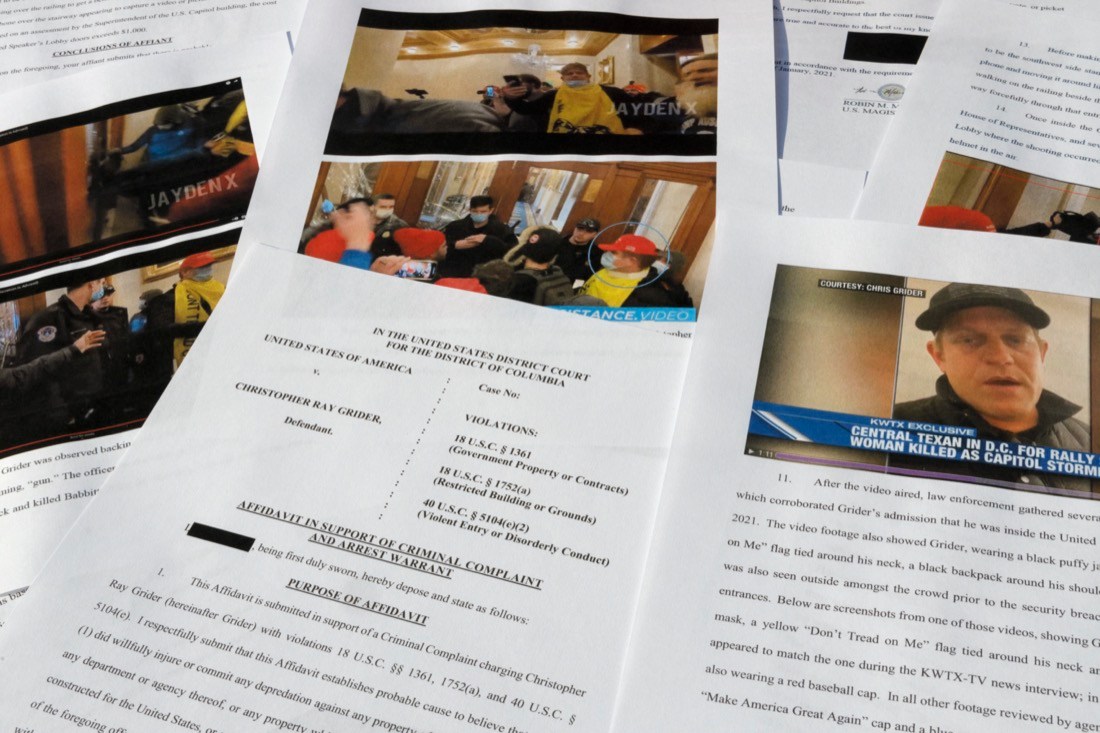
Christopher Grider said he came to Washington on Jan. 6 with no intention of rioting. But he got caught up in the mob of angry supporters of then-President Donald Trump as they surged into the U.S. Capitol, breaking through police barriers and smashing through doors.
It wasn’t his fault, he said, that he ended up inside the building with a yellow “Don’t Tread on Me” flag around his neck as lawmakers ran for their lives.
Grider, 39, a winery owner and former school teacher in Texas is among at least a dozen Capitol riot defendants identified by The Associated Press who have claimed their presence in the building was a result of being “caught up” in the hysteria of the crowd or that they were pushed inside by sheer force.
For some, blaming the mob is part of an attempt to restore reputations tarnished by their presence at an event of such infamy. Others may try to broach the issue at trial or at least during sentencing in bids for leniency.
Social scientists have long observed how individuals can act in ways they never would on their own when they are in crowds of like-minded people who are whipped into a frenzy.