
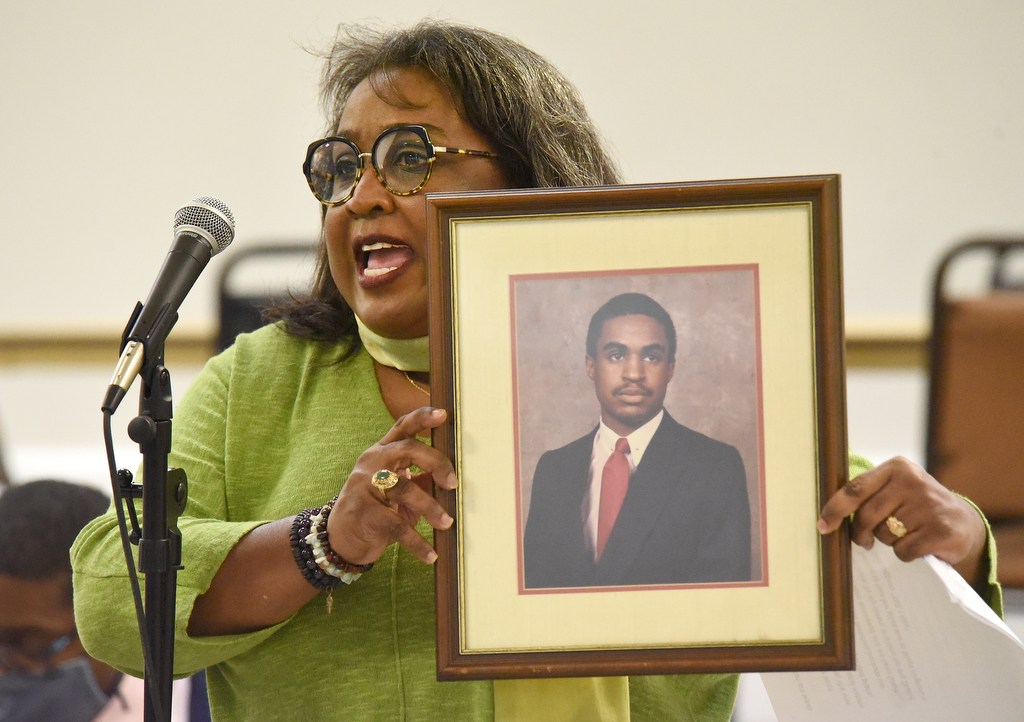
Chattanooga officials and some city residents took a big and needed step Tuesday by meeting to talk candidly about gun violence in our city.
Before the “Stop the Violence” community meeting began, Hamilton County Commissioner Warren Mackey, who hosted the event, said he understood no one individual has the solution for ending the gun violence. Still, he said, city and county leaders wanted to hear from the people and families most affected by the violence so they can work on systemic solutions that will result in less violence in the future. The meeting came in the wake of a string of shootings – including one on Grove Street that killed two women and injured five others. No one has been arrested in connection with those shootings.
Talk these folks did. And the word “systemic” was thrown around a lot.
Chattanooga Public Safety Coordinator Troy Rogers told the crowd at Olivet Baptist Church that he was tired of hosting community events on similar topics without seeing any follow-through. Like Mackey, he called for systemic changes that address the needs that lead many to commit acts of violence, such as a lack of access to education and a lack of mentors.
“Nobody is born bad. There is no kid that wakes up one morning and says, ‘I’m going to blow your brains out.'” Rogers said. “If a kid cannot read in elementary school, he’s going to prison. He’s going to struggle. If he grows up in a poverty house, that’s going to be hard for him. If he grows up without a father in his home, he’s going to have issues. Everybody sitting here with their mouth on the ground knows this is real. You can’t have a systematic issue, not do anything to change it and expect solutions.”