
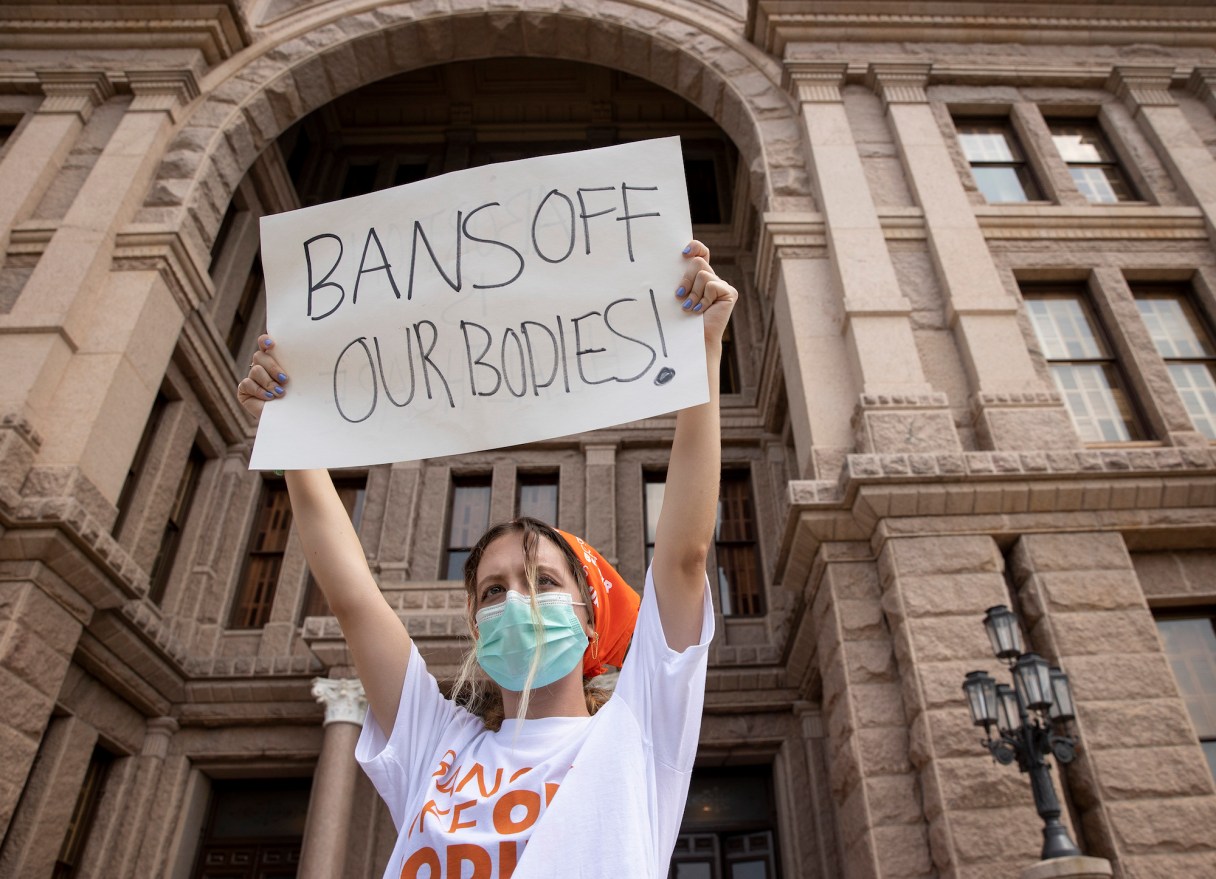
The threat posed by the Supreme Court’s refusal to block the Texas abortion law – which bans 85% to 90% of abortions performed in the state – goes far beyond reproductive rights. It opens the door to insidious copycat laws that could be used to attack other constitutional rights.
The Texas law bans abortions once a fetal heartbeat can be detected, around six weeks of pregnancy. Instead of requiring state prosecutors to enforce this clearly unconstitutional law, it gives private citizens the right to sue anyone who performs, aids or abets an abortion, or intends to do so, for a $10,000 payment from that party.
Because this law relies only on private civil lawsuits, a person targeted by this law (a clinic, a doctor, a person giving advice, a friend driving a woman to a clinic) cannot take the state or state officials to court to strike down the law. The state of Texas cannot be sued in federal or state court because it has sovereign immunity and it maintains that its officials cannot be sued because they are not involved in enforcing the law.
The bizarre twist in this devious law is that a doctor or other persons targeted can only challenge the law’s constitutionality as a defendant in a civil lawsuit. In other words, a courageous doctor or health professional would have to violate the six-week ban, be sued for money damages in Texas state court, and then argue as a defense that the law is unconstitutional. If a state judge rules in the defendant’s favor and strikes down the law, the case could then go up to the U.S. Supreme Court.
There is a huge risk in this strategy for doctors and health professionals. If the Supreme Court overrules Roe v. Wade – and its ruling last week suggests that five justices are willing to do so – then the Texas law would be upheld and the doctors would be liable to pay the money judgments. Not surprisingly, most reproductive health care facilities in Texas are complying with the unconstitutional law rather than face a wave of costly lawsuits.