
Tuesday, November 10, 2026Nov 10

Virus claims Black morticians, leaving holes in communities

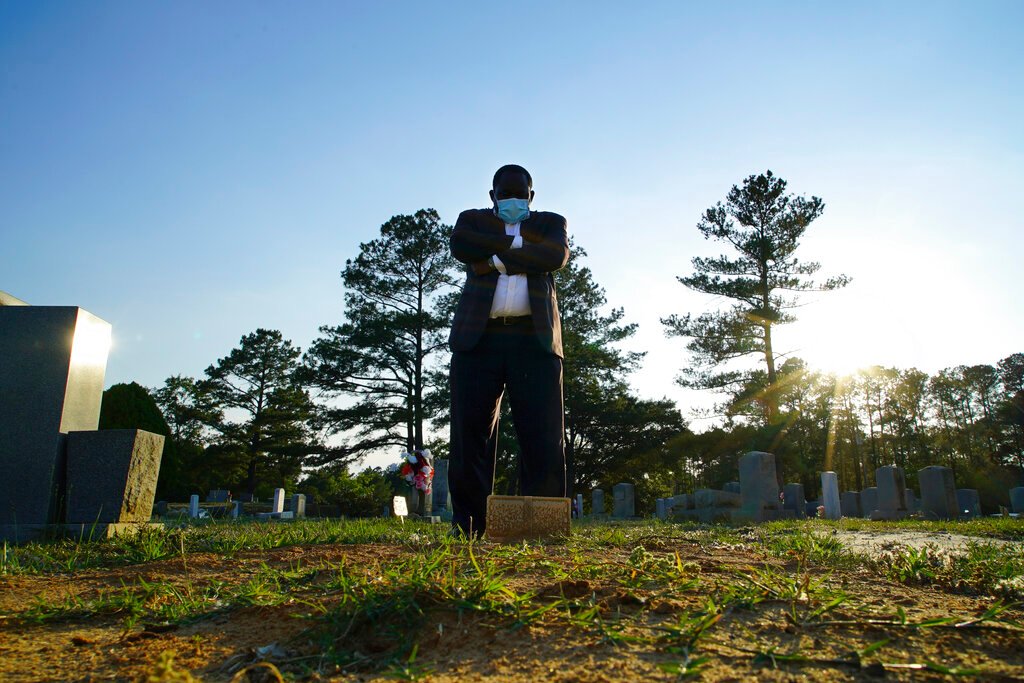
Mortician Shawn Troy stands at the grave of his father, William Penn Troy Sr., at Hillcrest Cemetery outside Mullins, S.C., on Sunday, May 23, 2021. The elder Troy, who developed the cemetery, died of COVID-19 in August 2020, one of many Black funeral directors to succumb during the pandemic. "I don't think I'll ever get over it," he said. "But I'll get through it." (AP Photo/Allen G. Breed)
Mortician Shawn Troy stands at the grave of his father, William Penn Troy Sr., at Hillcrest Cemetery outside Mullins, S.C., on Sunday, May 23, 2021. The elder Troy, who developed the cemetery, died of COVID-19 in August 2020, one of many Black funeral directors to succumb during the pandemic. "I don't think I'll ever get over it," he said. "But I'll get through it." (AP Photo/Allen G. Breed) Mortician Shawn Troy stands at the grave of his father, William Penn Troy Sr., at Hillcrest Cemetery outside Mullins, S.C., on Sunday, May 23, 2021. The elder Troy, who developed the cemetery, died of COVID-19 in August 2020, one of many Black funeral directors to succumb during the pandemic. "I don't think I'll ever get over it," he said. "But I'll get through it." (AP Photo/Allen G. Breed)

MULLINS, S.C. (AP) – When the last mourners departed and funeral director Shawn Troy was left among the headstones, he wept alone.

For five decades, the closing words at countless funerals in this town of 4,400 had been delivered by his father, William Penn Troy Sr. Now the elder Troy was gone, one of many Black morticians claimed by a pandemic that has taken an outsized toll on African Americans, after months of burying its victims.

And as Shawn Troy stepped forward to speak in place of a man well known beyond his trade — for his work in county politics and advocacy of its Black citizens — the emptiness felt overwhelming. Not just his family, but his community, had lost an anchor.

“I walked over to his grave and I could hear him talking to me,” Shawn Troy said, his own voice breaking as he recalled kneeling beside the plot last September, on a low rise near two palmetto trees. “And he said, ‘You got it. You can do it. This is what you were built for.’ He passed the baton on to me, so I’ve got to get running.”

He is hardly alone. Since the start of the pandemic, about 130 Black morticians have died from COVID-19, according to the association that represents them.