
Monday, November 9, 2026Nov 9

US Navy intends to decommission some of its newest warships

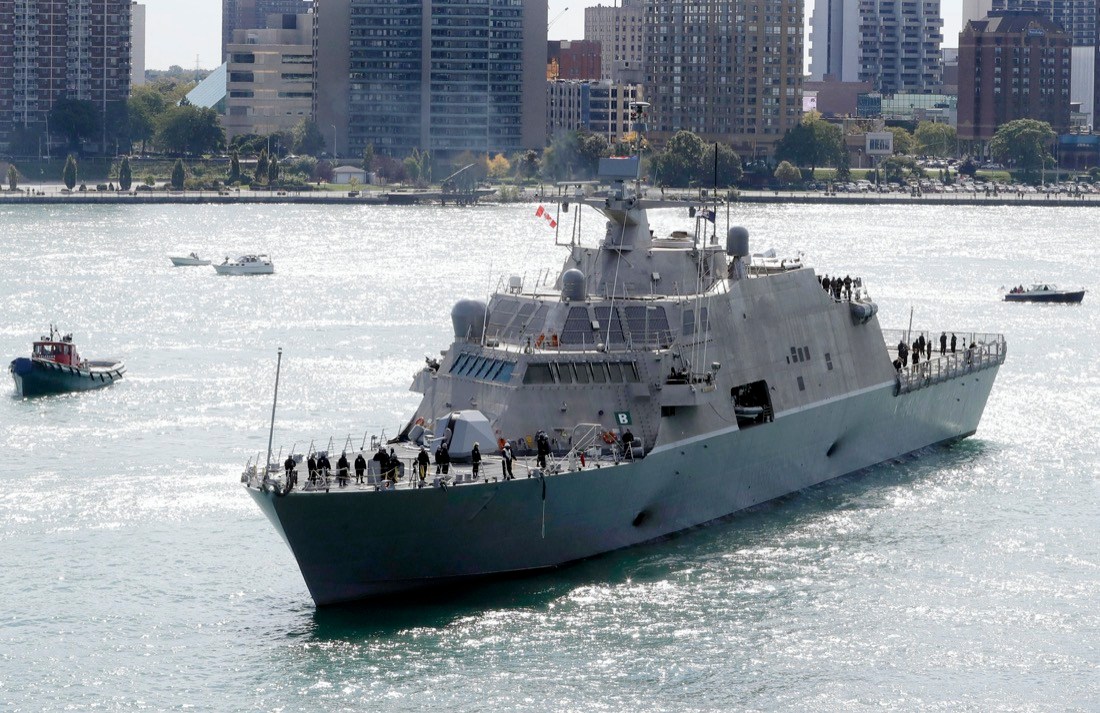
FILE - The USS Detroit, a Freedom-class of littoral combat ship, arrives Friday, Oct. 14, 2016, in Detroit. The Navy that once wanted smaller, speedy warships to chase down pirates has made a speedy pivot to Russia and China and many of those ships, like the USS Detroit, could be retired. The Navy wants to decommission nine ships in the Freedom-class, warships that cost about $4.5 billion to build. (AP Photo/Carlos Osorio, File)
FILE - The USS Detroit, a Freedom-class of littoral combat ship, arrives Friday, Oct. 14, 2016, in Detroit. The Navy that once wanted smaller, speedy warships to chase down pirates has made a speedy pivot to Russia and China and many of those ships, like the USS Detroit, could be retired. The Navy wants to decommission nine ships in the Freedom-class, warships that cost about $4.5 billion to build. (AP Photo/Carlos Osorio, File) FILE - The USS Detroit, a Freedom-class of littoral combat ship, arrives Friday, Oct. 14, 2016, in Detroit. The Navy that once wanted smaller, speedy warships to chase down pirates has made a speedy pivot to Russia and China and many of those ships, like the USS Detroit, could be retired. The Navy wants to decommission nine ships in the Freedom-class, warships that cost about $4.5 billion to build. (AP Photo/Carlos Osorio, File)

PORTLAND, Maine (AP) – The Navy that once wanted smaller, speedy warships to chase down pirates has made a speedy pivot to Russia and China – and many of those recently built ships could be retired.

The U.S. Navy wants to decommission nine ships in the Freedom-class of littoral combat ships – warships that cost about $4.5 billion altogether to build.

The Navy contends in its budget proposal that the move would free up $50 million per ship annually for other priorities. But it would also reduce the size of the fleet that’s already surpassed by China in sheer numbers, something that could cause members of Congress to balk.

Adm. Mike Gilday, chief of naval operations, defended the proposal that emphasizes long-range weapons and modern warships, while shedding other ships ill equipped to face current threats.

“We need a ready, capable, lethal force more than we need a bigger force that’s less ready, less lethal, and less capable,” he said Monday at the Navy League’s Sea-Air-Space symposium in Maryland.