
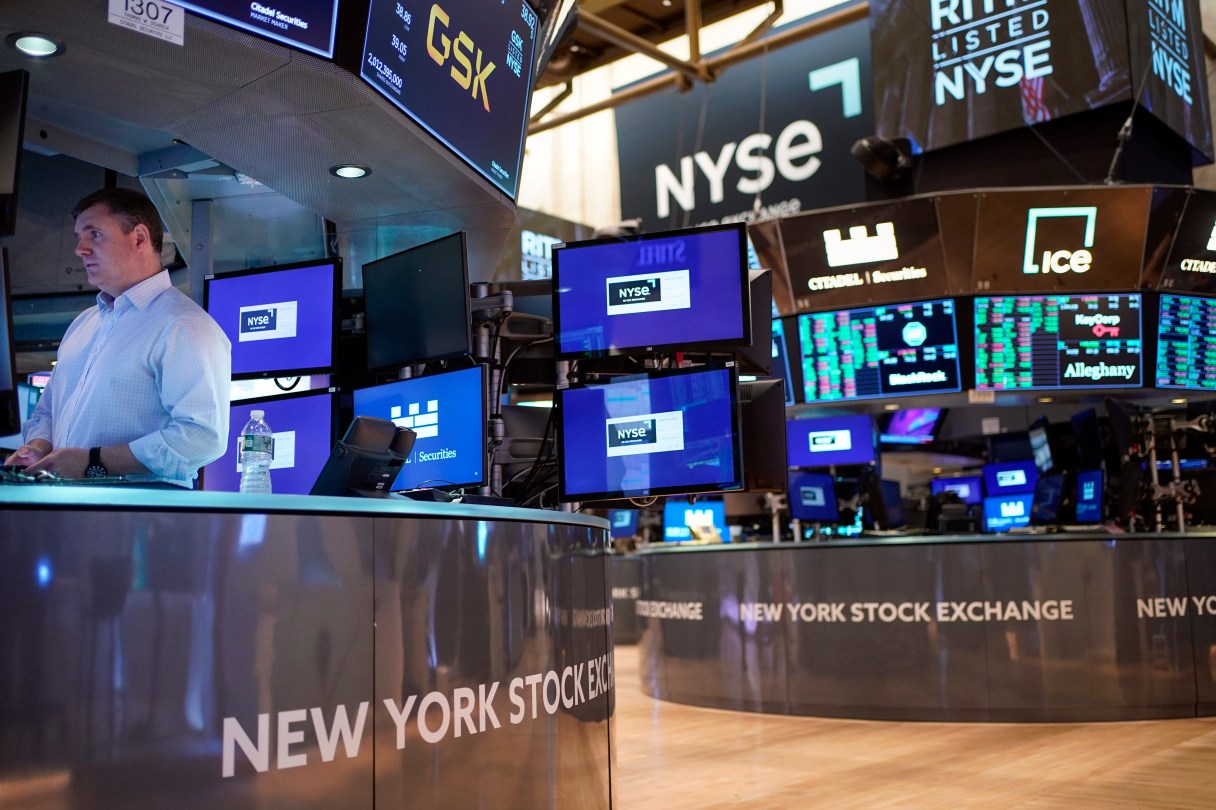
Stocks closed broadly lower on Wall Street Monday, adding to their hefty losses from last week when the Federal Reserve pledged to keep interest rates high as long as it takes to tame inflation.
The S&P 500 fell 0.7% after wavering between small gains and losses. The Dow Jones Industrial Average fell 0.6% and the Nasdaq composite lost 1%. Smaller company stocks also fell, pulling the Russell 2000 0.8% lower.
The selling was widespread, with technology and health care stocks among the biggest weights on the market. Only energy and utility stocks rose.
The market is coming off its worst weekly pullback since mid-June after Fed chief Jerome Powell indicated on Friday that the central bank will raise rates into next year and keep them elevated as it tries to quell demand and bring down prices for goods and services.
The open-endedness implied by how long the Fed may have to keep raising rates has, for now, quieted speculation on Wall Street that recent data showing more moderate inflation would prompt the central bank to act less aggressively.
“We’re in this period where you’re going to see volatility be more of the norm versus the exception and will probably continue until, frankly, inflation gets under control and that then sets the motion for the Fed to become a little bit more dovish,” said Terry Sandven, chief equity strategist at U.S. Bank Wealth Management.
The Fed’s last two hikes have been by 0.75 points, and Wall Street is expecting a third such increase in September, according to CME Group. Some investors had hoped that the Fed would ease up on rate hikes into next year if inflation subsides. That sentiment led to a rally for stocks in July and early August. All three major indexes are now lower this month.
On Monday, the S&P 500 fell 27.05 points to 4,030.61. The benchmark index fell 3.4% Friday, its biggest single-day drop since mid-June.
The Dow dropped 184.41 points to 32,098.99, while the Nasdaq slid 124.04 points to 12,017.67. The Russell 2000 gave up 16.89 points to 1,882.94.
Technology stocks, among the biggest decliners so far this year, led the way lower. Apple fell 1.4%.
The yield on the 10-year Treasury, which follows expectations for longer-term economic growth and inflation, rose to 3.11% from 3.03% late Friday. The yield on the two-year Treasury, which tends to track expectations for Fed action, rose to 3.43% from 3.38%.