
Tuesday, November 10, 2026Nov 10

Russian space capsule leak likely caused by micrometeorite

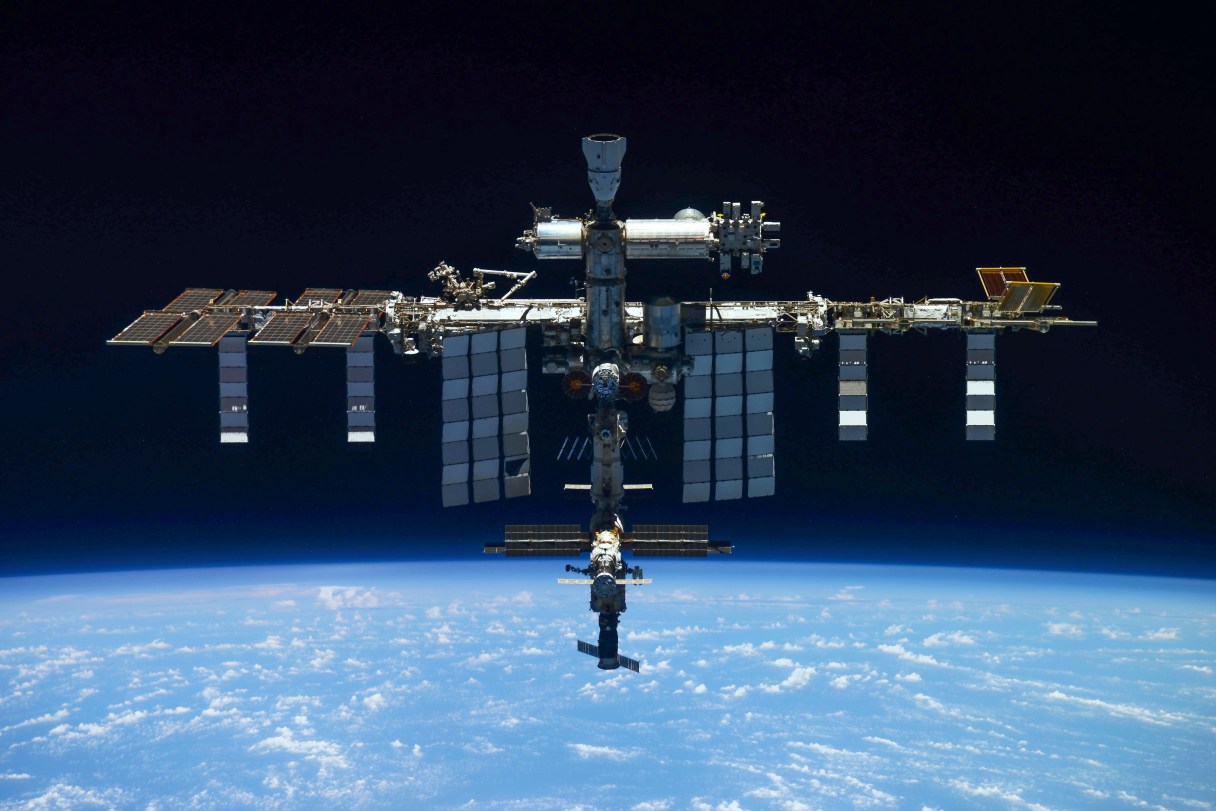
FILE - In this handout photo released by Roscosmos Space Agency Press Service, a view of the International Space Station taken on March 30, 2022 by crew of Russian Soyuz MS-19 space ship after undocking from the Station. NASA and Russia's space agency canceled a spacewalk by two Russian cosmonauts, Sergey Prokopyev and Dmitri Petelin, just as they were preparing to exit the International Space Station late Wednesday, Dec. 14 because of an apparent coolant leak from an attached space capsule. (Roscosmos Space Agency Press Service via AP, File)
FILE - In this handout photo released by Roscosmos Space Agency Press Service, a view of the International Space Station taken on March 30, 2022 by crew of Russian Soyuz MS-19 space ship after undocking from the Station. NASA and Russia's space agency canceled a spacewalk by two Russian cosmonauts, Sergey Prokopyev and Dmitri Petelin, just as they were preparing to exit the International Space Station late Wednesday, Dec. 14 because of an apparent coolant leak from an attached space capsule. (Roscosmos Space Agency Press Service via AP, File) FILE - In this handout photo released by Roscosmos Space Agency Press Service, a view of the International Space Station taken on March 30, 2022 by crew of Russian Soyuz MS-19 space ship after undocking from the Station. NASA and Russia's space agency canceled a spacewalk by two Russian cosmonauts, Sergey Prokopyev and Dmitri Petelin, just as they were preparing to exit the International Space Station late Wednesday, Dec. 14 because of an apparent coolant leak from an attached space capsule. (Roscosmos Space Agency Press Service via AP, File)

MOSCOW (AP) — A coolant leak from a Russian space capsule attached to the International Space Station was likely caused by a micrometeorite strike, a Russian space official said Thursday.

Russia’s space corporation Roscosmos and NASA both have said that the incident hasn’t posed any danger to the station’s crew.

Sergei Krikalev, a veteran cosmonaut who serves as the director of crewed space flight programs at Roscosmos, said the coolant leak from the Soyuz MS-22 capsule could have been caused by a meteorite striking one of its radiators. Krikalev said in a statement that the malfunction could affect the capsule’s coolant system performance and the temperature in the equipment section of the capsule but doesn’t endanger the crew.

The coolant leak prompted a pair of Russian cosmonauts to abort a planned spacewalk earlier in the day.

Krikalev said Russian flight controllers were continuing to assess the situation and following temperature indicators on the Soyuz, but emphasized that “there have been no other changes in parameters on the Soyuz spacecraft and the station, so there is no threat for the crew.”