
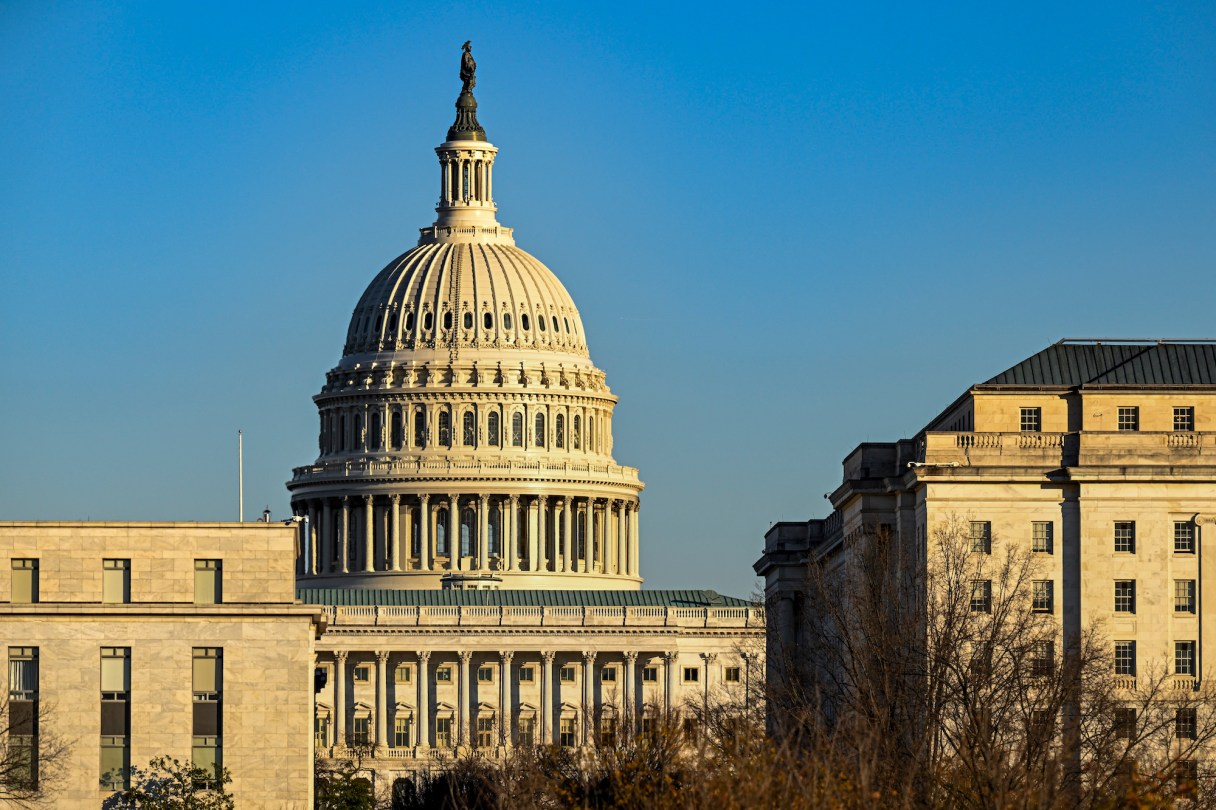
With the passage of a defense bill and an agreement on a spending package, the 117th Congress is wrapping up an extremely productive two years in office. This Congress, when Democrats held narrow margins in both houses, stands in sharp contrast to the last era of unified control of government, when Republicans controlled both chambers in 2017-2018. That era, remembered for late Sen. John McCain’s thumbs-down rejection of the repeal of part of the Affordable Care Act, ended with an extended government shutdown.
The difference this time? Preparation, pragmatism and professionalism.
Democrats were ready to act on consequential legislation when they took control of Congress and the White House two years ago in part because they had put in the time hashing out their party’s policy priorities during the long presidential nominating season.
Of course, very narrow margins meant that some ambitious ideas had to be scrapped. The votes just weren’t there. But on health care, climate, income inequality and more, a lot of the work had already been done.
Contrast that with the Republican presidential debates leading up to the 2016 primaries, notable mainly for personal attacks and unprecedented crudeness. Granted, that prepared the party for a presidency of personal attacks and crudeness. But not for public policy initiatives.