
Thursday, November 12, 2026Nov 12

Kazakhstan activists recall path from protest to bloodshed

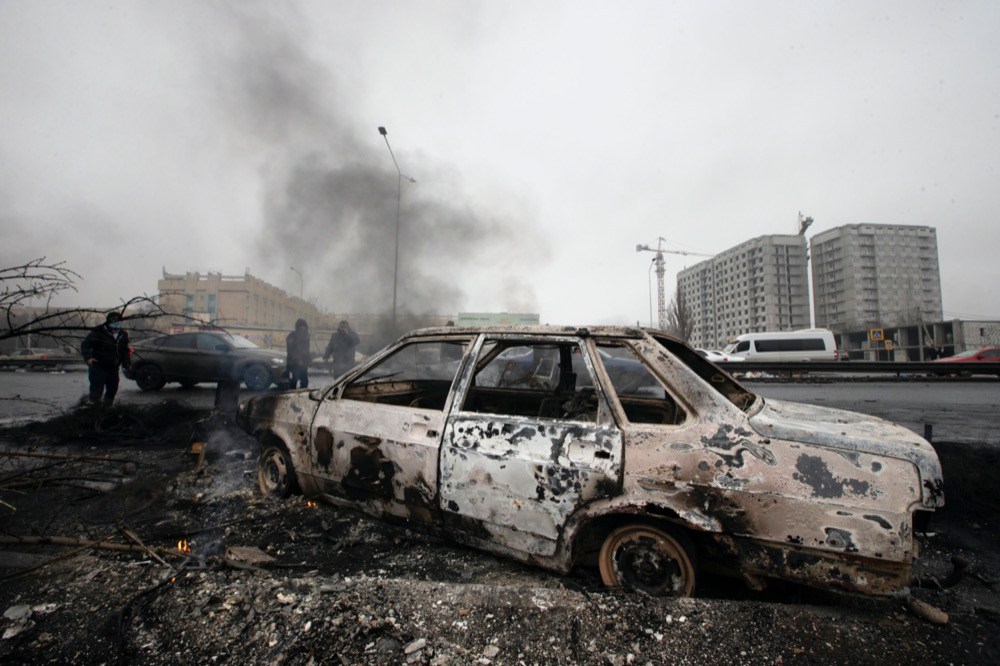
A car, which was burned after clashes, is seen on a street in Almaty, Kazakhstan, Friday, Jan. 7, 2022. The Central Asian nation this week experienced its worst street protests since gaining independence from the Soviet Union three decades ago, and dozens have been killed in the tumult. (AP Photo/Vasily Krestyaninov)
A car, which was burned after clashes, is seen on a street in Almaty, Kazakhstan, Friday, Jan. 7, 2022. The Central Asian nation this week experienced its worst street protests since gaining independence from the Soviet Union three decades ago, and dozens have been killed in the tumult. (AP Photo/Vasily Krestyaninov) A car, which was burned after clashes, is seen on a street in Almaty, Kazakhstan, Friday, Jan. 7, 2022. The Central Asian nation this week experienced its worst street protests since gaining independence from the Soviet Union three decades ago, and dozens have been killed in the tumult. (AP Photo/Vasily Krestyaninov)

ALMATY, Kazakhstan (AP) – The mass protests in Kazakhstan began peacefully over the New Year’s weekend, with marchers denouncing a sharp rise in fuel prices. They spread quickly from the western part of the Central Asian nation to more populous areas, eventually reaching its largest city of Almaty.

But something changed over the course of a week.

Groups of armed men appeared in Almaty, with some seen riding in cars without license plates or with their faces covered. Marchers at the peaceful protests say these men began urging them to storm government buildings, promising to give them guns.

Clashes with police soon broke out, and by the night of Jan. 5, Almaty was in chaos. City Hall was burning, as were cars and buses; stores were looted; and attempts were made to storm the presidential residence. Gunshots were heard in the streets, the internet was blacked out, and even the airport was briefly seized.

President Kassym-Jomart Tokayev has blamed the unrest on “terrorists” who received foreign training and support.