
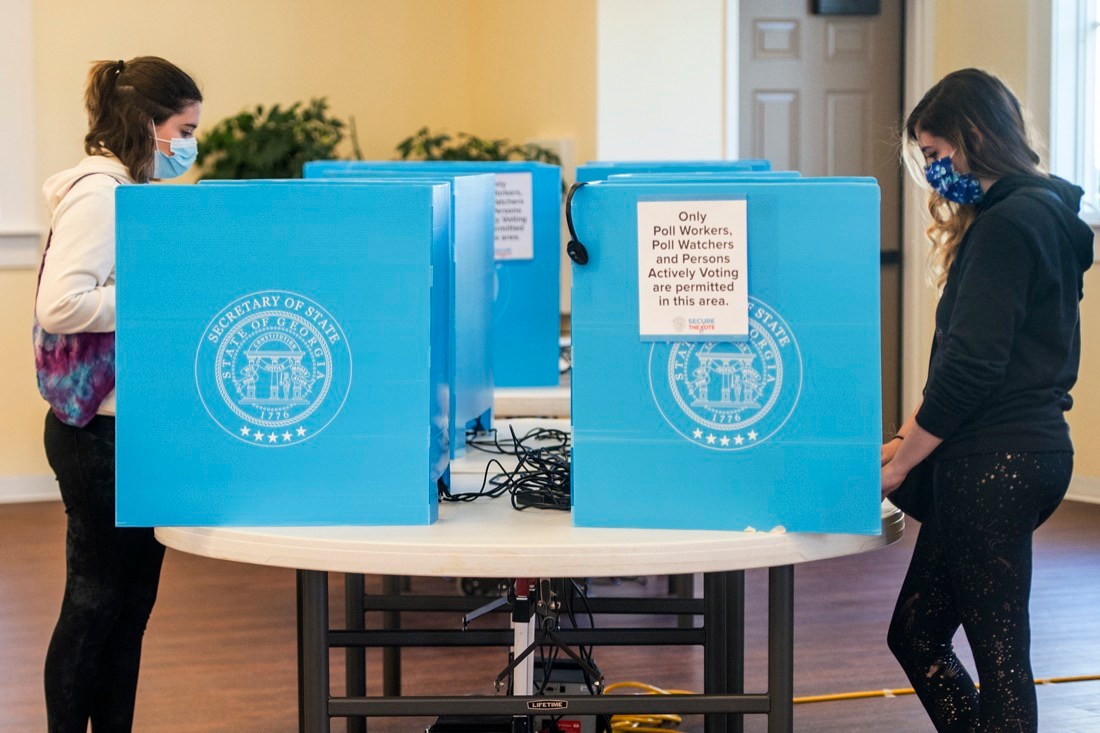
ATLANTA (AP) – Georgia’s secretary of state is buying a new voter registration system for the state’s 7 million voters, a move Republican Brad Raffensperger said Wednesday will enhance security and make it easier to retrieve data.
The state’s current system is nearly a decade old, and was blamed for slowdowns during the first few days of early in-person voting in the 2020 primary elections, when the system could not access data fast enough to handle a large volume of voters.
“This new system is more advanced, more secure, and more user friendly and will give our election directors and my office new tools to better manage our election efforts,” Raffensperger said.
Georgia’s election procedures have been a subject of contention in recent years, climaxing with intense criticism of Raffensperger by fellow Republicans who believe he did not do enough to overturn President Joe Biden’s victory in Georgia in 2020, followed by a restrictive new election law that knocked Raffensperger off the State Election Board.
Officials say the new system will cost less than $3.5 million, with funding split between leftover bond funds the state borrowed to buy new voting machines and federal money.