
I was just a kid when our family came to America from the British colony of Bermuda. We left behind loyalty to England’s combined church and empire, thanks to the American Revolution. I learned to sing “My Country, ‘Tis of Thee” to the same music of “God Save the Queen.” School prayer, a Church of England tradition, disappeared. Mom claimed that religious freedom rings true in this “sweet land of liberty.”
America moved away from the church and state merger in England with the clause in the First Amendment of the Bill of Rights that states “Congress shall make no law respecting an establishment of religion.” Even in our early history, America honored its religious diversity and freedom. I’m sure mom would protest if she were around to witness recent Supreme Court decisions related to religion.
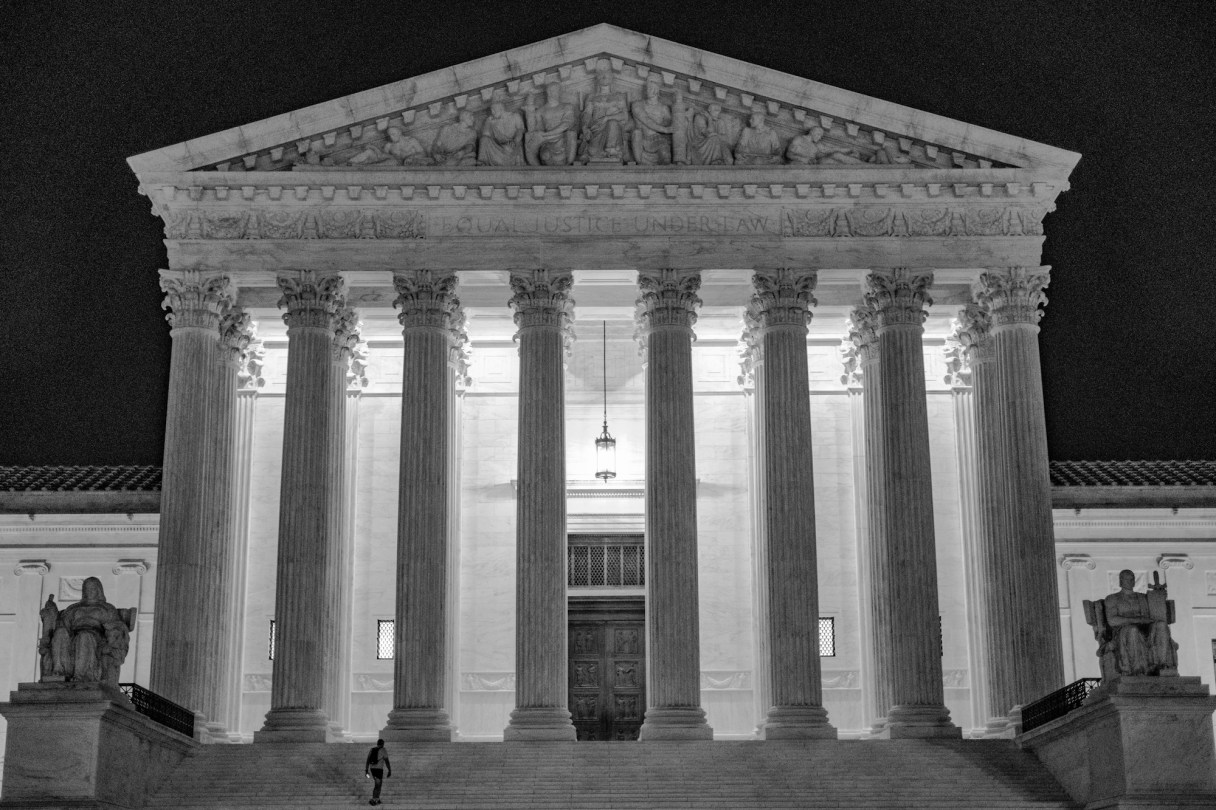
The Supreme Court opened the door to reinstating a state church by ruling that public school officials have a constitutional right to pray in schools as well as to lead students in prayer during school events. No wonder Rep. Lauren Boebert, R-Colo., felt she could get away with saying that she’s “tired” of the longstanding separation between church and state, adding that she believes “the church is supposed to direct the government.”
Let’s look at a pastoral response to the Supreme Court. Rev. Brandon Gilvin highlighted the dilemma that this ruling posed for students on a day-to-day basis. “What happens when that fellow faith traveler or guide is also the person who assigns you grades, helps decide whether you start or ride the bench, or signs your paycheck? The line between being “discipled” and being disciplined gets blurry – quick, even when intentions are good. Can you really decline your boss/teacher/coach’s invitation to pray without having to worry about reprisal?”
Teachers will also suffer. Florida’s new teacher training ignores President Thomas Jefferson’s declaration that when the American people adopted the establishment clause, they built a “wall of separation between the church and state.” Instead, Florida’s messy politics dismisses Jefferson, resulting in the infusion of religion into this training. Many teachers are uncomfortable with this new direction. A recently retired teacher remarked that church-state separation had been a gift to public schools.
Marrying messy politics and religion has often been disastrous. Ask yourself who said this and why: “The national government will maintain and defend the foundations on which the power of our nation rests. It will offer strong protection to Christianity as the very basis of our collective morality. We want to burn out all the recent immoral developments in literature, in the theatre and in the press; in short, we want to burn out the poison of immorality which has entered into our whole lives and culture as a result of liberal excess during the past years.”
That quote was from Adolph Hitler in 1933. He used religion to gain followers and grew a full-blown Nazi movement with their blessing. Politicizing religion signals a culture war ready to explode. Do we have to learn that history lesson again, the hard way? Putting public schools on the front line of these battles only adds fuel to the fire. It’s time to change direction or we’ll see a demonstration of Pastor Bill Bond’s quote from Will Rogers, “Mixing politics and religion is like mixing manure and ice cream. It doesn’t do much to the manure, but it surely does ruin the ice cream.”
Contact Deborah Levine, an author, trainer/coach and editor of the American Diversity Report, at deborah@diversityreport.com.