
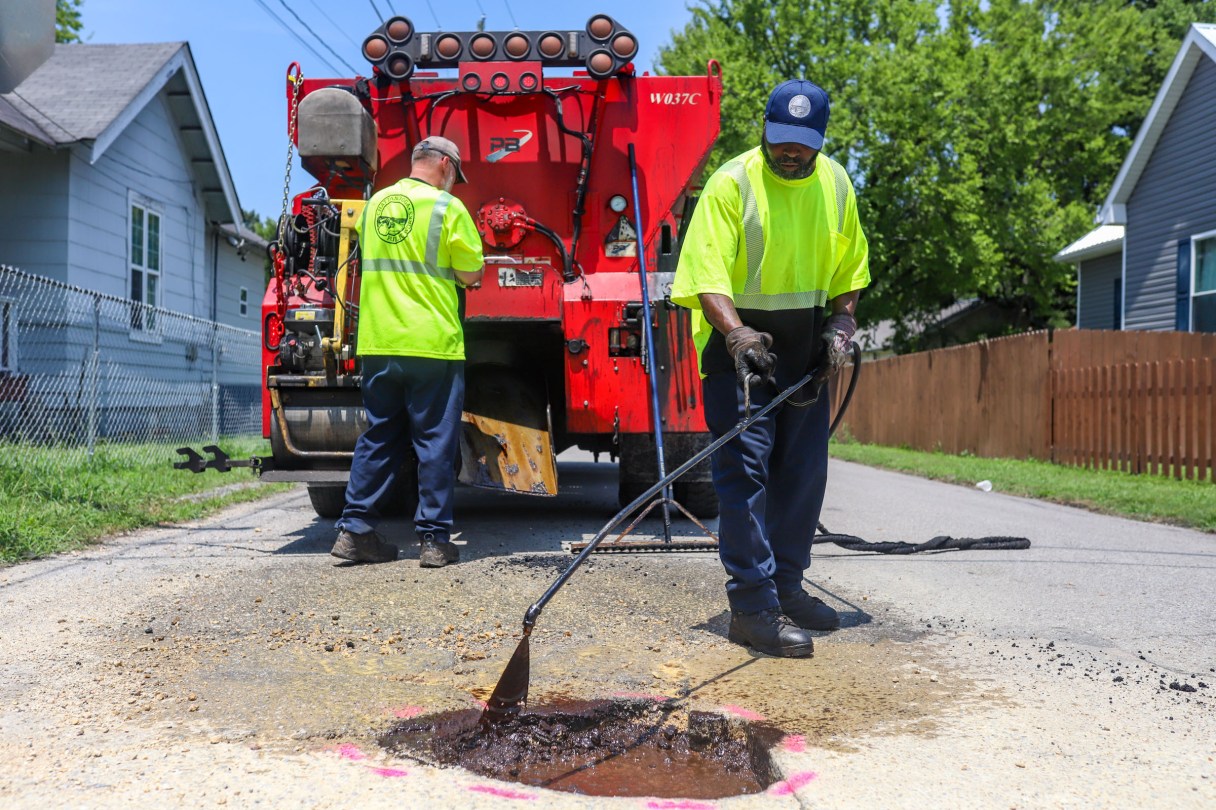
Touting a priority Mayor Tim Kelly made during his campaign and in his One Chattanooga plan, city officials have announced that as of June 20 they had filled 90% of the potholes identified on city streets.
That comes after inspectors examined conditions on 95% of Chattanooga’s roads. The city said it’s also creating work orders to address road problems beyond just potholes.
“We’ve always filled potholes, and we always will,” Ben Taylor, the city’s deputy administrator for transportation, said in a phone interview Friday.
The big change, he said, is how the city now goes about repairing them. Previously, the process was complaint-driven, meaning crews would go out as they heard about problems. It’s now more proactive, he said.
At the beginning of March, city crews started the process of reviewing streets with the goal of patching every pothole by fall, Taylor said. Since that time, workers have repaired 5,658 potholes and will continue to address issues as they occur.
The city’s fiscal year 2023 budget includes funding for a third pothole repair crew, two more inspectors and three utility inspectors to ensure street cuts are properly repaired. For the second straight year, the budget also allocates $10 million for repaving roads, which is part of a commitment from the mayor to invest $40 million in road repairs over four years.
Crews are applying a rejuvenator to paving projects that are about three or four years old, which is designed to restore and preserve the durability of asphalt. The city is also maintaining a list of streets to improve as they come up with more funding options.
Potholes are a recurring phenomenon and form when rainwater seeps into cracks caused by heavy traffic. When that water freezes, it expands and deepens those cracks, which are then made worse by passing vehicles.
Photo Gallery
Pothole patching
“They’re a daily situation,” Taylor said. “Enough that we’ve had two potholes crews and we’re constantly fielding pothole complaints that come into the city. They’re a constant consternation, no matter how much you put towards road maintenance.”
Improving local infrastructure is one of seven goals Kelly has included in his One Chattanooga plan. That includes ensuring the city can provide equitable and responsive repairs to potholes and aging roads and develop a strategic plan that addresses long-term road maintenance.
“Transportation is critical to getting to work, going to school and engaging with our outdoor assets, which is why we’ve placed a healthy emphasis on addressing our city’s aging infrastructure,” Kelly said in a June 28 press release. “After all, if residents can’t trust their local government to take care of potholes, then why would they trust it to address housing, gun violence and job creation?”
City Council Chairman Darrin Ledford said during a meeting on June 28 that the city’s community survey continually shows that paving and road conditions are the No. 1 concern for residents of all nine City Council districts.
“I know what blows up my email and phone is mostly 99% potholes,” he said. “We appreciate the response from the city and mayor, increasing the paving budget and really listening to council.”
In July 2021, council members heard in a presentation from city staff that local road conditions deteriorated between 2010 and 2020.
According to the presentation, the proportion of Chattanooga roads rated in excellent condition decreased from 49% in 2010 to 19% in 2020, and the number of roads rated poor increased from 7% to 20% over the same period.
Roads are rated using a pavement condition index score of between 0 and 100. At the time, Chattanooga had a score of 62 across 2,352 miles of roadway. When road conditions drop below a score of 40, they’re defined as poor and generally require significant structural repairs.
Staff told the council in July 2021 that the city would need to spend about $9.2 million per year to maintain an average score of 62. Fixing all roads rated as poor would cost more than $17 million per year. The budget approved the year before Kelly took office contained $6.3 million for paving.
Contact David Floyd at dfloyd@timesfreepress.com or at 423-757-6249. Follow him on Twitter @flavid_doyd.