
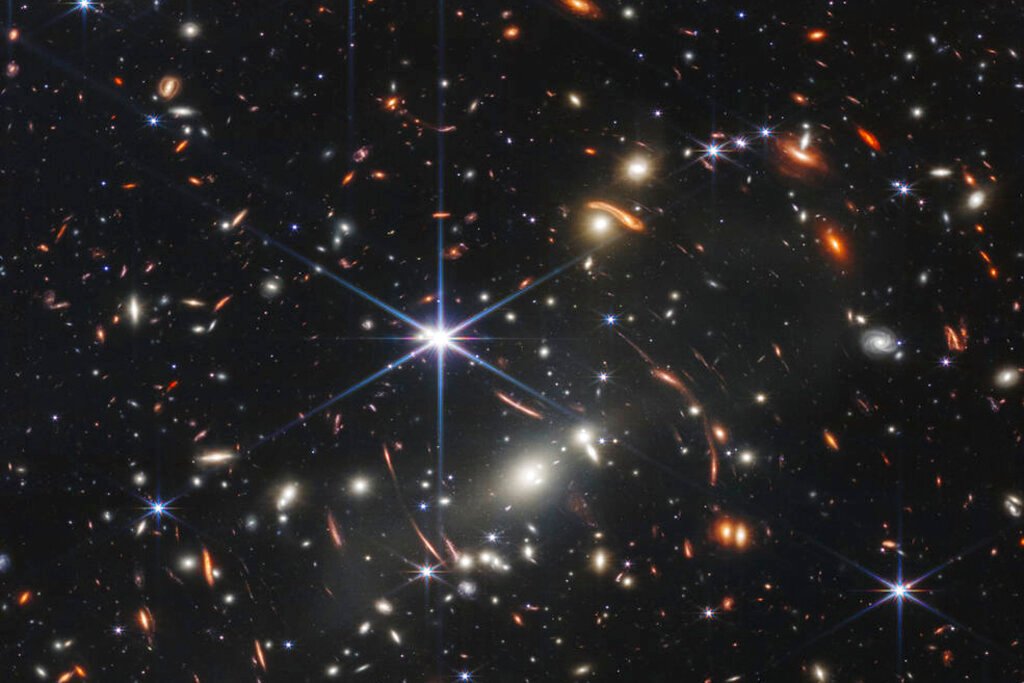
Our view of the universe just expanded: The first image from NASA’s new space telescope unveiled Monday is brimming with galaxies and offers the deepest look of the cosmos ever captured.
The first image from the $10 billion James Webb Space Telescope is the farthest humanity has ever seen in both time and distance, closer to the dawn of time and the edge of the universe. That image will be followed Tuesday by the release of four more galactic beauty shots from the telescope’s initial outward gazes.
The “deep field” image released at a White House event is filled with lots of stars, with massive galaxies in the foreground and faint and extremely distant galaxies peeking through here and there. Part of the image is light from not too long after the Big Bang, which was 13.8 billion years ago.
Seconds before he unveiled it, President Joe Biden marveled at the image he said showed “the oldest documented light in the history of the universe from over 13 billion — let me say that again — 13 billion years ago. It’s hard to fathom.”
The busy image with hundreds of specks, streaks, spirals and swirls of white, yellow, orange and red is only “one little speck of the universe,” NASA Administrator Bill Nelson said.