
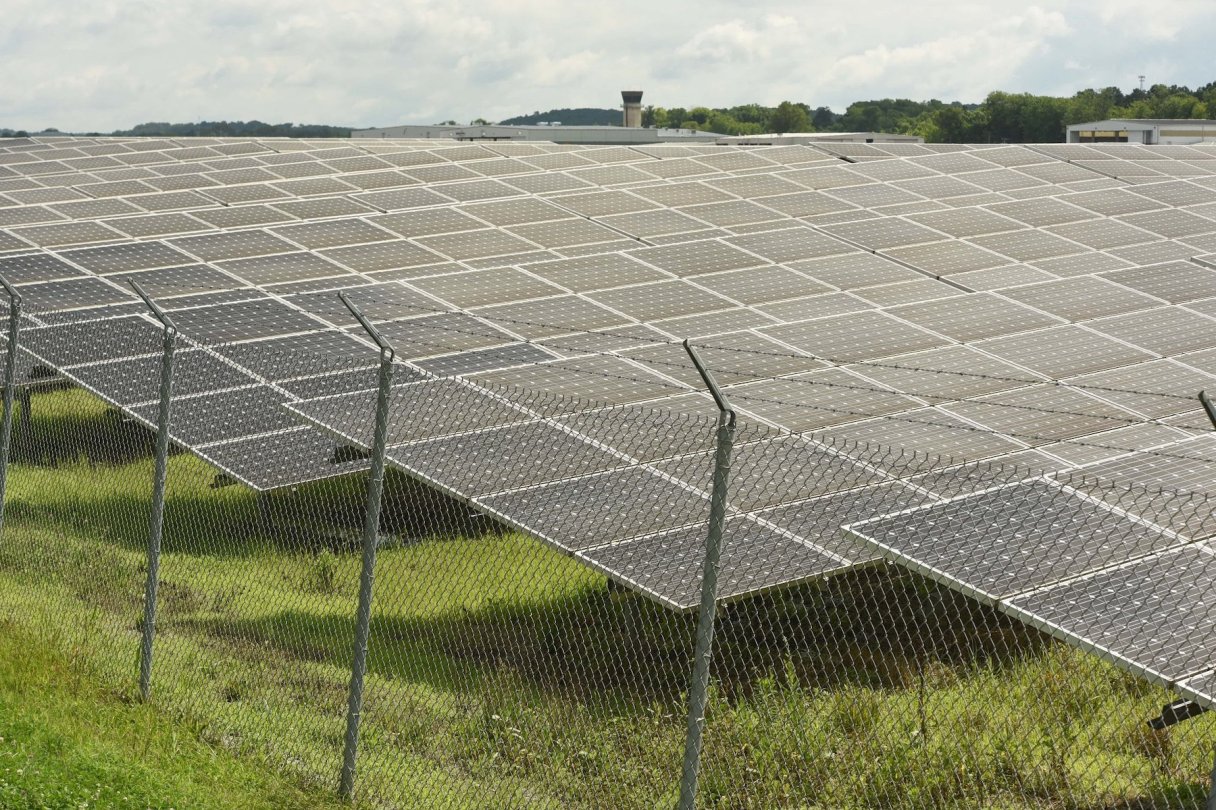
The Tennessee Valley Authority announced last week it is launching one of the biggest purchases of renewable energy for the future, but over the next five years, the federal utility is still projected to generate less than half as much solar power per capita as the average utility in the South, according to a study released Tuesday.
In a new report on Solar in the Southeast, the Southern Alliance for Clean Energy calls TVA a “SunBlocker,” with the least amount of solar power generation, even though one of TVA’s biggest distributors, the Knoxville Utilities Board, was recognized as the top “SunRiser” for promoting the most additional solar power of any local utility in the region through 2025.
Among the 13 major electric utilities in the Southeast, TVA ranks 10th in its current share of solar generating capacity at 121 watts per customer, or only one-fourth as much as the regional average of 484 watts per customer and only 8% as much as the regional leader, Duke Energy Progress in the Carolinas. In Tennessee, the amount of solar power generation is predicted to jump nearly four-fold from 2021 to 2025, rising to 433 watts per customer. But that is still well below the average for the region of 933 watts of solar capacity per customer.
“Despite the Green Invest projects (that supply entirely renewable power for customers wanting carbon-free power), TVA itself has not matched the pace of solar ambition in the Southeast region and has mathematically returned to the SunBlocker list – the large utilities whose four-year forecast remains below last year’s region average,” Bryan Jacob, the solar program director for Southern Alliance for Clean Energy, a Knoxville-based environmental advocacy group, said in a webinar. “TVA is the largest federal public power utility and should be aligned with and leading President (Joe) Biden’s executive order to achieve 100% carbon pollution-free electricity by 2030.”