
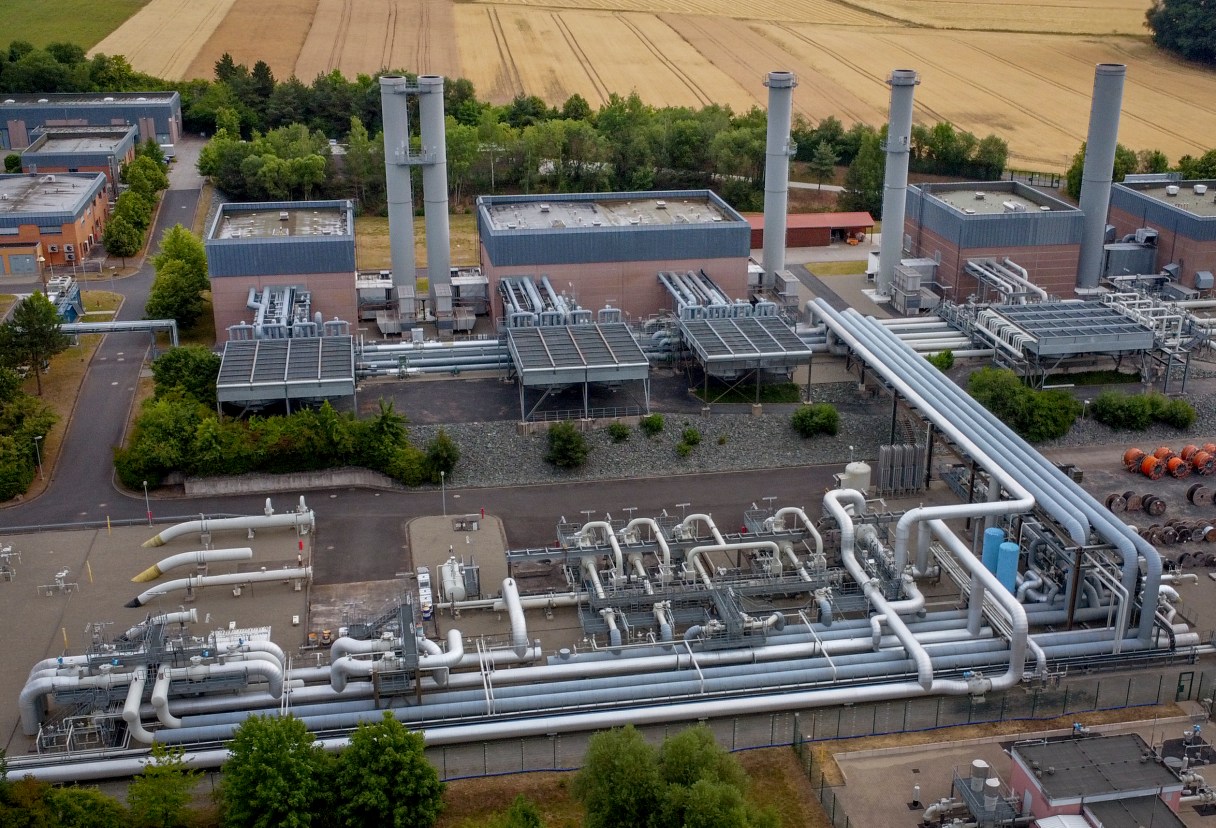
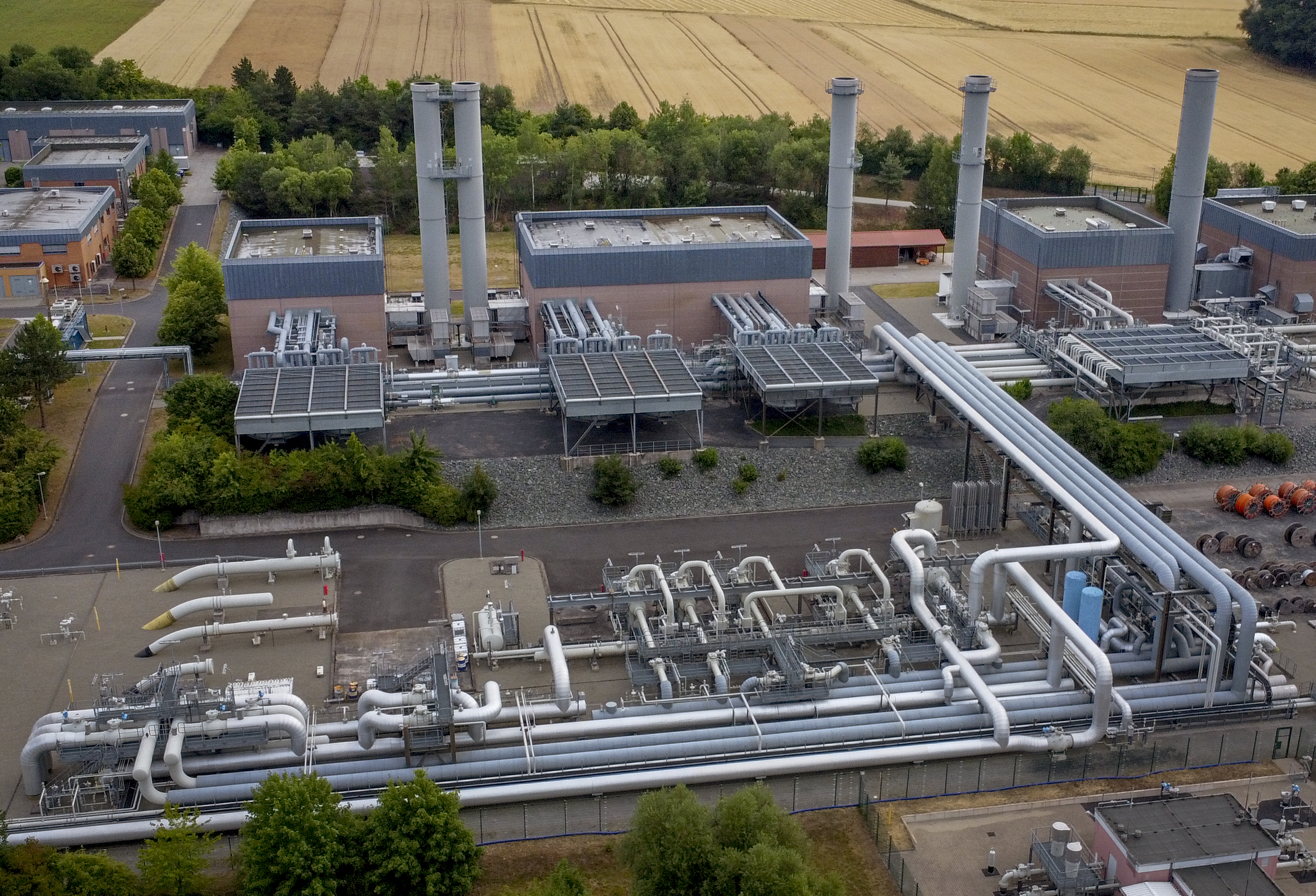
 FILE – The gas storage plant Reckrod is pictured near Eiterfeld, central Germany, Thursday, July 14, 2022, after the Nord Stream 1 pipeline was shut down due to maintenance. European Union governments agreed Tuesday, July 26, 2022 to ration natural gas this winter to protect themselves against any further supply cuts by Russia as Moscow pursues its invasion of Ukraine. (AP Photo/Michael Probst, File)
The brutal invasion of Ukraine by Vladimir Putin and the forceful response from the West has served to highlight a huge problem of Europe’s own making: excessive dependency upon Russia for its natural gas. The European Union is reducing consumption to rely less on Russia and to build a stockpile for the winter while it attempts to secure longer-term supplies from more reliable partners, but without doubt, the transition will be painful.
As the world’s largest exporter of natural gas, the United States has ample reserves to offset Russian supplies and American producers are eager to do so. The fly in the ointment is that America has just a few facilities for liquifying gas for shipment, most of the existing capacity is already contracted to current customers, and building a new liquefaction plant to export the gas takes three to five years once the permits are granted (which takes another two years). Uncle Sam has plenty of gas, but it’s going to take a while before it makes a substantial difference to Europe.
Germany, as the de facto leader and largest economy in the EU, made what has proven to be two serious miscalculations earlier this century. First in 2002, Chancellor Gerhard Schroeder announced that the country’s 17 nuclear power plants would be gradually phased out. In 2011, Angela Merkel succumbed to pressure from the Green party members in her government’s coalition to accelerate the decommissioning to the end of 2022. Today only three plants remain operational, all of which are due for mothballing in December.
The other big gamble taken by Germany and the rest of the EU was a deepening of economic ties with Russia, including increasing the amount of natural gas purchased from the former Soviet Union. These failed bets have rendered Europe dangerously dependent on Putin at the most perilous moment of this century. In 2021, the EU purchased 40% of its gas from Russia and Germany over 50%. This has left Western Europe exceptionally vulnerable to Putin’s caprice and is in fact helping to finance the invasion and devastation of Ukraine.
Meanwhile across the pond, America is swimming in gas. It was not always so. Following deregulation of electrical generation in the late 1990s, dozens of gas-fired generating plants sprang up that quickly created a critical gas shortage and caused prices to quintuple. Then along came the revolution in horizontal drilling and hydraulic fracturing that freed up massive amounts of previously inaccessible oil and gas. This unexpected bounty soon propelled the US from being a net importer in 2017 to the world’s largest exporter of natural gas by 2021.