
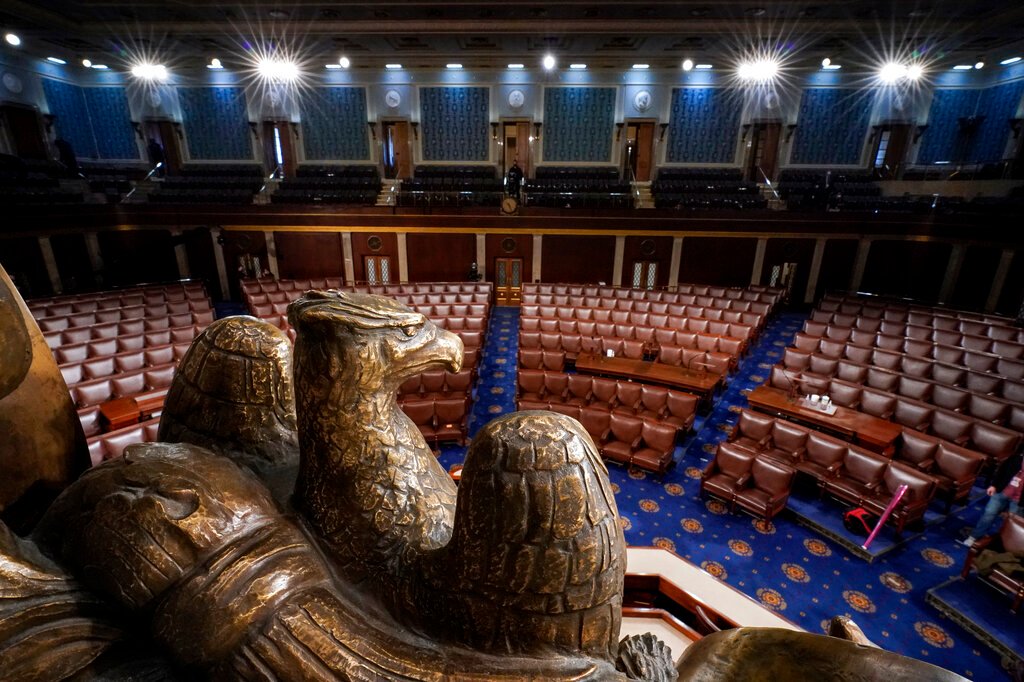
WASHINGTON (AP) – They have argued viciously in Congress over just about everything: Whether the Capitol insurrection should be investigated or brushed aside. If the president’s choice for the Supreme Court should be limited to the first Black woman. Even over whether or not to wear masks in the Capitol building.
But as lawmakers gather for President Joe Biden’s first State of the Union address amid the gravity of Russia’s invasion of Ukraine, they have mustered a rare and remarkable bipartisan resolve, determined to hold the U.S. and its allies together in the defense of a Western-oriented democracy.
When Biden stands in the House chamber Tuesday evening, trying to make good on what until now has been a faltering attempt to resolve the nation’s bitter divisions, he may find that the threat from Russian President Vladimir Putin abroad has become the unexpected force pulling the U.S. political parties toward common purpose.
“I think you will see in the State of the Union, a strong bipartisan support for our president,” predicts Sen. Chris Coons, D-Del., a Biden ally.
The turn of events is both stunning and fragile. Foreign policy has not been the kind of bipartisan draw it was during the past century, when Congress and the White House worked together as the U.S dominated the global stage. Factions on the right and left have broken off, most definitively over the long wars in Iraq and Afghanistan, creating oddball political alliances in the U.S. and chiseling away at a shared mission.