
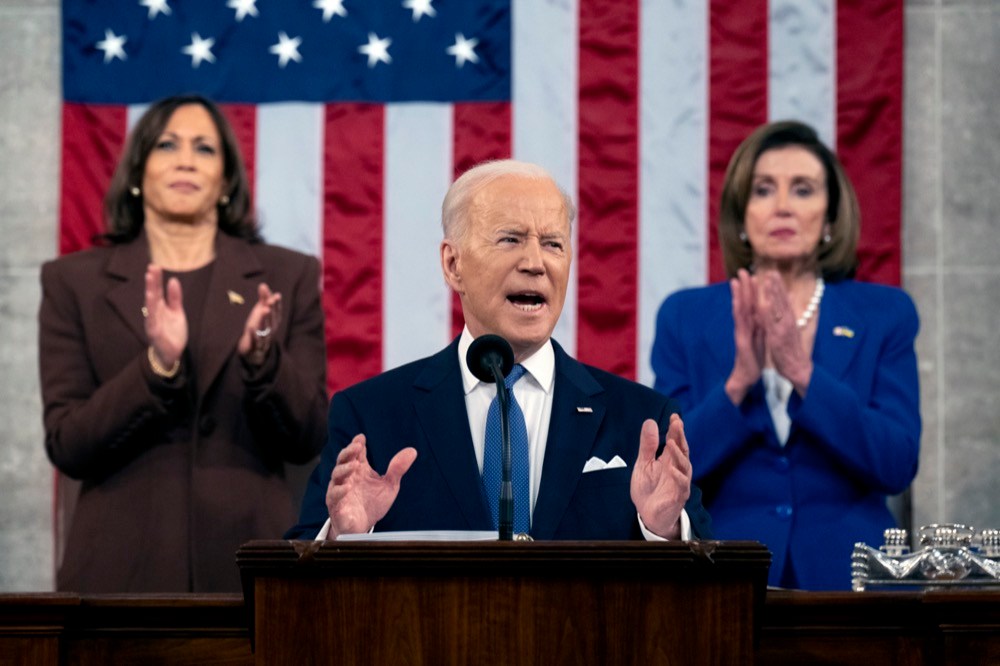
WASHINGTON (AP) – Not long after winding down 20 years of war, President Joe Biden now finds the United States entrenched in a conflict in Ukraine, even without sending in U.S. troops, that could have a more far-reaching effect on a larger cross section of Americans than Afghanistan or Iraq ever did.
Fighting in Afghanistan and Iraq cost the lives of more than 6,900 U.S. troops and more than 7,500 U.S. contractors, and American spending topped $2.3 trillion. But those wars had little impact on how the vast majority of Americans lived their daily lives. It was a 20-year period where people experienced both the Great Recession and the longest U.S. economic expansion, touchstones that were little influenced by the two grinding conflicts.
Now, five months after the end of the war in Afghanistan, the longest in U.S. history, Americans are entering complicated terrain with the Russian invasion in Ukraine. While Biden promises there will be no American forces on the ground there, he acknowledged the war waged by Russian President Vladimir Putin could have real impact on Americans’ pocketbooks.
“A Russian dictator, invading a foreign country, has costs around the world,” Biden told Americans in his State of the Union address on Tuesday night.
The financial tumult of the most significant military campaign in Europe since World War II is already being felt.