
Tuesday, November 10, 2026Nov 10

How would those accused of Ukraine war crimes be prosecuted?

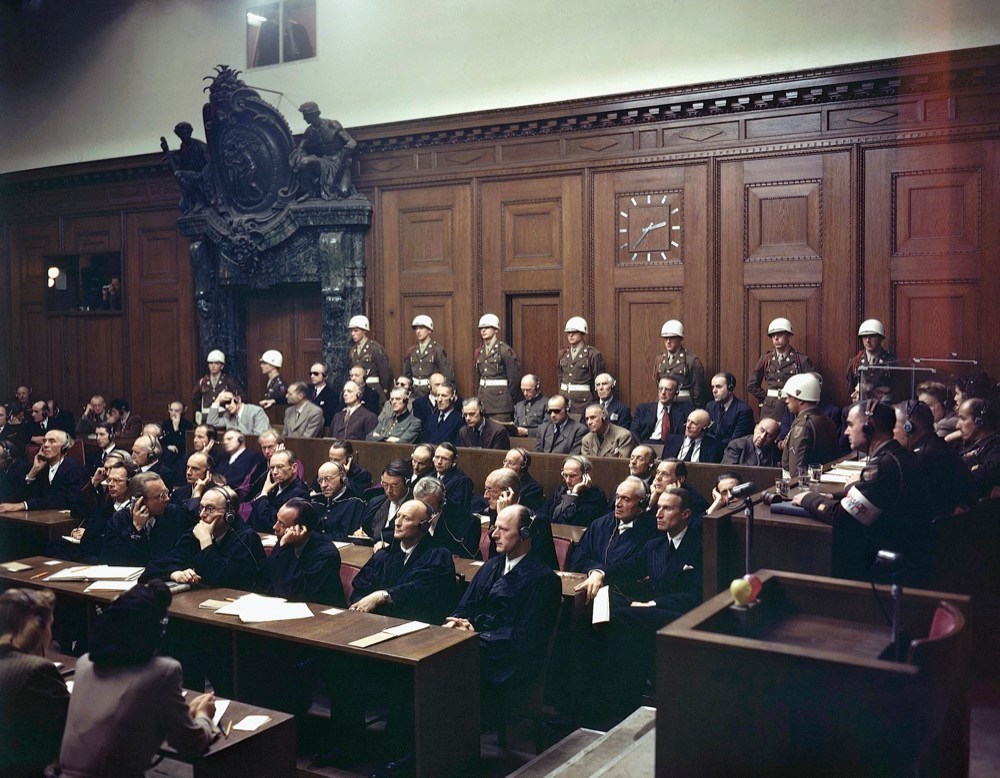
FILE - Defendants listen to part of the verdict in the Palace of Justice during the Nuremberg War Crimes Trial in Nuremberg, Germany on Sept. 30, 1946. Seated in the first row in the prisoner's dock are, from left: Hermann Goering, wearing dark glasses; Rudolf Hess; Joachim von Ribbentrop; Wilhelm Keitel; Ernest Kaltenbrunner; Alfred Rosenberg; Erich Raeder, wearing dark glasses; Wilhelm Frick; Julius Streicher;and Walter Funk. In the back row in front of the police guards are, from left: Karl Doenitz; Constantin von Neurath; Baldur von Schirach, wearing dark glasses; Fritz Sauckel; Alfred Jodl; Franz von Papen; Arthur Seyss-Inquart; and Albert Speer. Seated at the tables in front of the defendents are their council. (AP Photo/Eddie Worth)
FILE - Defendants listen to part of the verdict in the Palace of Justice during the Nuremberg War Crimes Trial in Nuremberg, Germany on Sept. 30, 1946. Seated in the first row in the prisoner's dock are, from left: Hermann Goering, wearing dark glasses; Rudolf Hess; Joachim von Ribbentrop; Wilhelm Keitel; Ernest Kaltenbrunner; Alfred Rosenberg; Erich Raeder, wearing dark glasses; Wilhelm Frick; Julius Streicher;and Walter Funk. In the back row in front of the police guards are, from left: Karl Doenitz; Constantin von Neurath; Baldur von Schirach, wearing dark glasses; Fritz Sauckel; Alfred Jodl; Franz von Papen; Arthur Seyss-Inquart; and Albert Speer. Seated at the tables in front of the defendents are their council. (AP Photo/Eddie Worth) FILE - Defendants listen to part of the verdict in the Palace of Justice during the Nuremberg War Crimes Trial in Nuremberg, Germany on Sept. 30, 1946. Seated in the first row in the prisoner's dock are, from left: Hermann Goering, wearing dark glasses; Rudolf Hess; Joachim von Ribbentrop; Wilhelm Keitel; Ernest Kaltenbrunner; Alfred Rosenberg; Erich Raeder, wearing dark glasses; Wilhelm Frick; Julius Streicher;and Walter Funk. In the back row in front of the police guards are, from left: Karl Doenitz; Constantin von Neurath; Baldur von Schirach, wearing dark glasses; Fritz Sauckel; Alfred Jodl; Franz von Papen; Arthur Seyss-Inquart; and Albert Speer. Seated at the tables in front of the defendents are their council. (AP Photo/Eddie Worth)

LVIV, Ukraine (AP) – Each day searing stories pour out of Ukraine: A maternity hospital bombed in Mariupol. A mother and her children killed as they fled Irpin in a humanitarian corridor. Burning apartment blocks. Mass graves. A child dead of dehydration in a city under siege, denied humanitarian aid.

Such images have contributed to a growing global consensus that Russia should be held accountable for war crimes in Ukraine.

“The world’s strongmen are watching like crocodiles We have to show tyrants around the world that rule of law is stronger than rule of gun,” said David Crane, a veteran of numerous international war crime investigations.

Even as the conflict rages, a vast apparatus is being built to gather and preserve evidence of potential violations of international laws of war that were written after World War II. Less than a month after Vladimir Putin’s order to drop the first bombs on his neighbor, the United States declared that Russian forces were committing war crimes in Ukraine. But it remains far from clear who will be held accountable and how.

Here’s a look at what war crimes are and what options exist for bringing those responsible to justice.