
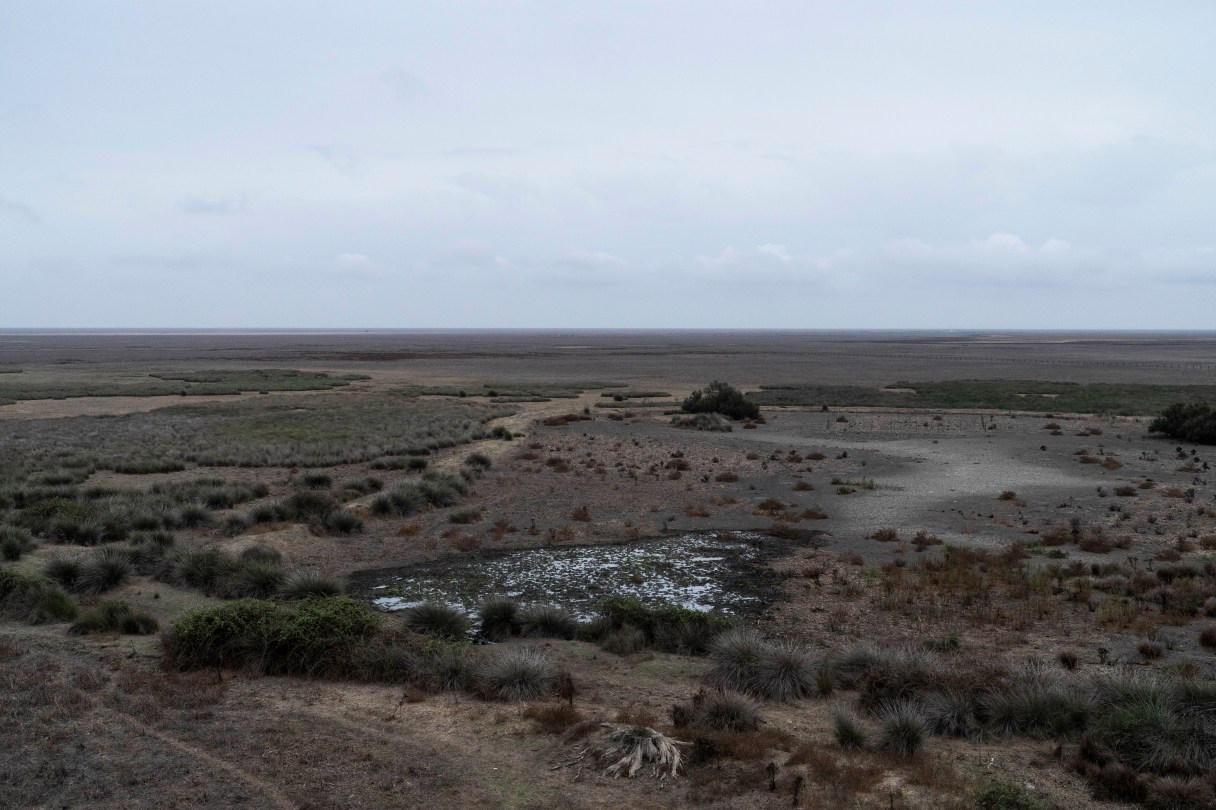
DOÑANA NATIONAL PARK, Spain (AP) — Flamingos, herons and fish once filled a freshwater lagoon in southern Spain. Today, it’s a fetid brown splotch. The whisper of wind in the grass is a sad substitute for the cacophony of migratory birds.
Biologist Carmen Díaz steps onto cracked mud. The lagoon in the heart of Spain’s Doñana nature reserve is a puddle. The park called “the crown jewel of Spain” may be dying.
Farming and tourism had already drained the aquifer feeding Doñana. Then climate change hit Spain with record-high temperatures and a prolonged drought this year. The disappearance of Doñana’s Santa Olalla lagoon’s in August makes Díaz, 66, fear that the ecosystem she has studied for four decades may have vanished for good.
“Seeing this last bit of water makes me think that the entire park is dry,” Díaz said.
Doñana’s Santa Olalla lagoon was the biggest of the handful of lagoons that maintained some water year-round, providing a summer reservoir of aquatic plants and animals.