

The Hamilton County Schools does have a deferred maintenance problem, to be sure, but we think the district’s academic problems are an even bigger priority.
So while we like Hamilton County Commissioner Joe Graham’s resolution for a dedicated fund for school system capital needs, we’re not ready to endorse a second resolution directing 100% of future revenue for education from tax break agreements into such a fund.
Superintendent Dr. Justin Robertson said revenue from tax break agreements helps the day-to-day operation of the schools. If that money were directed to deferred maintenance, money for the necessary operation of the schools conceivably could be taken from money earmarked for academics. For us, that’s a no-go.
After all, on the front of this newspaper Thursday, sharing space with a story about Graham’s resolutions, was an Associated Press article on national scores by this year’s high school graduates on the ACT college admissions test.
The scores were the lowest since 1991, more than 30 years ago, and are continued evidence of how devastating the learning disruption was during the COVID-19 pandemic.
How bad was it?
Forty-two percent of the students who took the ACT did not meet a single one of the college-ready benchmarks in English, reading, science or math. And that number is up 4% from 2021, when most states returned to in-school learning after the pandemic.
Yes, statistics show that ACT scores have been declining in recent years, but this should signal a crisis. A country that is growing, thriving, producing, inventing and succeeding cannot be sustained when its body of high school graduates is not making the proverbial grade.
It should be a sign to education officials to stop spending so much time on diversity, equity and inclusion, for example, and start spending more time on reading, writing and arithmetic.
The state-level and school-level scores are not out yet. In 2021, they were not released until December. So Tennessee and Hamilton County officials don’t know if their scores fell as those for the country, but it’s likely they did.
While the composite ACT score across the country hasn’t been below 20 since 1991, until this year, the composite score has not been above 20 in Hamilton County in recent years.
It hit 19.9 in both the 2016-2017 and 2017-2018 school years but fell to 19.6 in 2018-2019 and 19.7 in 2019-2020. But in 2020-2021, when the pandemic learning loss would have been felt most keenly, it fell to 18.9.
The county’s high-minority schools have been the most stubborn to show improvement. Brainerd High, for example, had a composite ACT score in the 2012-2013 school year of 14.7. By 2020-2021, it had fallen to 14.2.
Standardized academic test scores at the state and local levels have shown similar trends to the ACT scores. They’re not making the progress needed, and the pandemic only made things worse.
All that said, we’re certainly not unsympathetic to the district’s maintenance needs. The 2019-2020 district facilities report by MGT Consulting Group put the amount at about $1.36 billion (later revised to $891 million), and a figure of $1 billion has been frequently reported since.
However, since that time, Chattanooga School for the Liberal Arts, one of the buildings with the most needs, has been — in part — relocated to the renovated former Lakeside Elementary School. The school’s upper students are still in the old building but eventually will move to the new location.
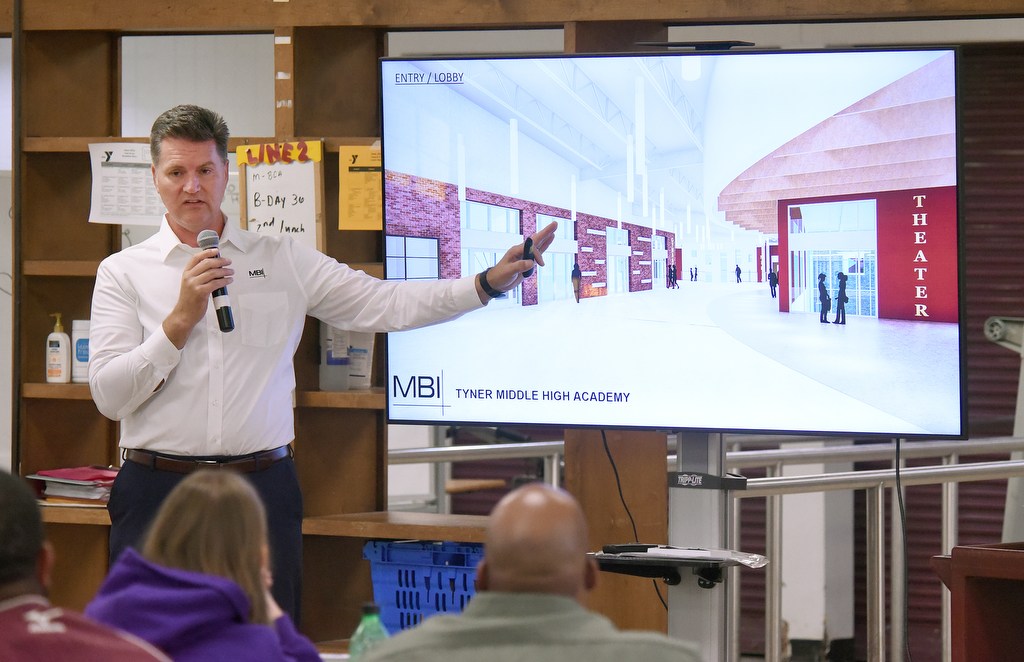
Tyner Academy, another school with numerous needs, is being replaced. A new school encompassing the high school and middle school located across the street soon will be built.
The district, in addition to dedicating $3 million to maintenance issues in its year-over-year budget, also has been the recipient of several rounds of coronavirus relief funds, parts of which were dedicated to deferred maintenance.
According to newspaper archives, it used $4.4 million from Elementary and Secondary School Emergency Relief Funds, $5 million from a second relief fund and some $5 million in American Rescue Plan funds — directed by individual Hamilton County commissioners in August — on facility needs.
All those combined are a drop in the bucket to the $1.36 billion, $1 billion or $891 million (pick your figure) of maintenance needs in the schools, but it’s money the district wouldn’t have had otherwise.
Plus, last month, Hamilton County Mayor Weston Wamp and Robertson formed a working group on school facilities that will evaluate urgent and future building needs across the district.
“We … look forward to bringing an innovative and financially feasible plan forward for the citizens to review and provide input,” Wamp said in the news release at the time. “School facilities are important to every member of the County Commission, and I look forward to their input and support of the road map that comes out of the working group.”
So maintenance issues are in the works, and Graham’s dedicated fund could help. But the focus needs to be on academic improvement.