
With Election Day two weeks away, Republican prospects of taking control of the House of Representatives, already strong, appear to have solidified. Barring the unexpected, President Joe Biden’s next two years will be shaped by challenges from a House led by some of his most zealous opponents.
That isn’t unusual; every president for the last four decades has contended with divided government. Sometimes, that has arguably been a good thing — a constructive check on executive power.
Not now.
The House won’t merely be held by Republicans. It will be led by Republicans loyal to former President Donald Trump, many of whom refuse to accept Biden’s legitimacy as president.
Most members of the new majority will have been elected with Trump’s endorsement. There will be almost no Trump critics in the House GOP — none who dare voice their qualms, at least.
Of the likely members of the next majority, well more than half have questioned or denied the legitimacy of the 2020 presidential election.
The ranks of the hard-line House Freedom Caucus are swelling. The group has been recruiting members among this year’s candidates and is on track to boast at least 46 next year, an all-time high.
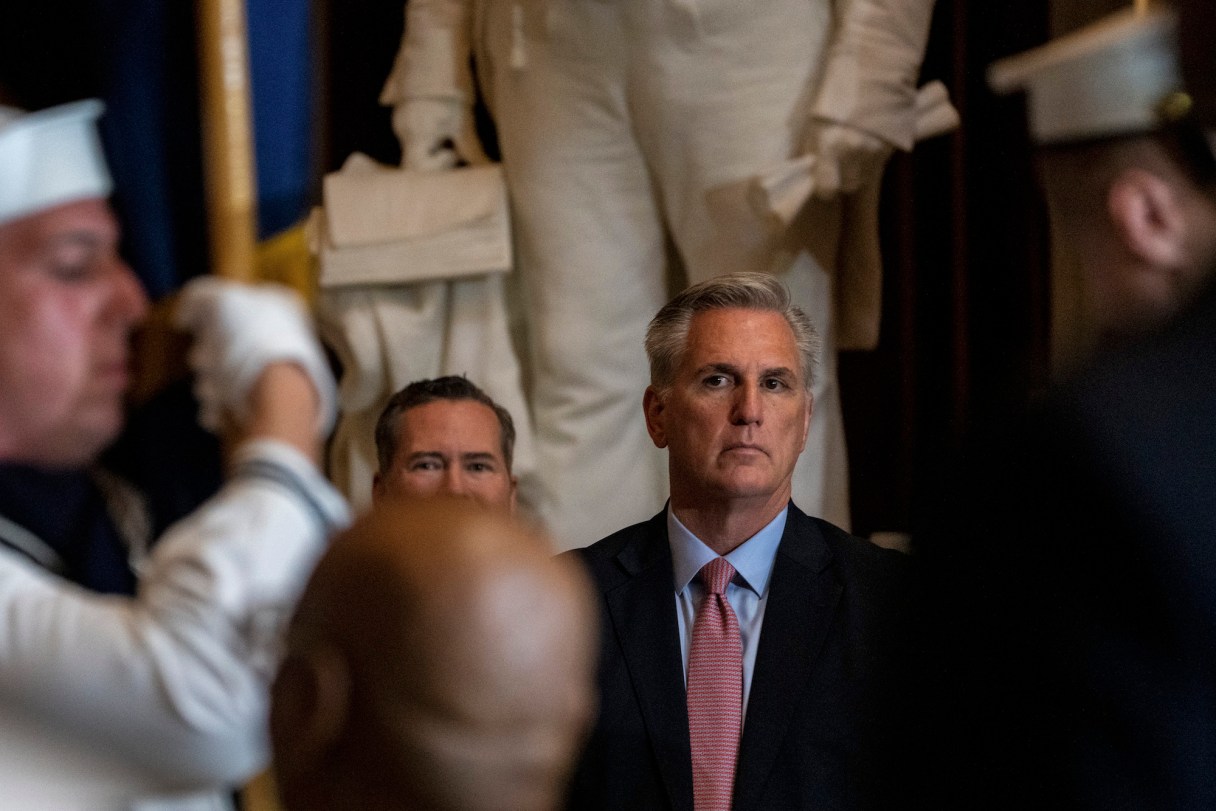
The likely next House speaker, Rep. Kevin McCarthy, R-Calif., is a Trump loyalist too.
He has made clear that other Trump acolytes will gain under his speakership. He has promised Rep. Jim Jordan of Ohio, one of the founders of the Freedom Caucus, the chairmanship of the powerful Judiciary Committee. He has promised Rep. Marjorie Taylor Greene of Georgia, who once suggested that California’s wildfires were caused by Jewish-funded space lasers, a seat on the Oversight Committee, which is likely to launch an investigation of Hunter Biden.
Their agenda begins with deep spending cuts in domestic programs, which they argue are needed to shrink the federal budget deficit and quell inflation.
Some members have already declared their willingness to shut down the federal government to get their way.
Even worse, several have said they plan to block an increase in the federal debt ceiling — a move that would raise the specter of the government defaulting on its debts and risk a global financial crash.
McCarthy said he too would be willing to block a debt limit increase as a tactic to force spending cuts.
“OK, we’ll provide you more money, but you got to change your current behavior,” he told the newsletter Punchbowl News.
Government shutdowns and debt-ceiling hostage dramas tend to backfire on the party that launches them. Most voters don’t enjoy watching the economy being held hostage by politicians.
McCarthy presumably knows that — but he also knows his majority includes many who would relish a showdown, either on principle or to pander to right-wing voters.
In another sign that Republican radicals are in the ascendance, McCarthy said he wants to impose limits on future U.S. aid to Ukraine, a hobbyhorse of Fox News host Tucker Carlson.
“Ukraine is important, but … it can’t be a blank check,” McCarthy said.
It adds up to a recipe for a series of collisions — not only with the Biden White House but with the Senate. No matter how the election turns out, the Senate is almost certain to be narrowly divided between the parties — and because of its 60-vote filibuster rule, any major legislation will need support from at least a few senators on both sides.
Pro-Trump voters who want to stop the Biden administration cold, no matter the cost, may enjoy the battle. But moderates and independents who vote for divided government, expecting anything better than chaos, are indulging in wishful thinking.
The Los Angeles Times