
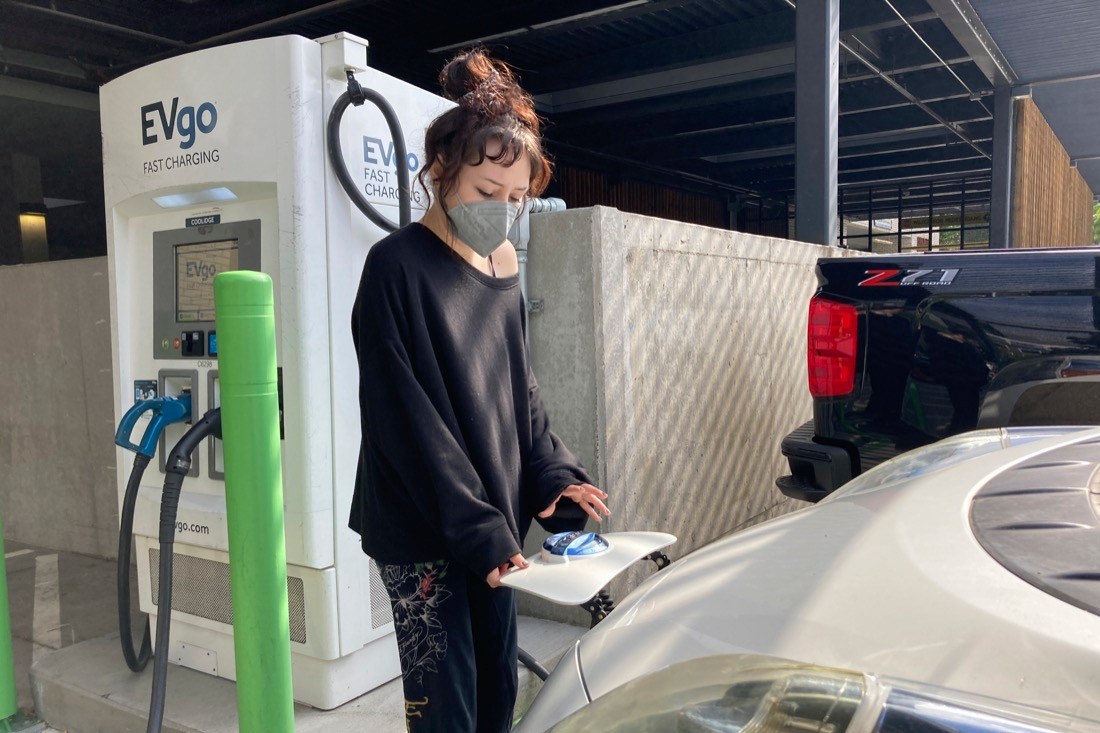
PORTLAND, Ore. (AP) — Stephanie Terrell bought a used Nissan Leaf this fall and was excited to join the wave of drivers adopting electric vehicles to save on gas money and reduce her carbon footprint.
But Terrell quickly encountered a bump in the road on her journey to clean driving: As a renter, she doesn’t have a private garage where she can power up overnight, and the public charging stations near her are often in use, with long wait times. On a recent day, the 23-year-old nearly ran out of power on the freeway because a public charging station she was counting on was busy.
“It was really scary and I was really worried I wasn’t going to make it, but luckily I made it here. Now I have to wait a couple hours to even use it because I can’t go any further,” she said while waiting at another station where a half-dozen EV drivers circled the parking lot, waiting their turn. “I feel better about it than buying gas, but there are problems I didn’t really anticipate.”
The great transition to electric vehicles is underway for single-family homeowners who can charge their cars at home, but for millions of renters like Terrell, access to charging remains a significant barrier. People who rent are also more likely to buy used EVs that have a lower range than the latest models, making reliable public charging even more critical for them.
Now, cities from Portland to Los Angeles to New York City are trying to come up with innovative public charging solutions as drivers string power cords across sidewalks, stand up their own private charging stations on city right-of-ways and line up at public facilities.