
Tuesday, November 10, 2026Nov 10

Battle of the Alps? Water woes loom amid climate change

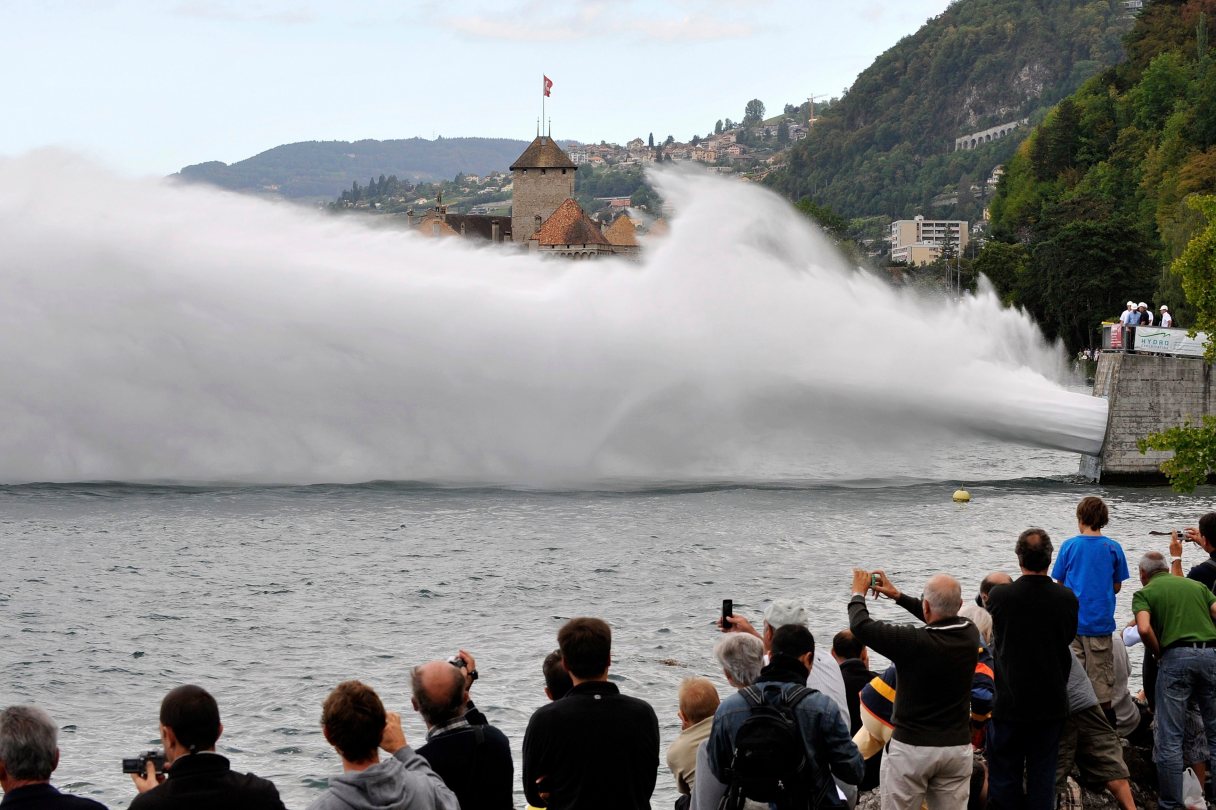
FILE - People watch a huge water jet of 350m length throwing 20,000 liters of water per second into the Geneva Lake, during a functional check of the Forces Motrices Hongrin-Leman hydropower plant in Veytaux, Switzerland, Aug. 29, 2009. Faced with increasing demand for alpine water resources at a time of accelerating glacier melt, policymakers from 8 European countries are meeting in Switzerland to prevent a dispute over diminishing water resources the Alps. (Dominic Favre/Keystone via AP, File)
FILE - People watch a huge water jet of 350m length throwing 20,000 liters of water per second into the Geneva Lake, during a functional check of the Forces Motrices Hongrin-Leman hydropower plant in Veytaux, Switzerland, Aug. 29, 2009. Faced with increasing demand for alpine water resources at a time of accelerating glacier melt, policymakers from 8 European countries are meeting in Switzerland to prevent a dispute over diminishing water resources the Alps. (Dominic Favre/Keystone via AP, File) FILE - People watch a huge water jet of 350m length throwing 20,000 liters of water per second into the Geneva Lake, during a functional check of the Forces Motrices Hongrin-Leman hydropower plant in Veytaux, Switzerland, Aug. 29, 2009. Faced with increasing demand for alpine water resources at a time of accelerating glacier melt, policymakers from 8 European countries are meeting in Switzerland to prevent a dispute over diminishing water resources the Alps. (Dominic Favre/Keystone via AP, File)

BRIG, Switzerland (AP) — A battle is brewing around Europe’s rooftop over the planet’s most precious resource.

The crystal-clear waters issuing from the Alps could become increasingly contested as the effects of climate change and glacier melt become more apparent. Italy wants them for crop irrigation in the spring and summer. Swiss authorities want to hold up flows to help hydroelectric plants rev up, when needed.

For the first time in four years, government envoys from eight Alpine countries — big, small and tiny — were meeting under a grouping known as the Alpine Convention, which was set up 30 years ago to help coordinate life, leisure and the limited resources from Europe’s most celebrated peaks.

The envoys in Brig, Switzerland, representing pint-sized principality Monaco and small Slovenia as well as powerhouses like France, Germany and Italy, focused attention Thursday on what’s known as the Simplon Alliance. Named after an Alpine pass between Italy and Switzerland, it aims to make transportation in the mountains more eco-friendly, such as by favoring rail over roads, electric vehicles and public transportation over private cars.

But with global warming causing a worrying shrinkage in Alpine glaciers this year, the issue of water frozen up in the mountains, or showered and snowed on them, is growing in importance. Environmental advocates say jockeying for water isn’t being addressed with enough urgency; they want the Alpine countries to do more to secure the future of the resource that’s been bountiful for centuries.