
The Times Free Press recently reported that incoming Hamilton County Mayor Weston Wamp says he will never embrace the baseball stadium project because it’s a “terrible use” of taxpayer money.
Wamp said, “There are still some of the biggest questions relative to that project yet to be asked, and I will ask them.”
I hope the first question he asks is this: Will the stadium mitigate global warming or exacerbate it?
And then if it appears that the project is a colossal polluter, I hope he will want to know if its future benefits to the community override the environmental damage.
It’s troubling that, as fires and floods ravage our land, slabs of ice peel off glaciers, and one million plant and animal species face extinction, there has been no public discussion of the stadium’s environmental impact that I am aware of.
Our indispensable community gadfly, Helen Burns Sharp, broached the subject at a meeting covered by the Times Free Press but no comment was reported.
Maybe that’s because proponents don’t want to acknowledge that a stadium is far from a green enterprise. Worse, maybe they don’t think its environmental effect is worthy of public consideration.
The truth is that during both their construction and general usage, sports stadiums create a number of environmental problems — traffic-related air pollution, generation of tons of waste and consumption of millions of gallons of water annually.
What’s more, another concrete box and adjacent parking lots will only intensify the heat island effect in Chattanooga’s downtown.
The redevelopment of the old Wheland/U.S. Pipe foundry site on South Broad Street is a laudatory initiative. And we could have chosen to anchor the 100 plus-acre project in ways that would be easy on the environment.
We could have installed an urban forest of trees native to Tennessee. We could have created a park. And, best of all, we could have enhanced our city with a botanical garden — just as Wamp suggested we do weeks ago.
Public gardens conserve endangered plant species and benefit pollinators. And as large green swaths, gardens lower the temperatures in urban districts.
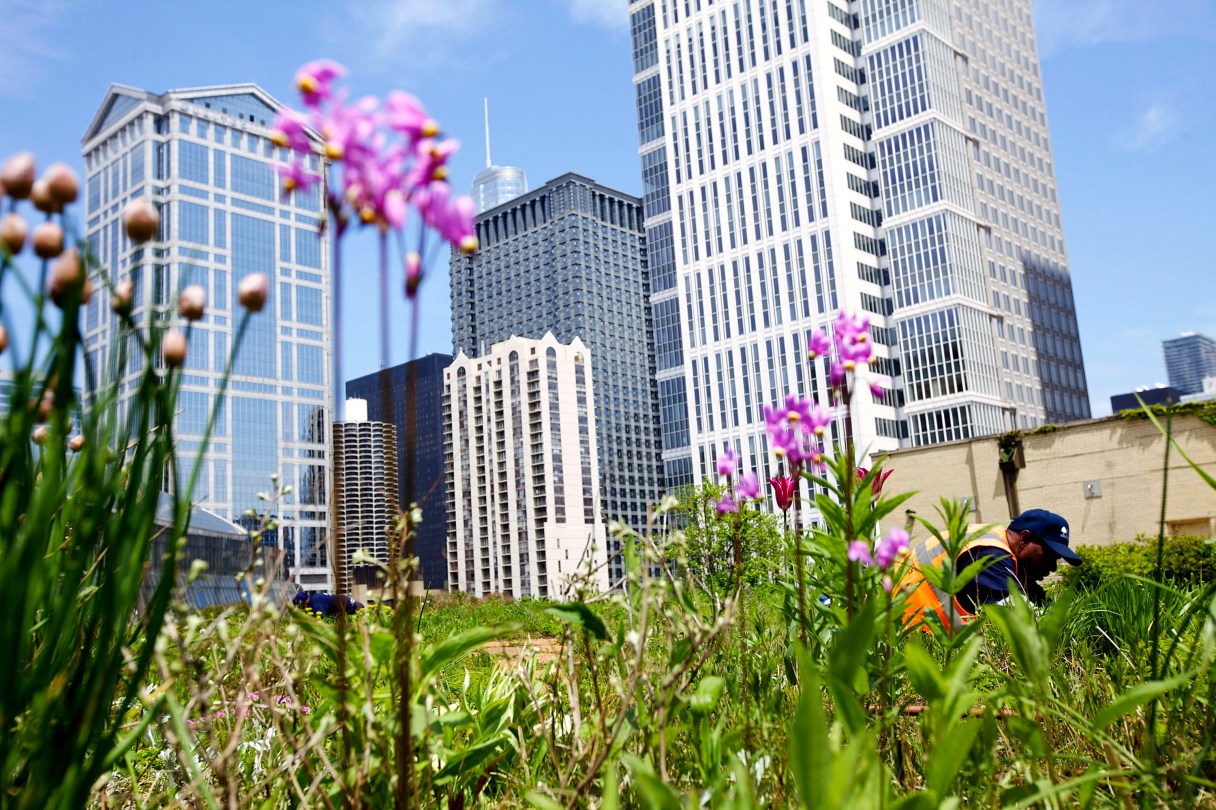
A dramatic green cornerstone for the foundry reclamation could have given rise to an explosion of rooftop gardens for our downtown structures.
Growing in popularity around the globe, rooftop gardens help cool buildings and absorb and use rainwater, reducing stormwater runoff into sewers.
And they’re eye-catching. In fact, they would create a view that might impress those all-important folks on the freeway, taking their first gander at the Scenic City from I-24.
I’m not so sure about a ballpark’s impact on travellers.
A couple from Canada approaching Chattanooga: “Guess what, Joe? Another stadium coming up. That’s 15 for this trip.” “Mary, please. I’m trying to nap.”
Wamp’s musing about botanical gardens for Chattanooga is encouraging and I hope suggests that he takes climate change seriously and will consider the cost to the environment of everything he undertakes.
Writer and environmentalist Wendell Berry offers a warning for all of us as we consider the fate of the McDonald Farm, the old Red Bank High School property on Dayton Boulevard and the foundry site.
“Whether we and our politicians know it or not,” Berry says, “Nature is party to all our deals and decisions, and she has more votes, a longer memory and a sterner sense of justice than we do.”
Carolyn Mitchell is a former writer for The Chattanooga Times.
 Contributed Photo Carolyn Mitchell